 0
0
 0
0
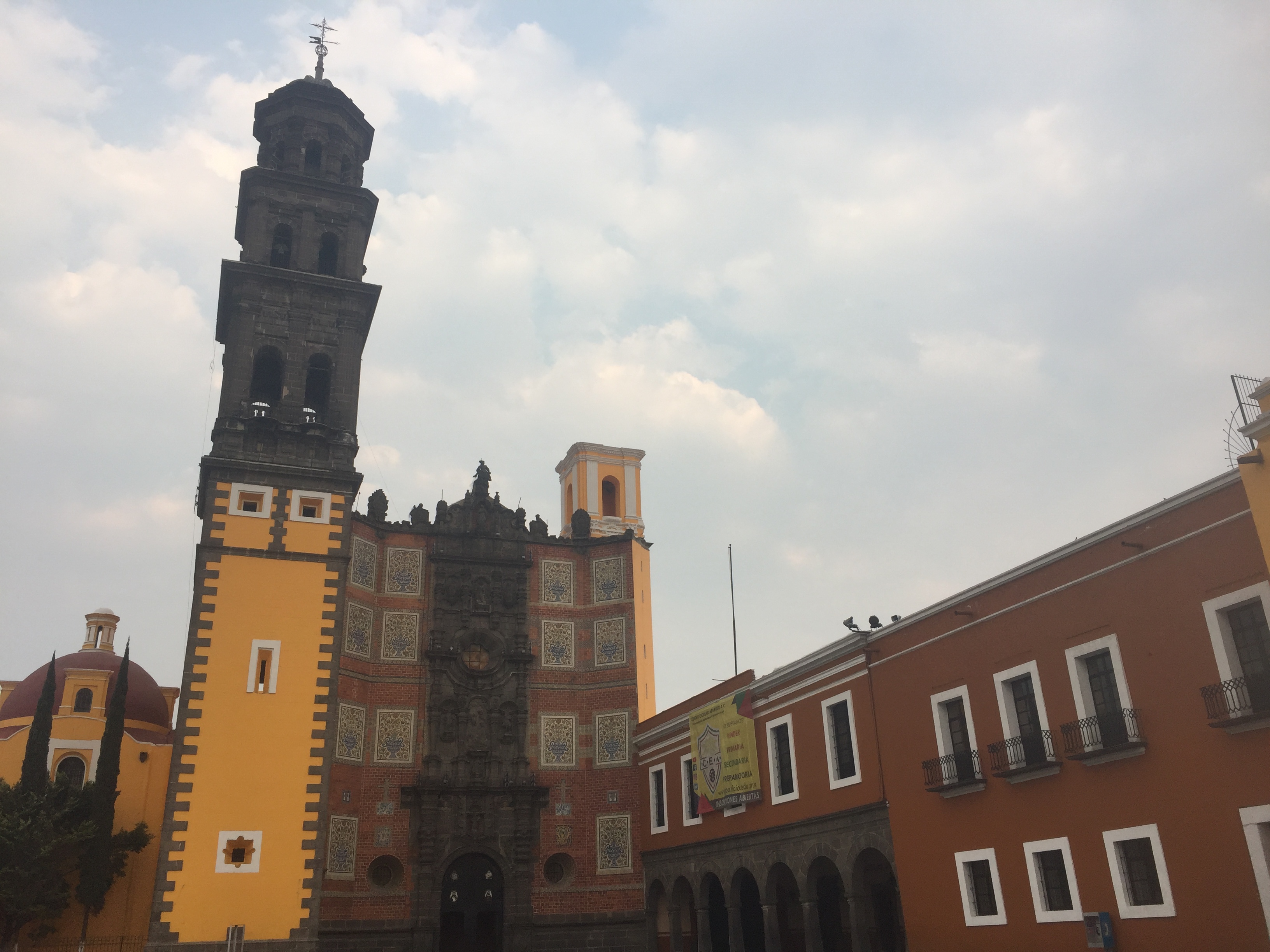
I landed in Mexico City and caught a bus straight from the airport to Puebla, the fourth largest city in the country. It welcomed me back to Mexico with colonial architecture and large helpings of mole poblano and ceviche.
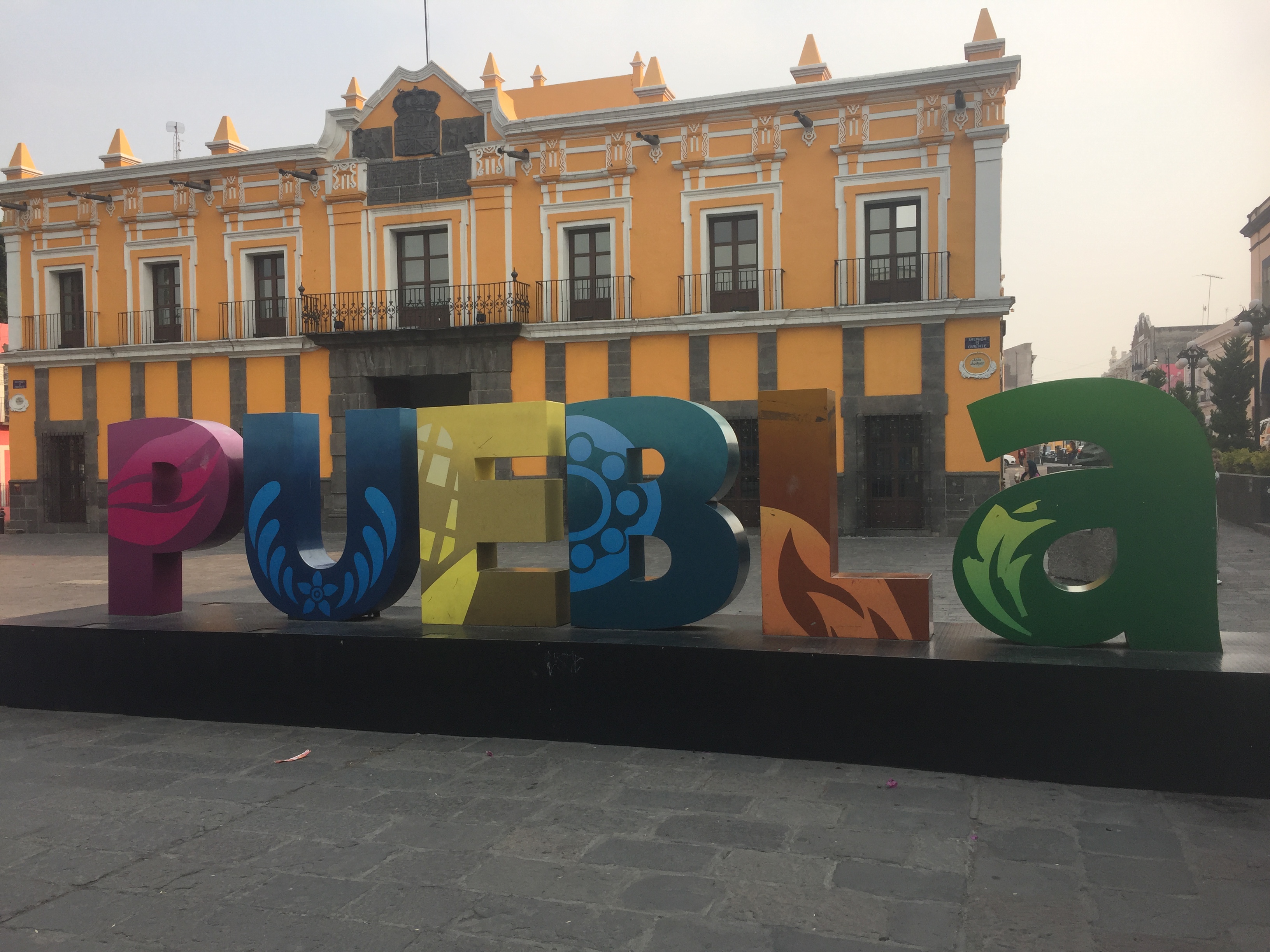
Much of my first day was spent answering emails from the office and preparing for my hike the next morning, but I still had some time to explore the old town and Zocalo on foot. I picked up a Telcel SIM card to have data access during my stay, and had ceviche for an afternoon snack.
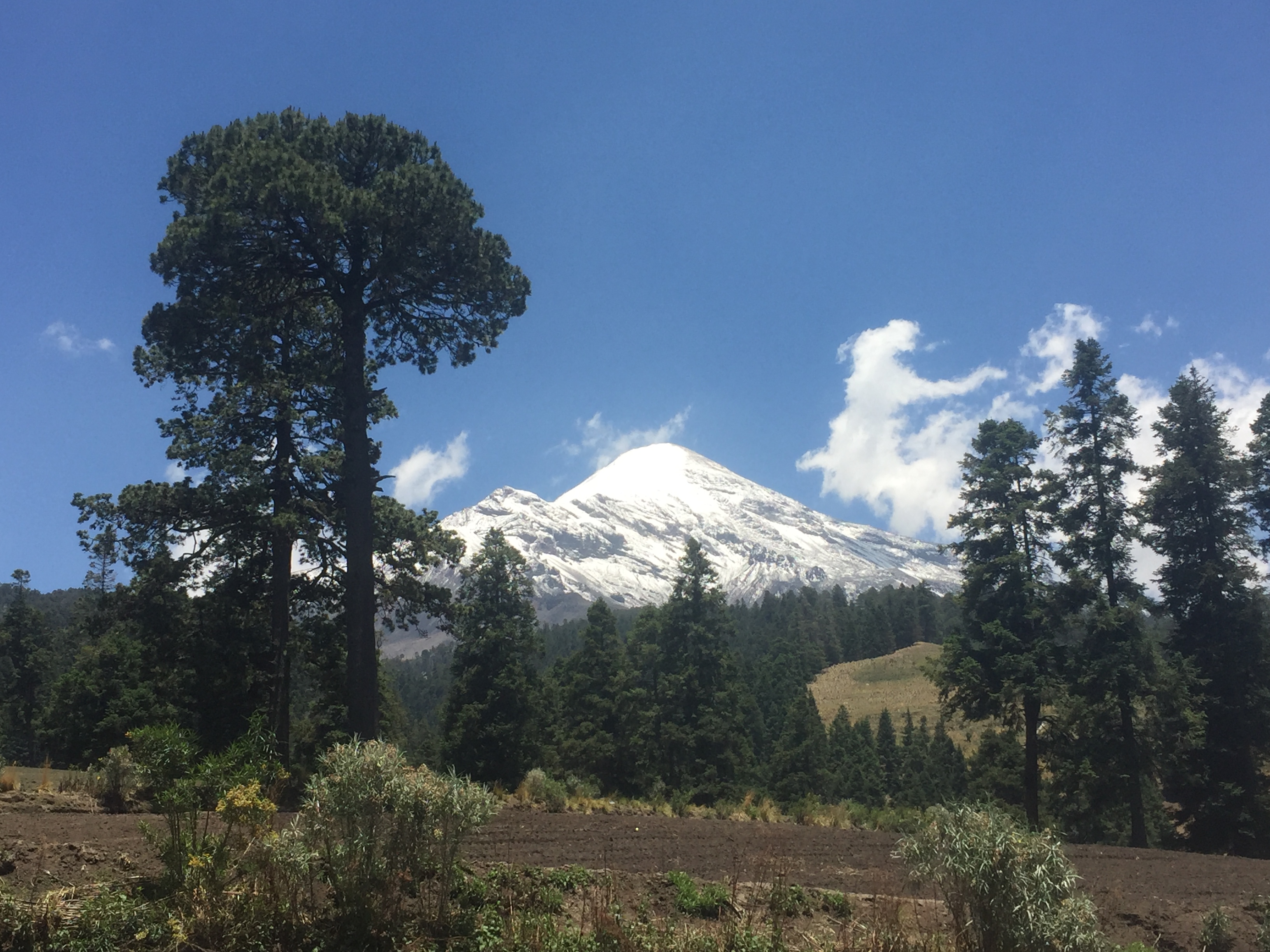
I climbed into my rental car at 3am to climb La Malinche, a nearby volcanic peak that would help me acclimatize for my eventual goal – climbing Pico de Orizaba, the highest peak in Mexico. I drove through deserted streets that were nevertheless littered with topes – the massive speed bumps that scrape the undercarriages of the unwary all over Mexico.
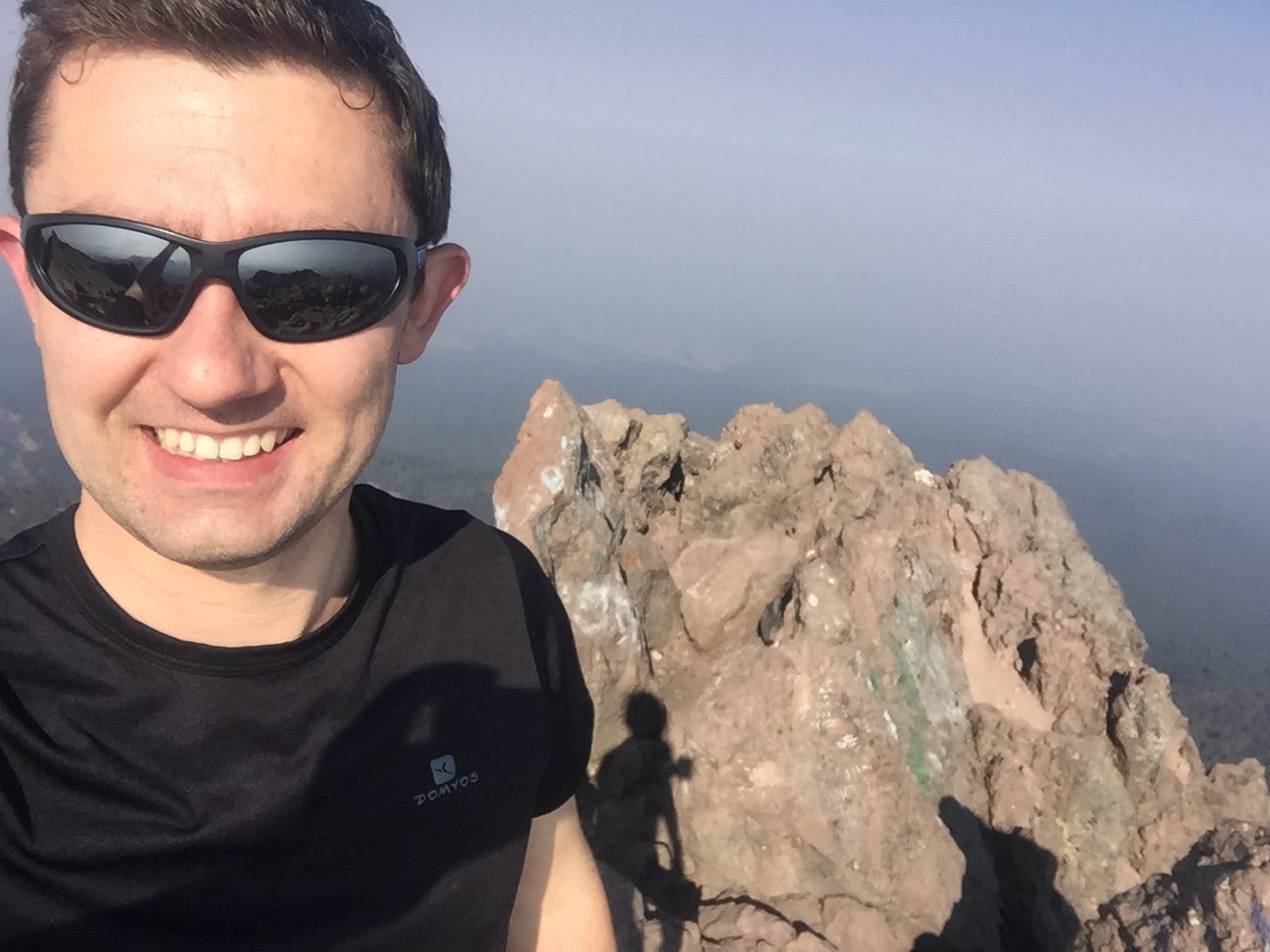
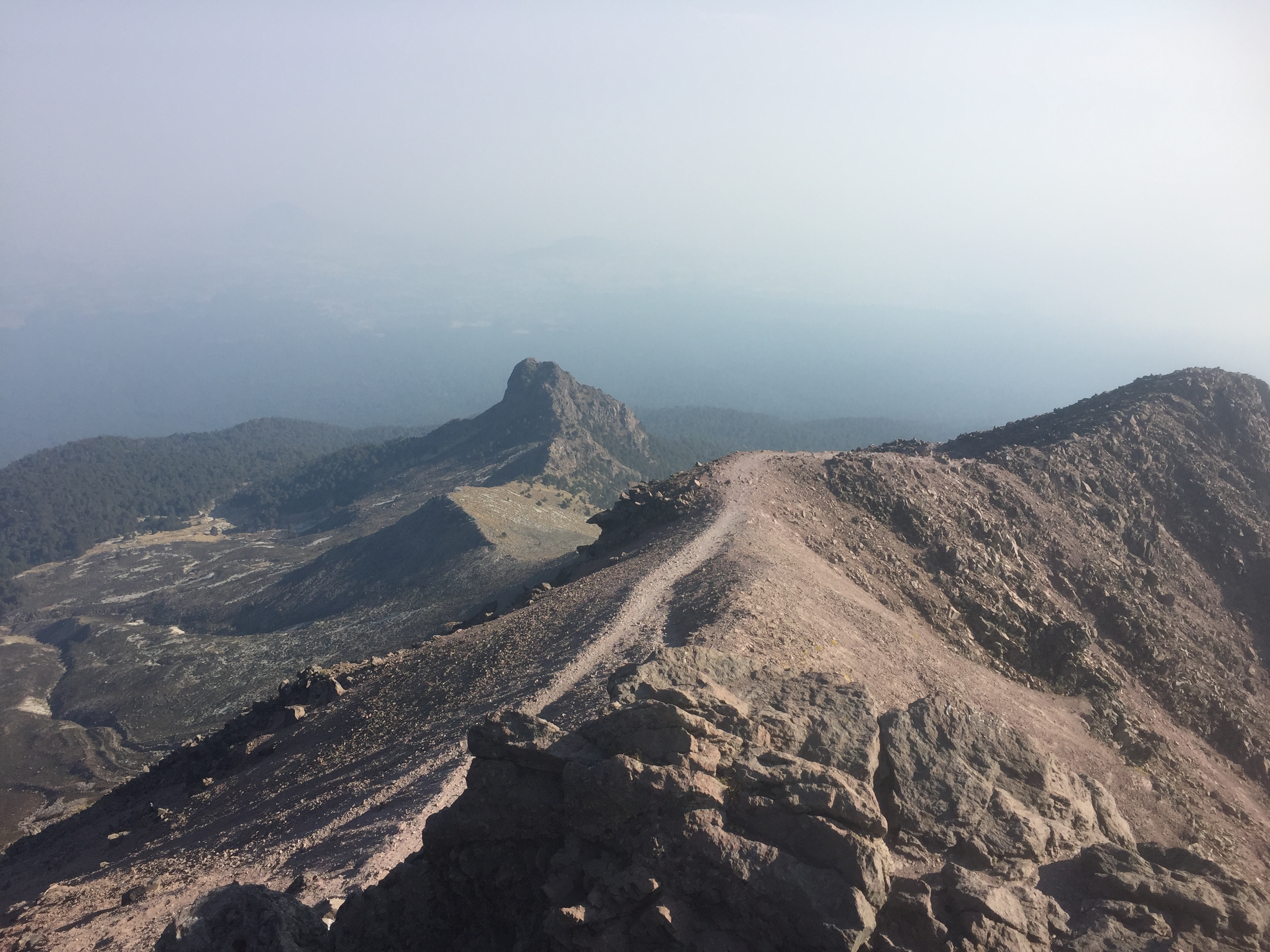
At 4,430 meters (14,636 feet) above sea level, Malinche is higher than any peak in the Continental US. Its sides are covered with sand and scree, which makes the upward climb less pleasant. Because of my early start, I had the peak to myself and reached the top at 9:15am after four hours of climbing.
I was back in Puebla in time for lunch, and after returning the rental car answered a new batch of emails from the office throughout the afternoon. In the morning, I went for another long walk through the city and a last run to the grocery store before hopping on a bus to Tlachichuca, the jumping off point for Pico de Orizaba’s base camp.
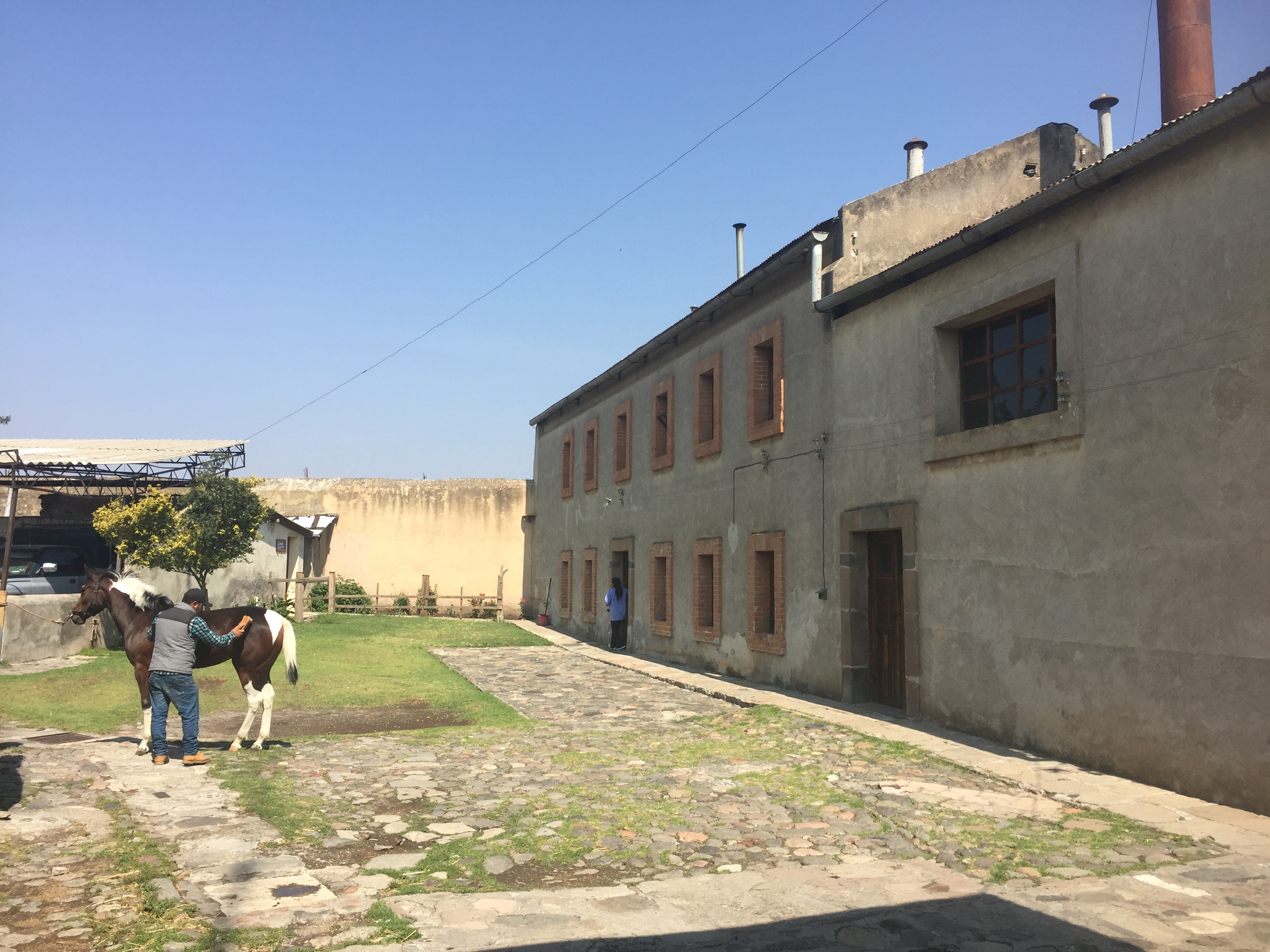
The region’s first rain in six months soaked me as I walked from the bus station to Servimont, the outfitting company that would support my one-man expedition to Orizaba. The Reyes family has been involved in mountaineering on Orizaba since the 1930s and is now in its fourth generation on the mountain. The family’s former soap factory has been converted into a small museum and bunkhouse, displaying antiques for both making soap and climbing mountains.
Señor Reyes introduced himself and over dinner we discussed my plans for the climb. He would drive me up to the hut on Friday, I would climb for a few hours to acclimatize on Saturday morning and wake up at midnight on Sunday to try for the summit. On the next morning’s drive to the hut over a rough jeep track, we discussed his family’s history with the mountain. His grandfather organized the first expedition by locals from Tlachichuca in the 1930s. His father opened the Ruta Norte, now the most common route to the summit, in the 1940s and supervised the construction of the hut where I would sleep in 1957. Señor Reyes himself has climbed all three of Mexico’s highest peaks. The second-highest, Popocatépetl, was closed to climbing in the 1990s after it erupted for the first time since 1947, leaving its summit off-limits to a generation of climbers.
We arrived at the hut around 1pm on Friday. Señor Reyes drove into the distance, leaving me alone on the mountain for the next 24 hours. I ate some instant oatmeal with strawberries, and a few hours later a snowstorm rolled in as I boiled some pasta for dinner. All my surroundings were thinly coated in white. Without a book, I took out a deck of card and played game after game of solitaire to pass the time.
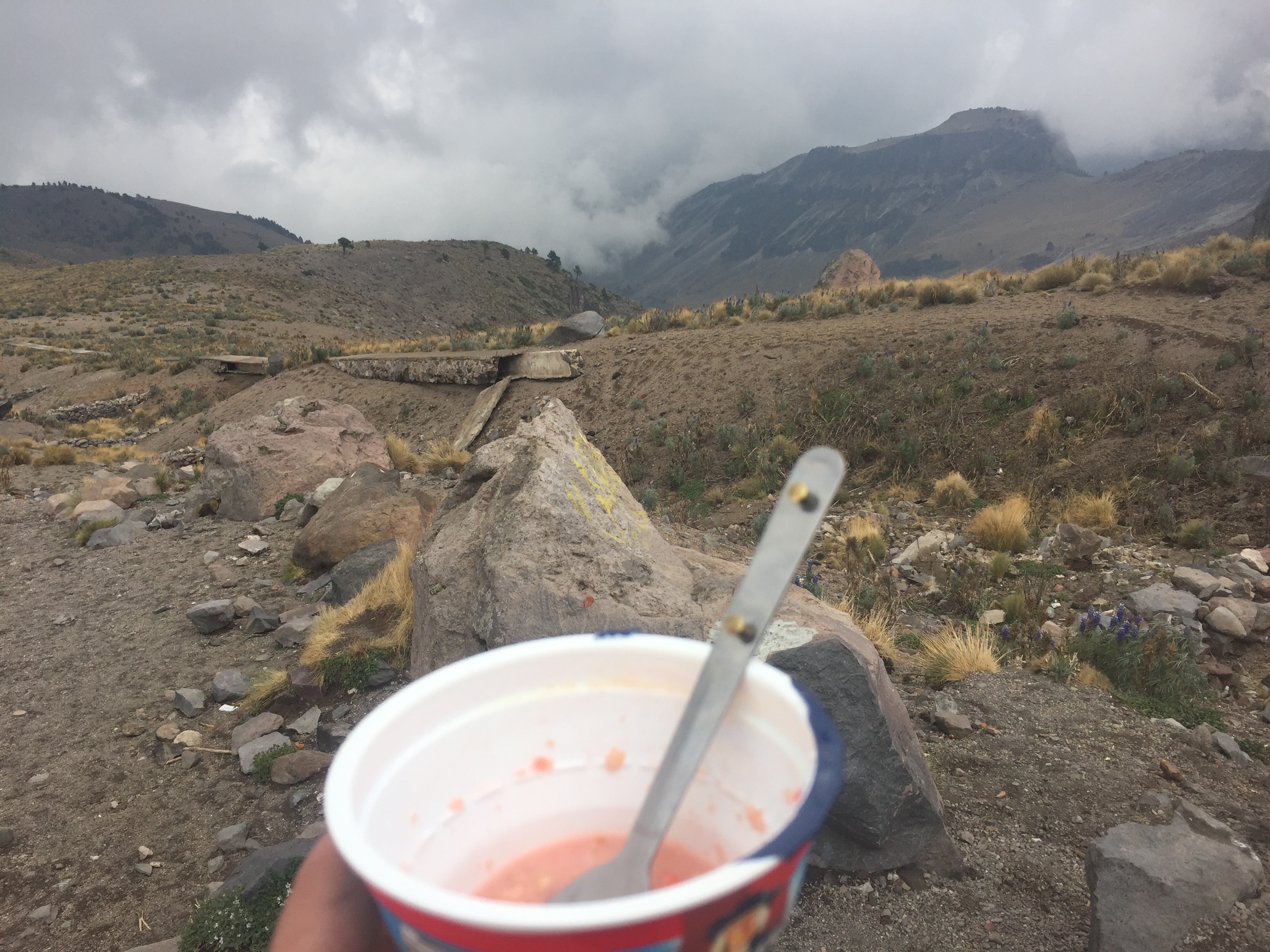
My afternoon snack, alone at the hut 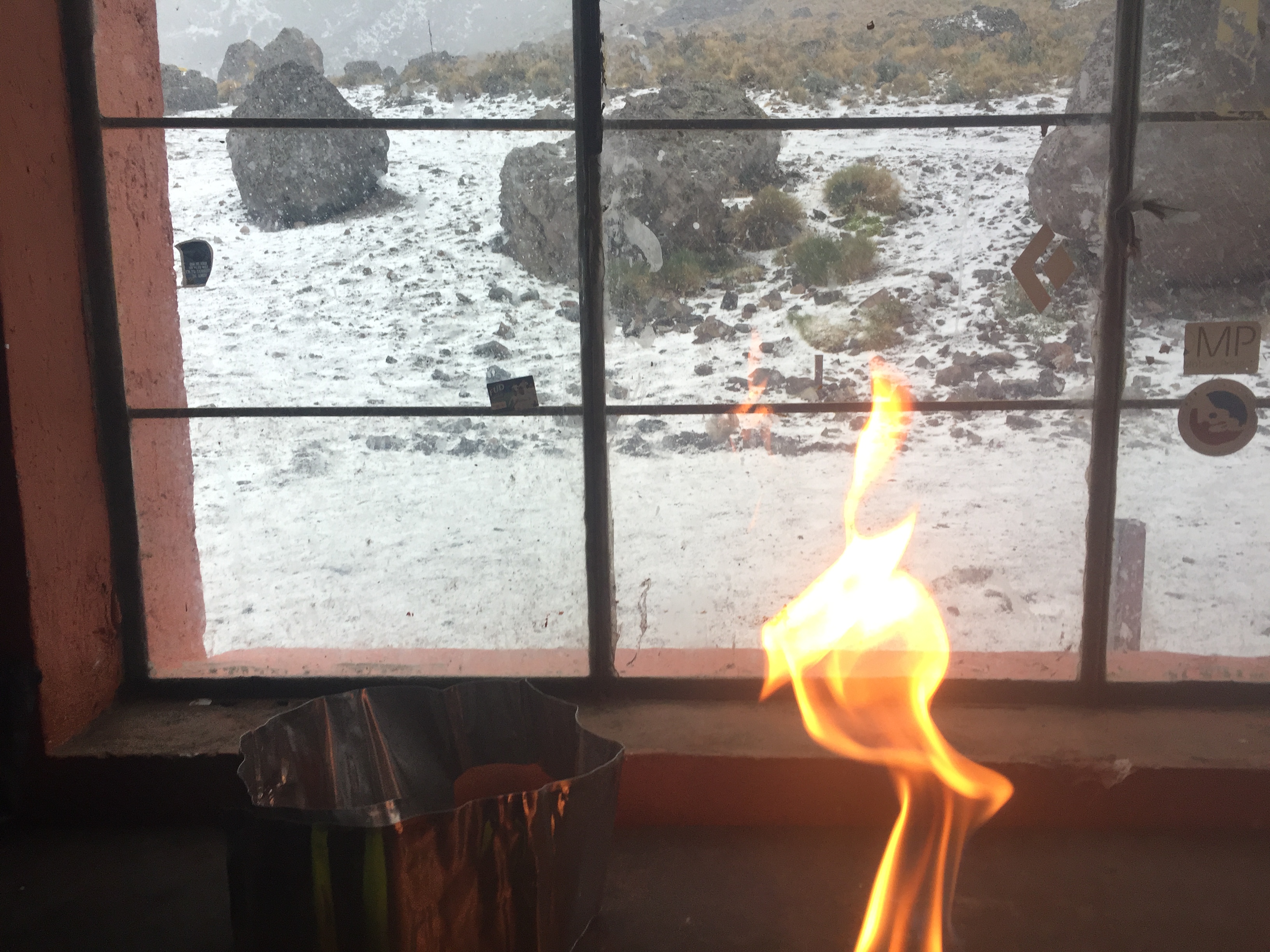
Cooking with snow outside 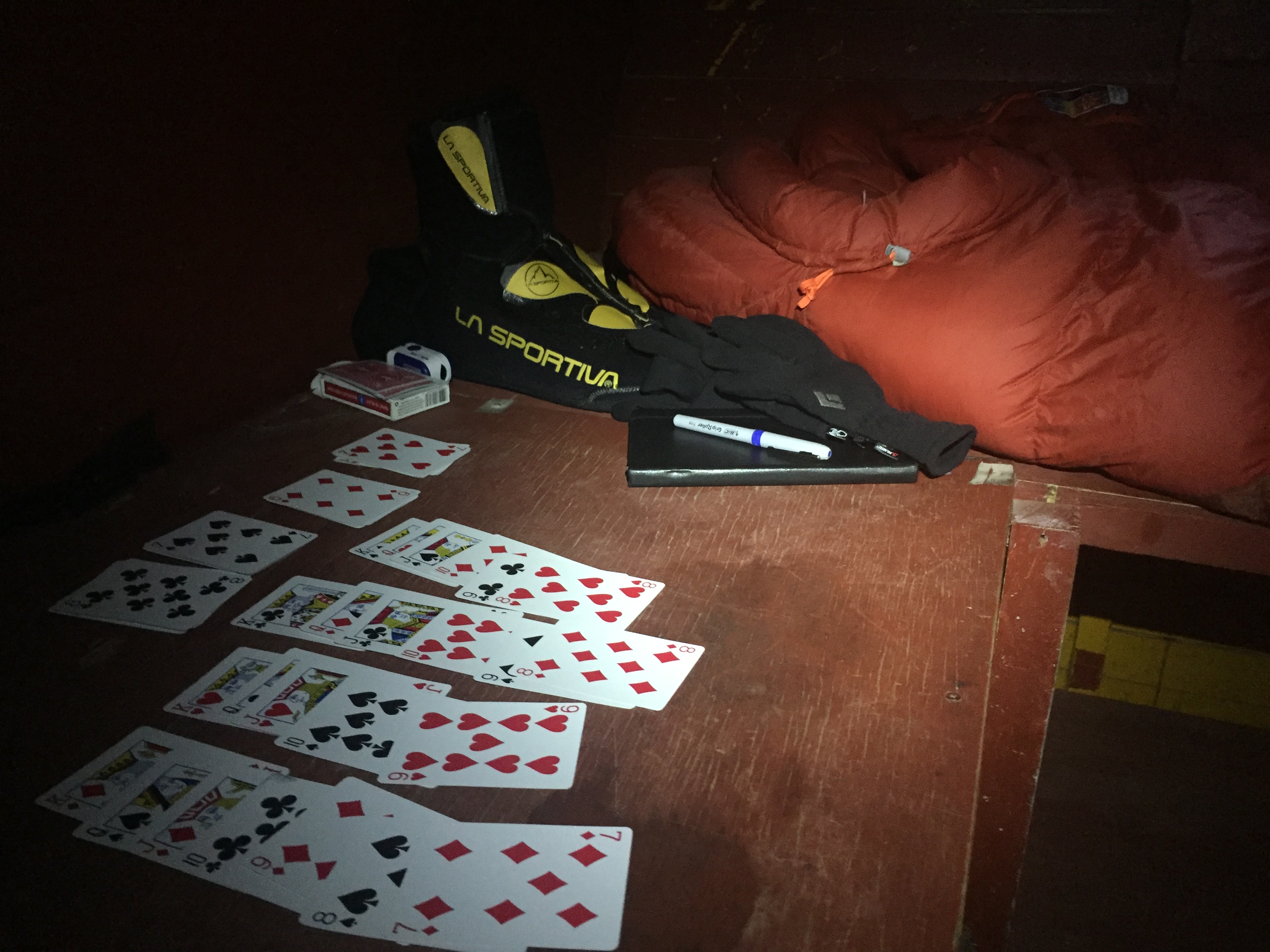
Solitare game #1,285 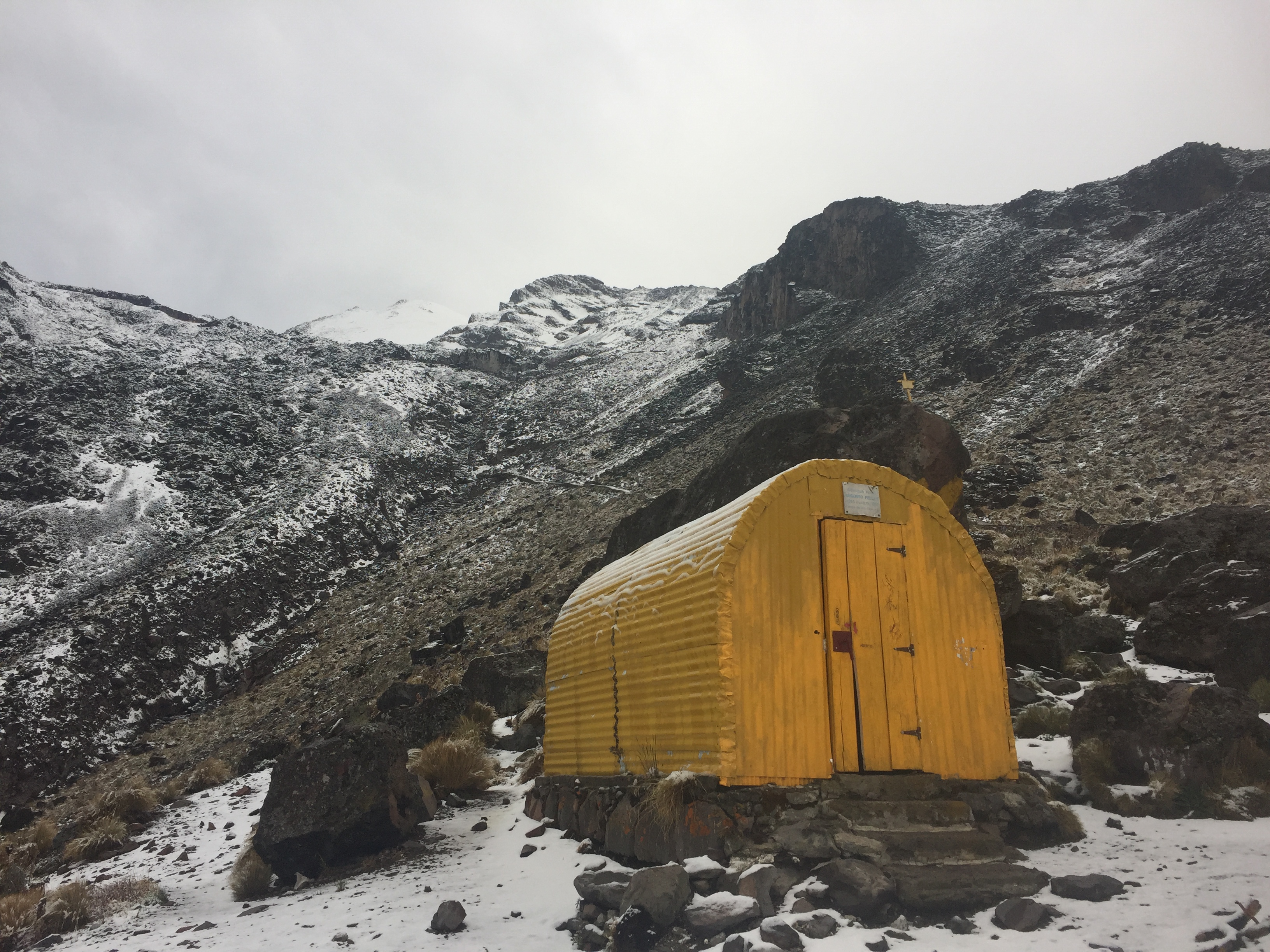
The 1957 hut, my home for two nights 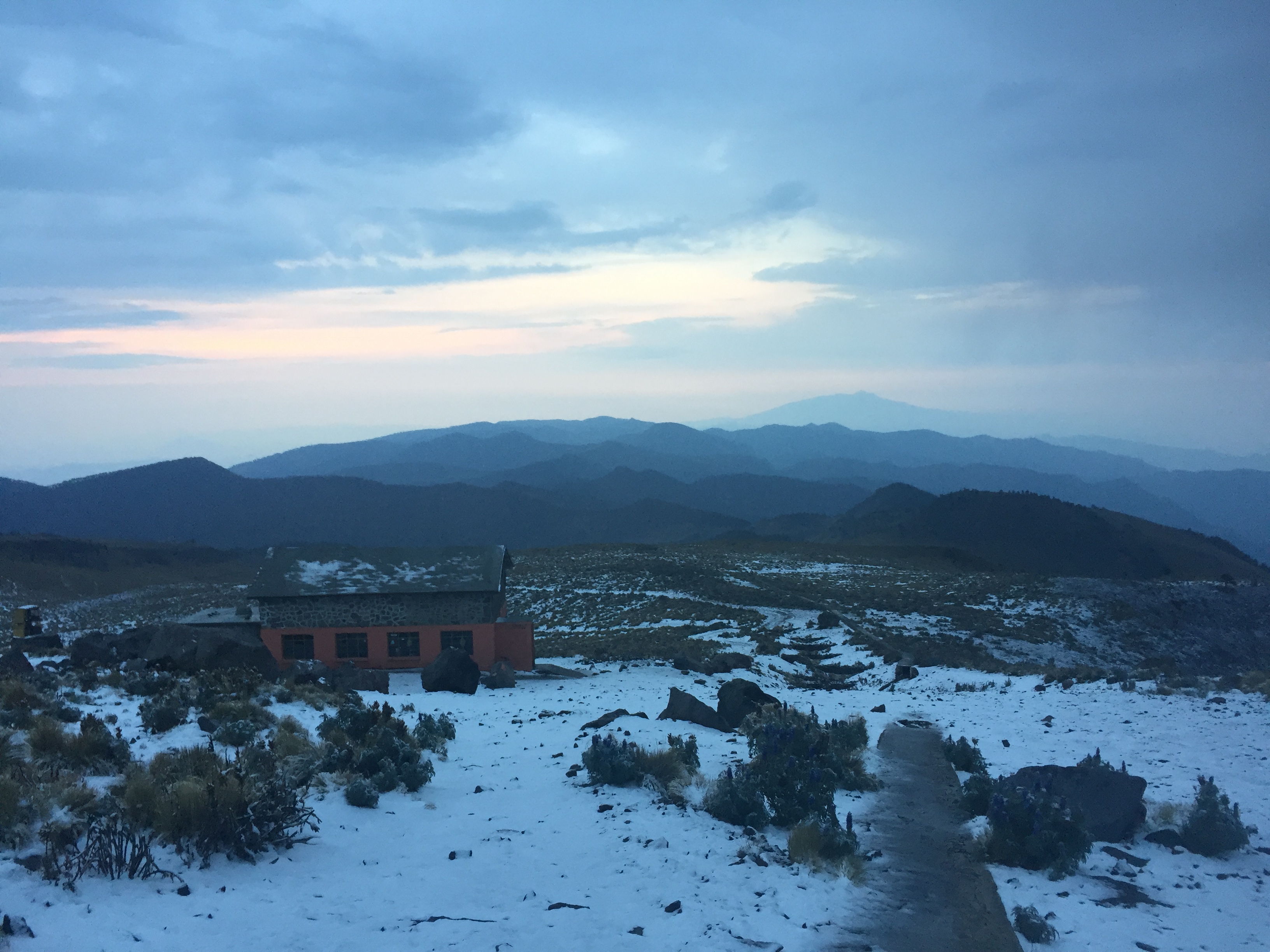
The new hut blanketed with snow
I slept well my first night on the mountain. Señor Reyes told me that when his father constructed this hut in 1957, the glacier was an hour’s climb away. I woke up around dawn and climbed two and a half hours to 4,800 meters (15,748 ft.). The glacier was nowhere to be seen. Such are the dramatic effects of global warming over the past decades.
My acclimatization hike accomplished, I descended to the hut to play a few thousand more games of solitaire. Acclimatization is the boring, unglamorous component of mountaineering. Mexican climbers arrived later in the afternoon, but all occupied the big 1980s stone hut, leaving me the sole occupant of the tiny wooden one. I appreciated the peace and quiet while trying to sleep that night.
My alarm went off at midnight. I dressed, taped up my feet in a useless attempt to prevent blisters, and pulled on my boots. I left the hut to find that most of the climbers had already started moving at midnight and I was one of the last to leave. At 12:40am I began the 1,400 meters of climb to the summit. The first 300 meters would take me just over an hour. The last 300 meters would take three hours. While climbing the glacier at sunrise, I saw Orizaba’s shadow that stretched nearly a hundred miles, and at 7am I stood on top at 5,636 meters (18,491 ft.) in the howling wind and frigid cold.
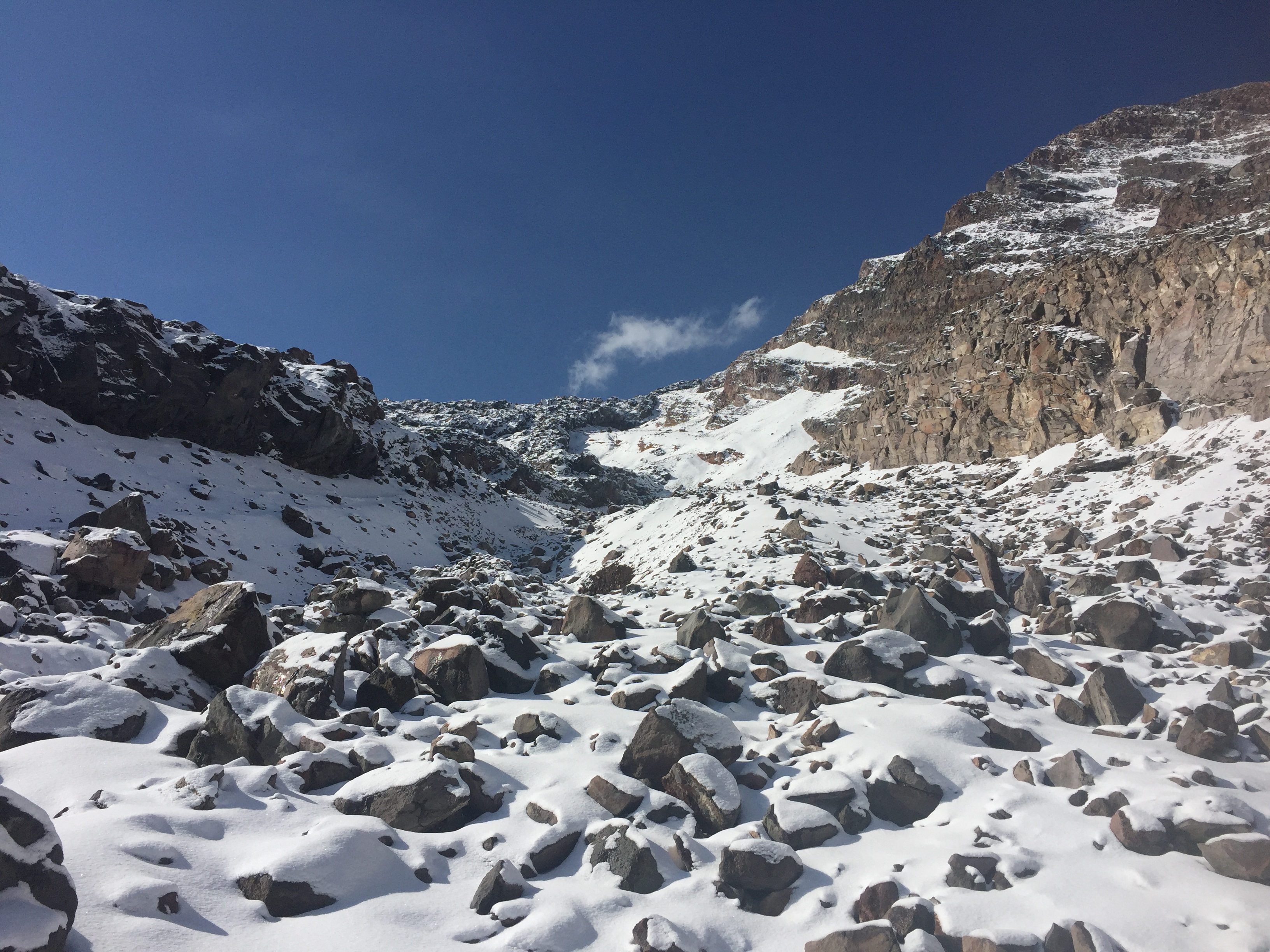
The boulder field known as “The Labyrinth” 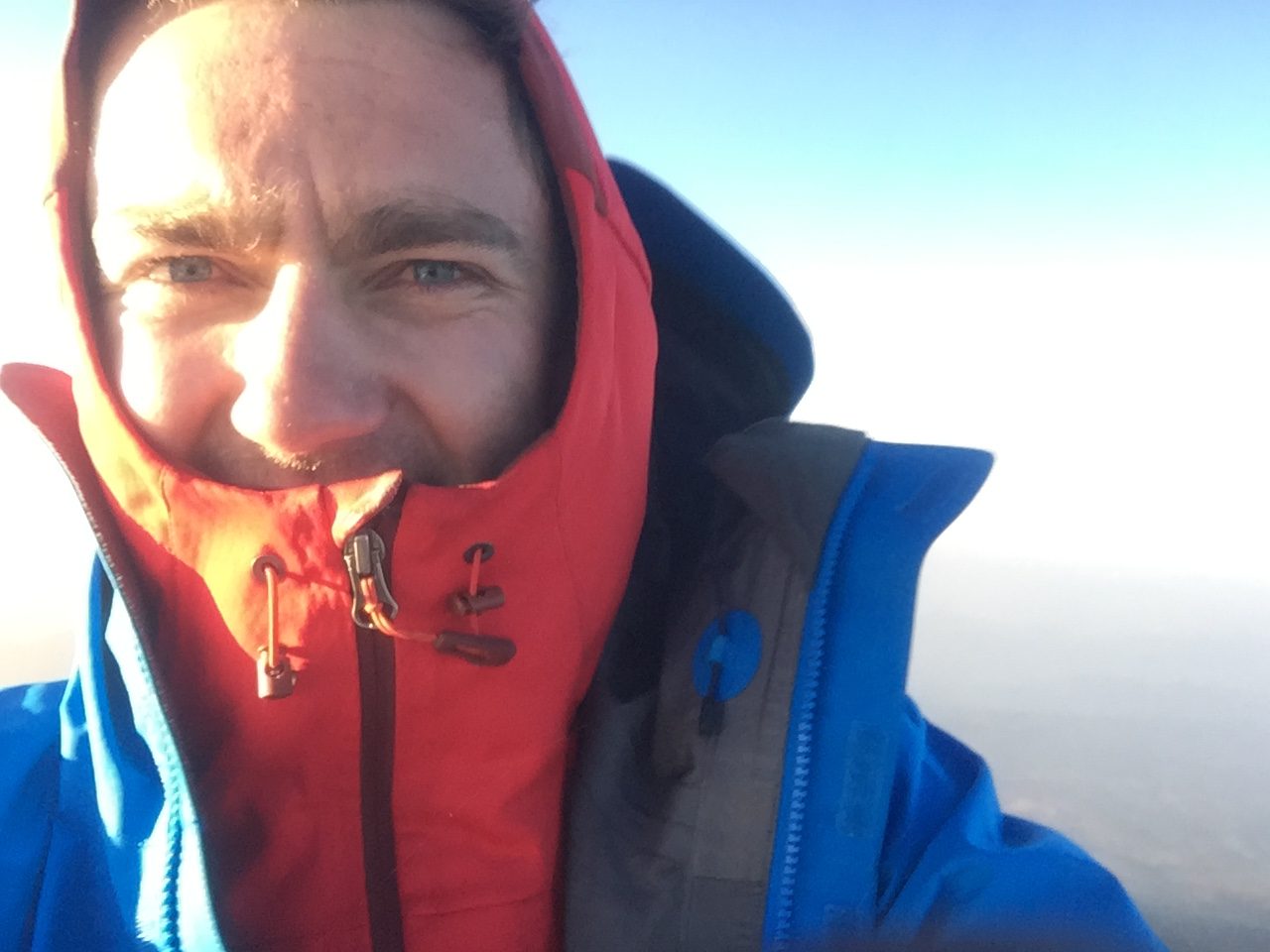
My summit selfie 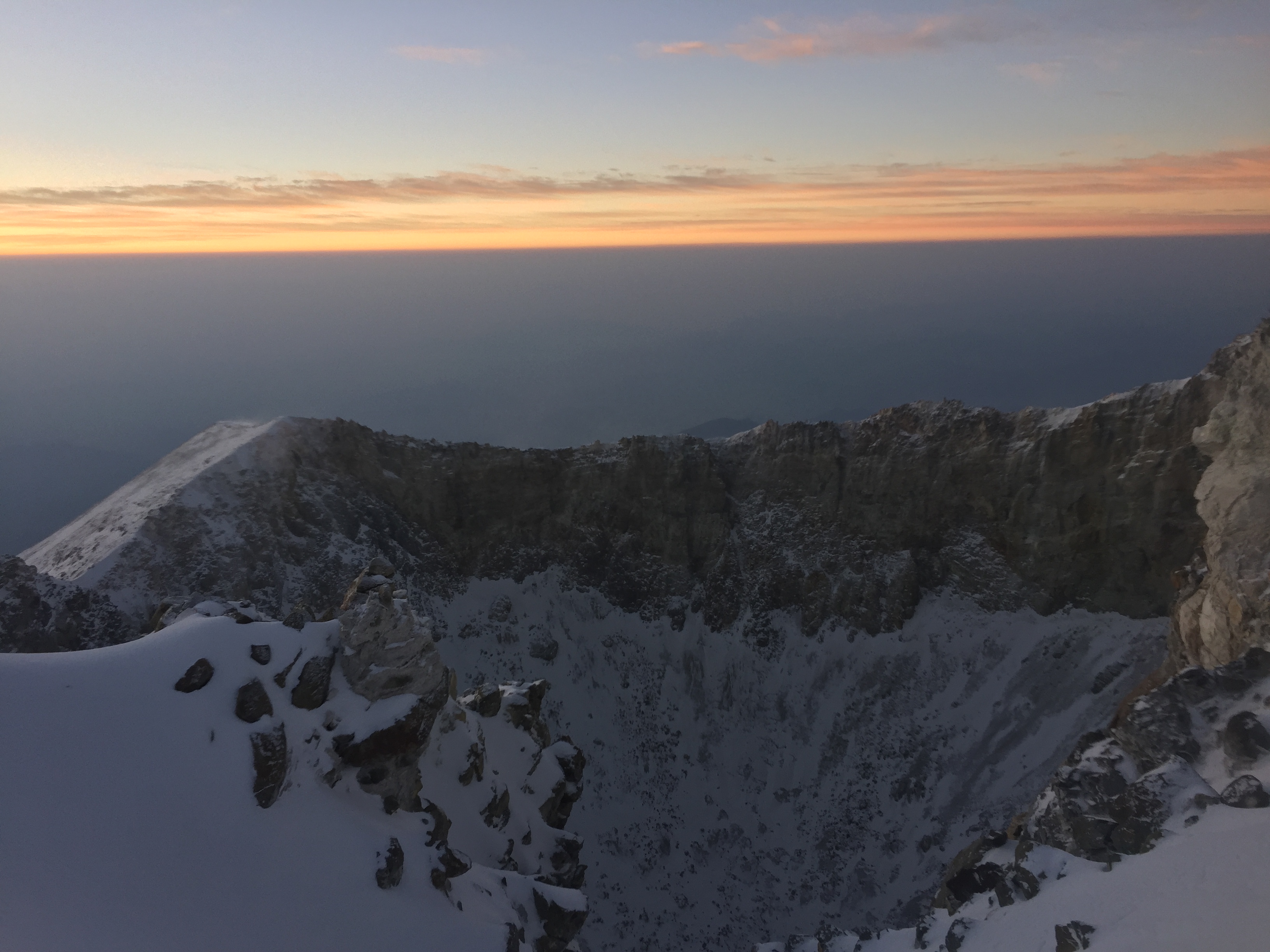
Orizaba’s caldera. Summit is out of frame to the right.
I ascended and descended faster than expected, and had time to take a nap back at the hut while waiting for the 4×4 to take me back down. But the driver also arrived early, and I was roused from sleep to pack my gear and get off the mountain. I had a late lunch with Señor Reyes back in Tlachichuca, and caught a bus to Puebla and another to Mexico City.
I spent the week in Mexico City enjoying delicious street food, paying for it with a few pesos and a few rounds of the runs. Work kept me busy during the day. Two friends, Caroline and Brendan, arrived on Tuesday, and at the end of the week we went on a climbing trip to Iztaccihuatl, Mexico’s third-highest peak. We spent Friday night at the Altzomoni hut, a comfortable building with a fireplace next to a radio transmitter. The next morning we locked up the rental car and started climbing at 8am.
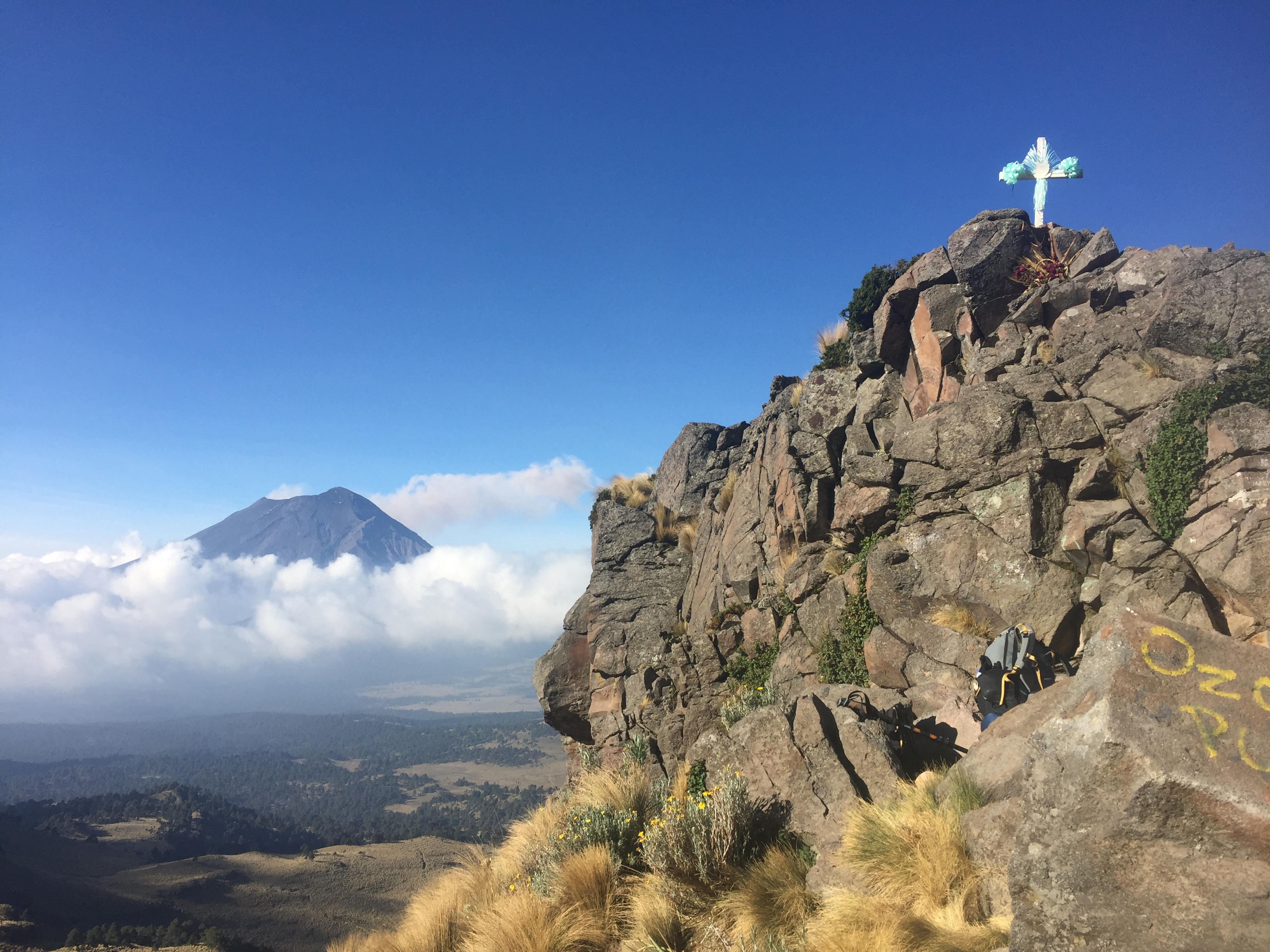
After a tiring climb with all our equipment, we reached the Grupo de los Cien Hut around 11:30am. After some food and rest, we decided to try for the summit instead of waiting for the morning. Around 12:30, we started moving again with lighter packs. For Caroline and Brendan, every step was the highest altitude they’d ever reached. We reached “Las Rodillas” at 5,100 meters (16,732 feet), but Caroline and Brendan turned around at the Ayoloco Glacier. I continued alone, tagging the south and west summits before turning around myself. The north summit lay out of reach across another glacier. I descended back to the hut in two hours and we rolled out our sleeping bags for the night, exhausted.
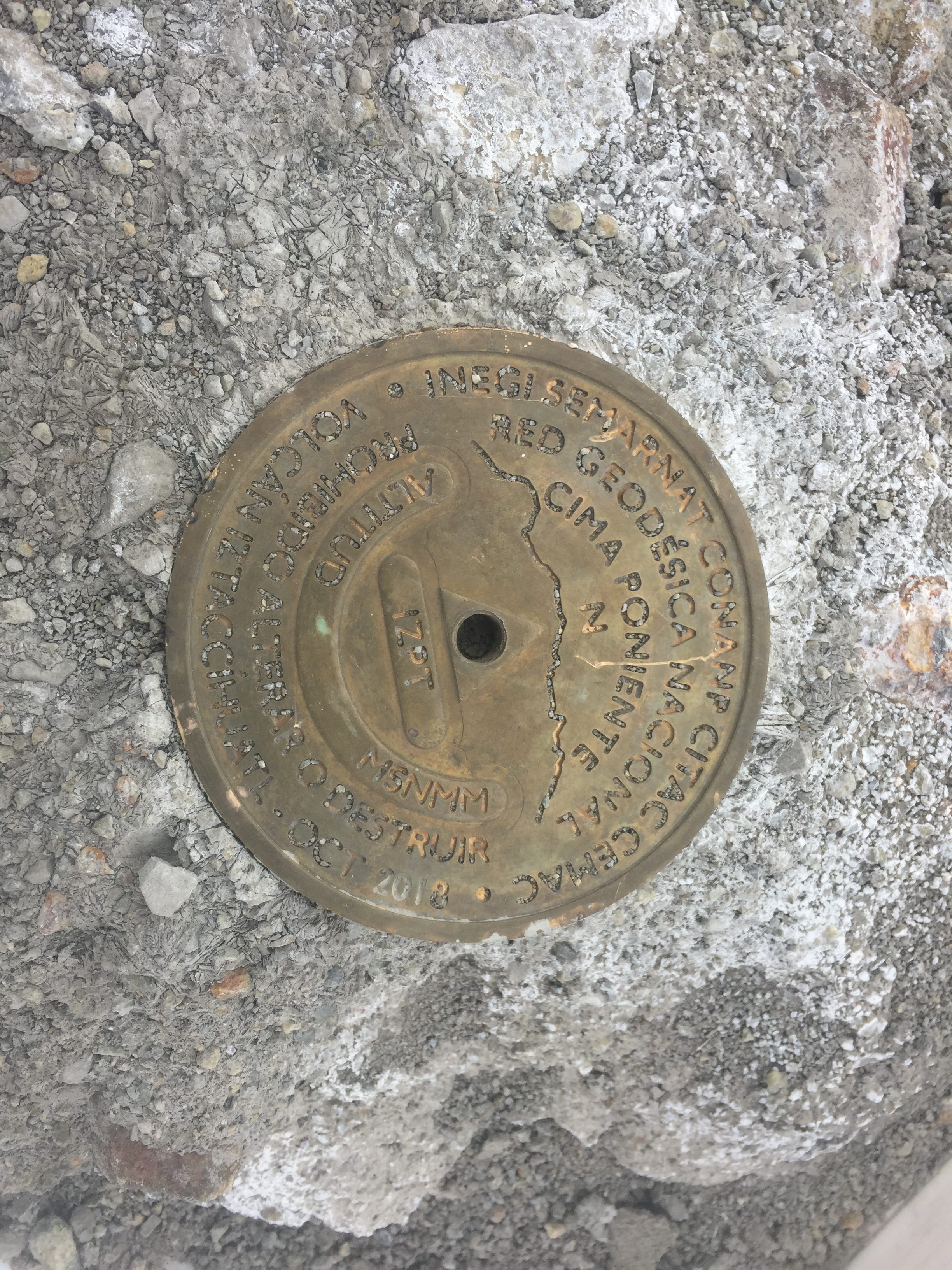
West summit marker 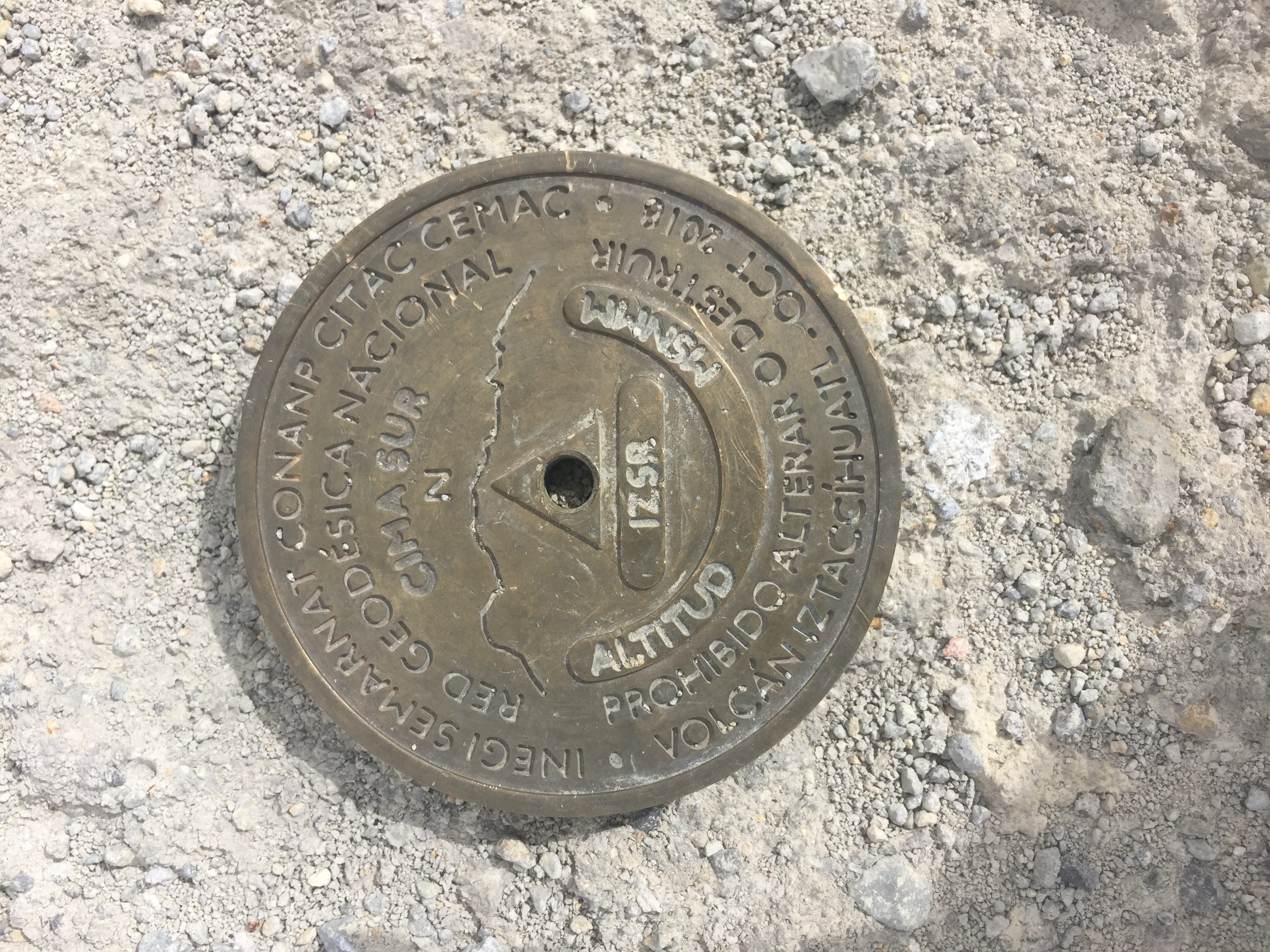
South summit marker 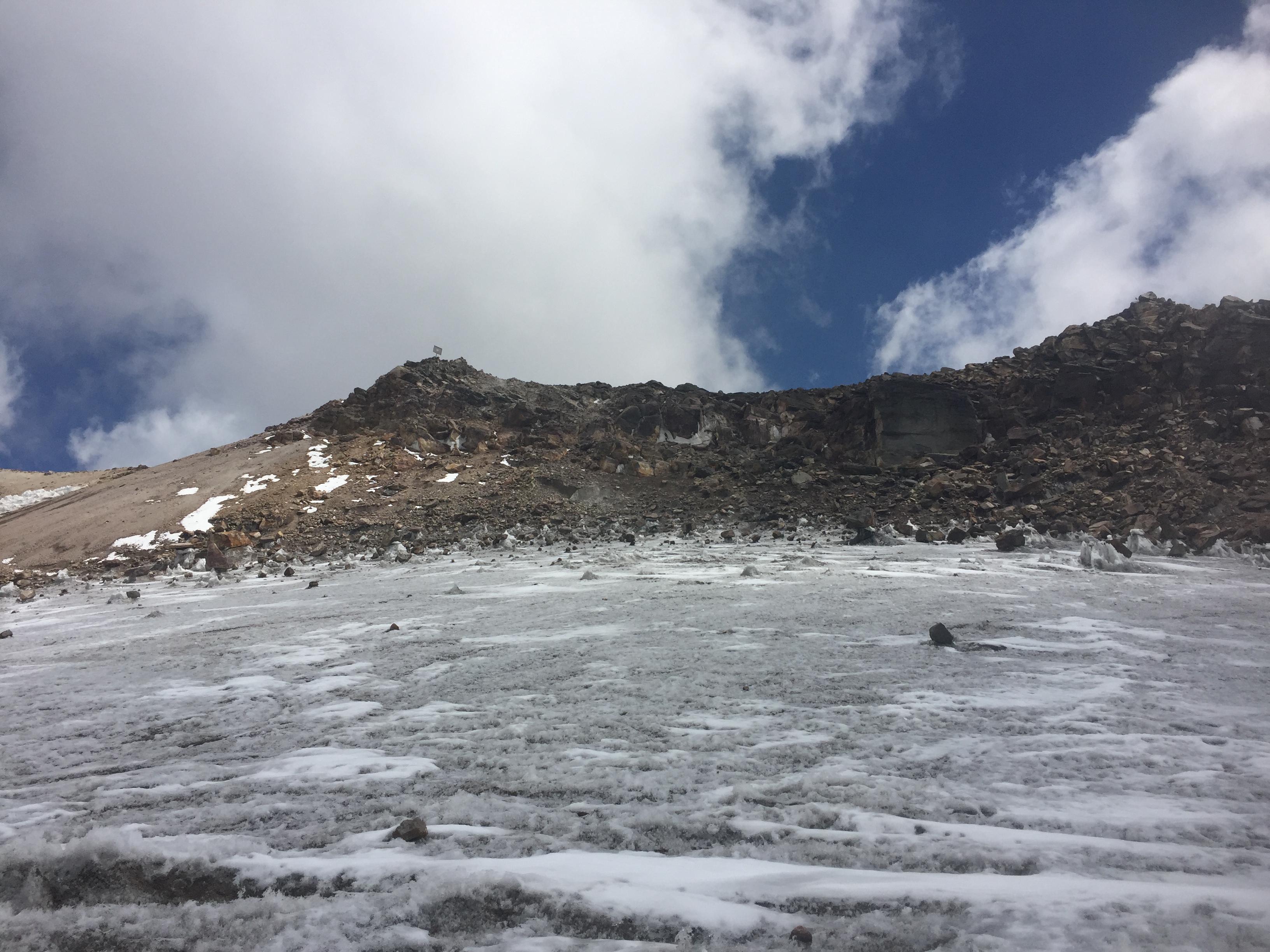
The Ayoloco Glacier, looking south
The night in the hut was mostly sleepless. Other climbers came and went, talking loudly, and rats climbed across our sleeping bags. We eventually got some rest, but were ready to be off the mountain the next morning. Back at the rental car, we cracked open a gigantic bottle of beer, but were unable to drink more than a few sips. No one felt hungry then, but altitude suppresses appetite. By the time we had driven off the mountain, we felt ravenously hungry. McDonald’s tasted delicious.
On Monday I mostly worked on some writing projects and tried to recover from the weekend’s exertion. In the evening, we visited Licorería Limantour, consistently rated one of the 50 best bars in the world. The cocktails were delicious, and a great bookend to my trip to Mexico before my flight home in the early hours of the next morning.