 0
0
 0
0
This is the first installment of three covering my adventures in Peru and Bolivia. You might also be interested in mountaineering in Bolivia and my subsequent Adventures in Potosi and Uyuni.
My prior climbing trips to Russia and Mexico focused on volcanoes, whose relatively gentle slopes make for straightforward mountaineering. In search of a challenge in the greater ranges, I settled on Bolivia, where there were several peaks with a slightly higher level of technical challenge than I had experienced before. Huayna Potosi, near La Paz, is the most frequently climbed peak in Bolivia and seemed like an ideal place to spend a weekend climbing after working on the weekdays.
On my way to La Paz, I stopped in Lima, Peru for most of a cloudy Wednesday. After an all-night flight, I sleepily stepped down from a taxi at the Plaza de Armas, Lima’s main square, to start a whirlwind tour of the city’s cultural attractions.

Late in the evening of 28 October 1746, a massive earthquake leveled Lima, and the subsequent tsunami inundated the nearby port city of Callao. This destroyed all of the city’s original colonial architecture, and what stands today was reconstructed during the subsequent decades, including the Cathedral.
In this era, every Catholic priest was required to say mass every day, often for just himself, and the cathedral contains over a dozen side chapels to facilitate this. In the first one lie the remains of Conquistador Francisco Pizarro, who conquered the Inca Empire and was assassinated during a rebellion in 1541. His remains were discovered by a work crew in 1977 and reinterred in this chapel.

A few blocks from the cathedral stands the Lima Mint, which produced coinage from 1565 through the 20th century. It has since been turned into a museum to Peru’s monetary history. Not all the coins are real, but it does illustrate the evolution of Peruvian coinage through the centuries.
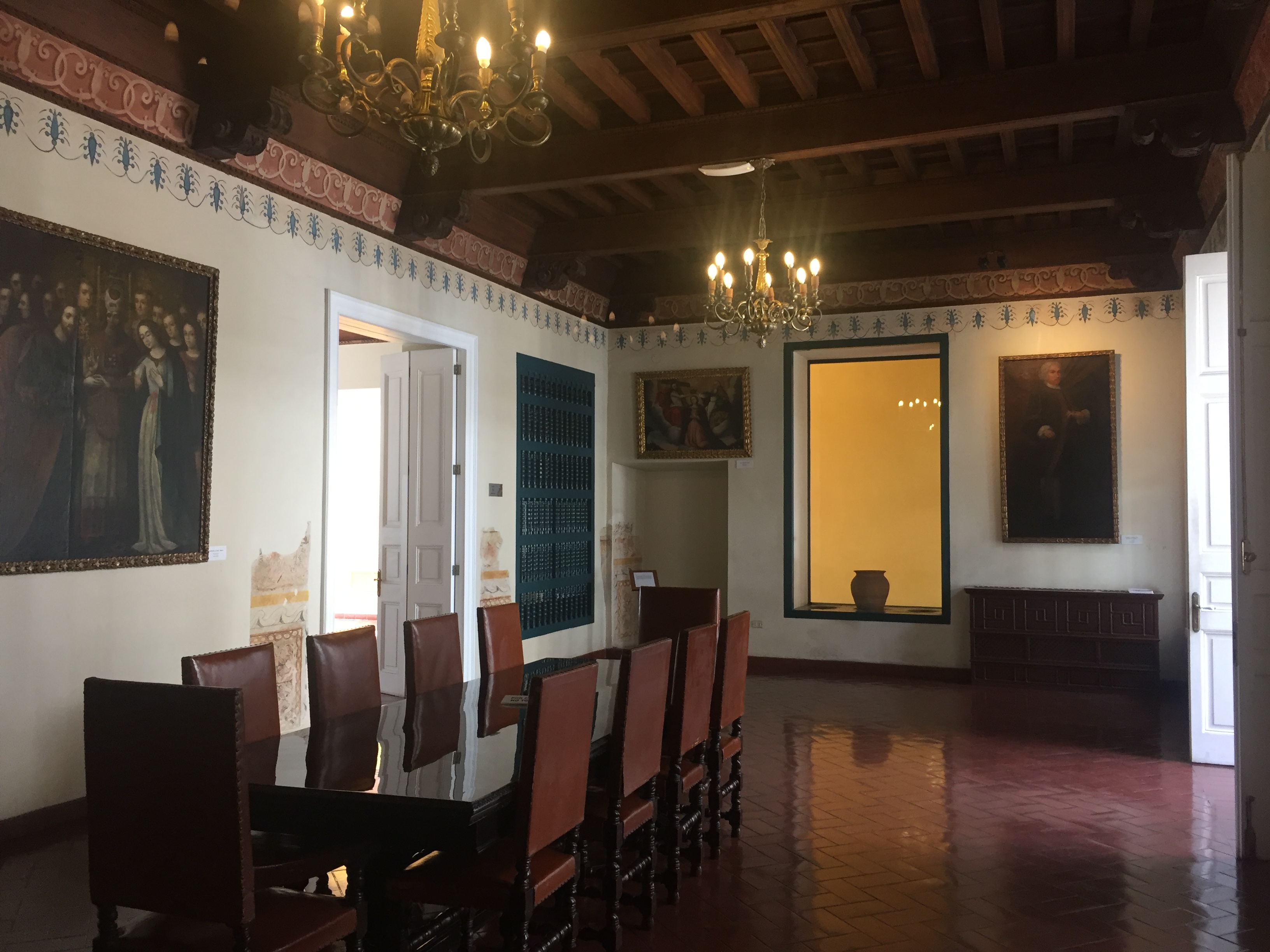
At the suggestion of one of my college professors, I visited the Basilica and Convent of San Francisco, home of the Franciscan order. Though there are only a dozen friars today, this was formerly home to over a hundred priests. Its library and archive are one of the best sources of information on colonial Peru, and its eerie catacombs contain macabre piles of skulls and femurs. I obeyed the unfortunate prohibition on photography while inside.
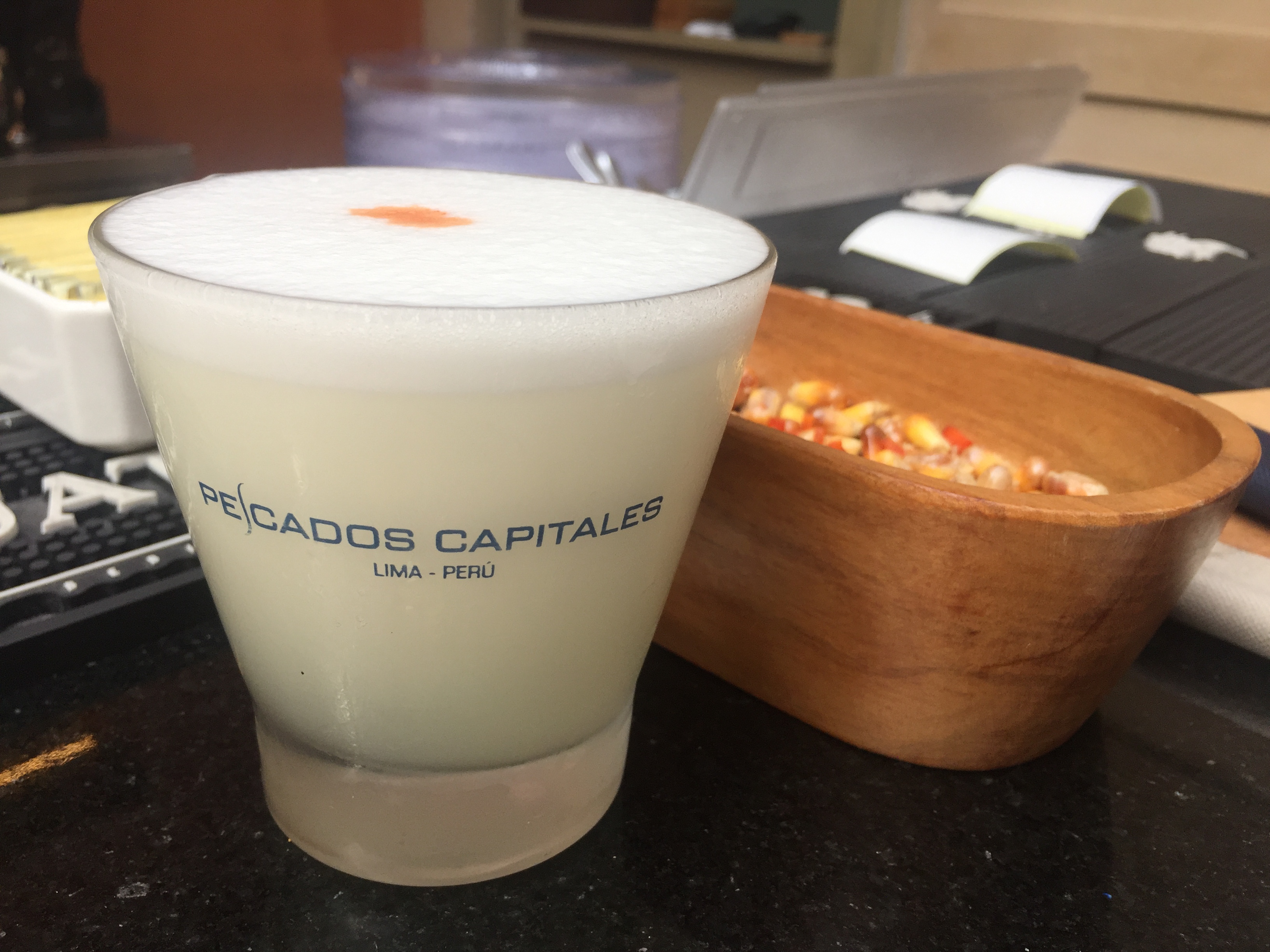
My former professor’s best recommendation was undoubtedly Pescados Capitales, an upscale fish restaurant in the Miraflores district. Its name is a pun on the Spanish word for mortal sins – pecados capitales – and each of the house specialties is named after one of the seven sins that will send you straight to hell. I started with an excellent ceviche and then chose Avaricia – greed – which was octopus and fish in a Chinese sauce served over rice. I washed it all down with the best pisco sour I’ve ever had.
My final cultural stop in Lima was the Museo Larco, a private museum founded by Rafael Larco Hoyle. Its collection of pre-Columbian artifacts was largely assembled during the extensive excavations of its namesake during the 1930s, with additions from collections he purchased. It is especially notable for its collections of Inca gold and erotic pottery.

After a dinner meeting with a business client, I hopped in an Uber back to the airport for my midnight flight to La Paz, where my dad was waiting to start our adventures in Bolivia.