
 2
2
 0
0
As my American Airlines flight approached Santiago from the north, Cerro Aconcagua dominated the skyline on the left side of the plane. Even from the air, my objective looked imposing. Only in the Himalayas can you find peaks higher than Aconcagua, and it stood almost a thousand meters (3,300 feet) higher than anything I had attempted before. My previous climbs were essentially weekend excursions – this would be my first true expedition.
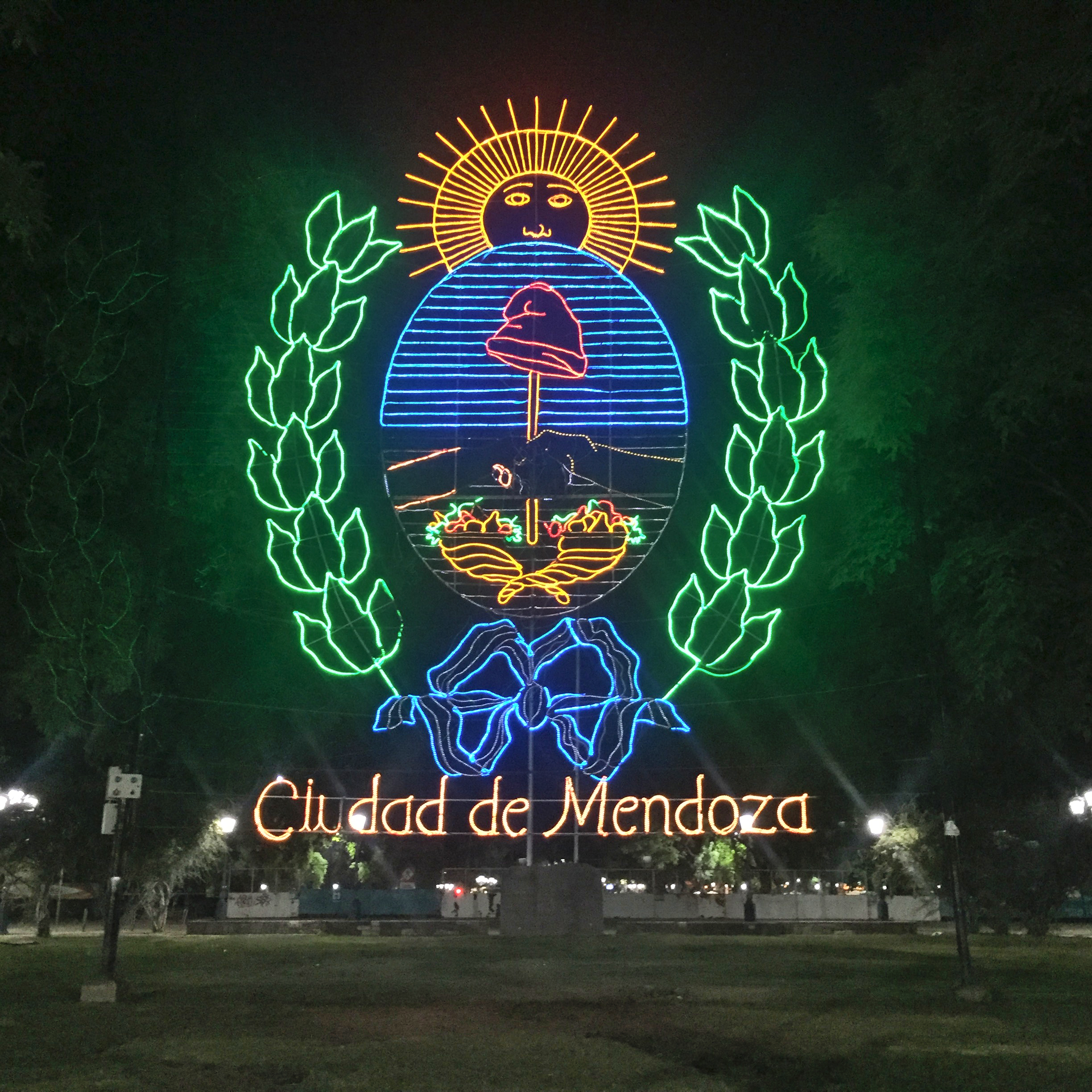
I hit the ground in Santiago and went immediately to the bus station downtown. I picked up a Chilean SIM card for my phone and changed some money before getting on the next bus over the border to Mendoza, Argentina. Ironically, the route over the mountains took my straight past Aconcagua, but it’s only possible to obtain a climbing permit in Mendoza.
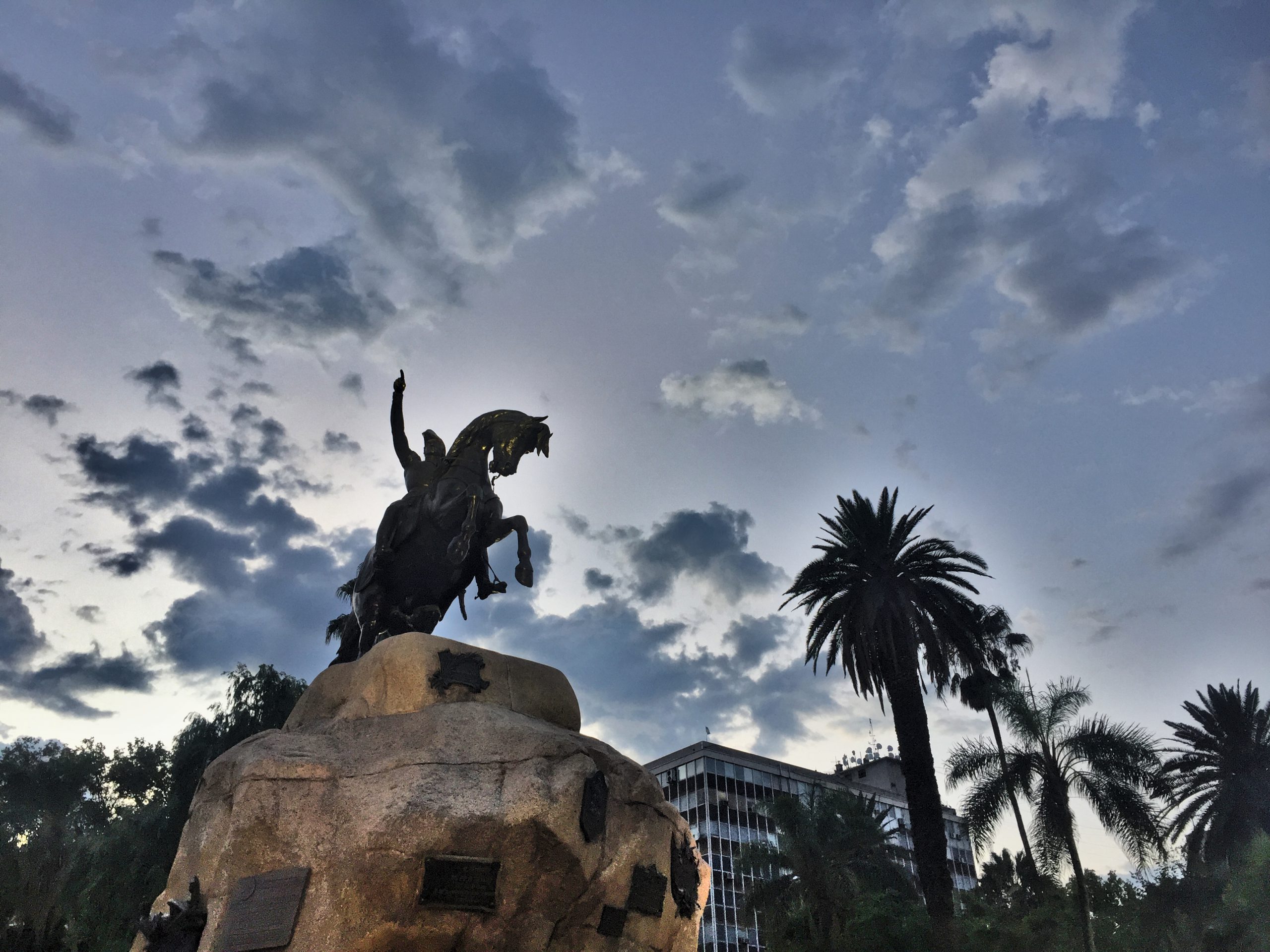
After securing Argentina’s independence from Spain, José de San Martín came to Mendoza and assembled his Army of the Andes to likewise liberate Chile. While the main army took an even more circuitous and difficult route, he ordered his cannons to be hauled over the steep Uspallata Pass that I had just crossed myself. While the gradient on the Argentinian side is relatively sane until the end, the Chilean side of the pass plummets abruptly. I can’t imagine the effort required in the age before the paved road, and was glad to be traveling in an air-conditioned bus.
Mendoza is in the heart of Argentina’s wine country, but I tried to exercise some restraint until the climb was over. After buying food and getting a permit over the weekend, I was off to Los Penitentes, a former ski resort that serves as the jumping off point for expeditions to the mountain.
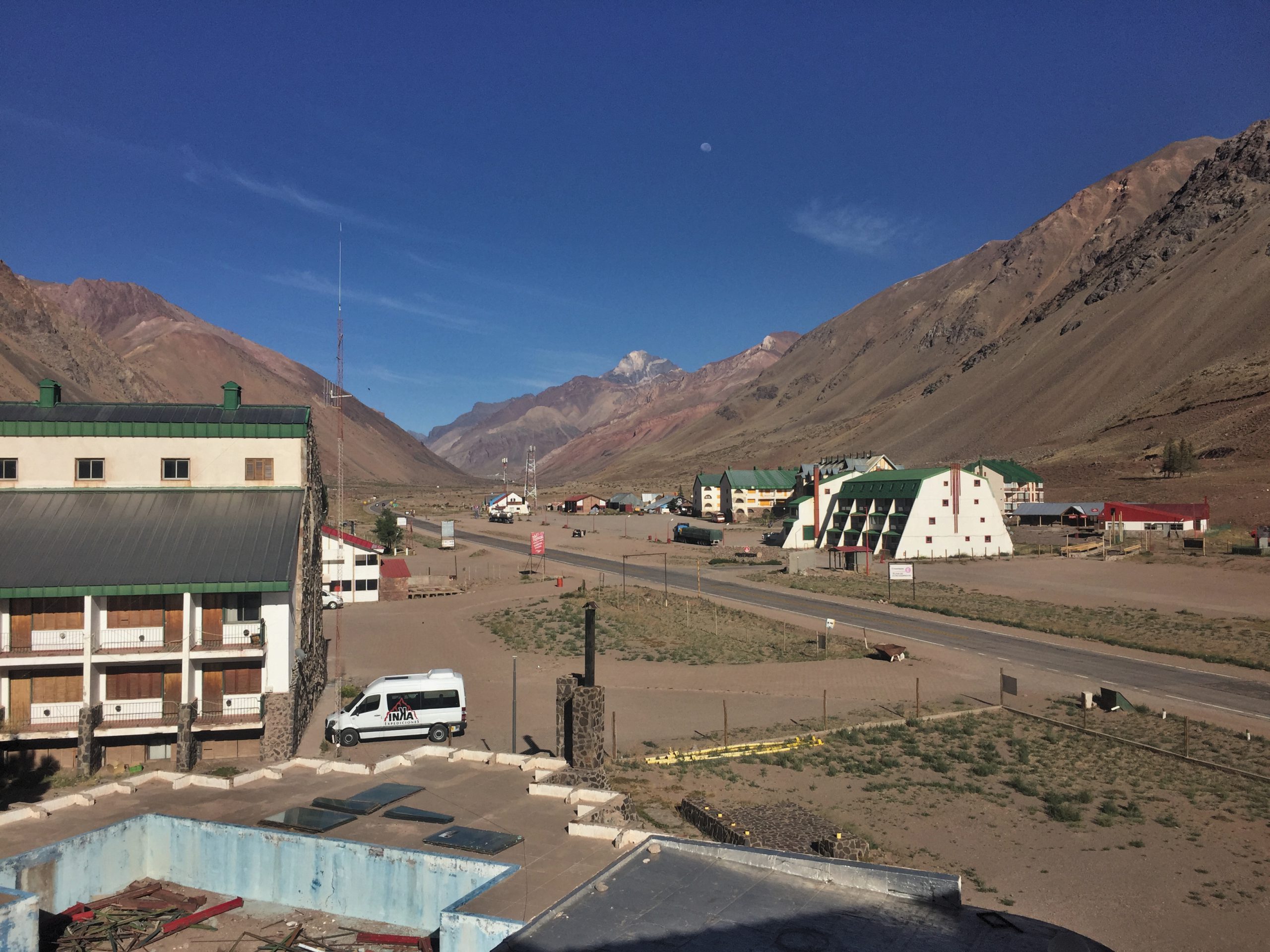
After buying food in Mendoza, my equipment weighed right around 100 lbs. I stashed some of the less necessary items with my expedition logistics company (Inka Expediciones was amazing throughout the trip) and packed the remaining gear so it would be ready for the mules to haul it to base camp. I carried about 30 pounds (14 kg) myself.
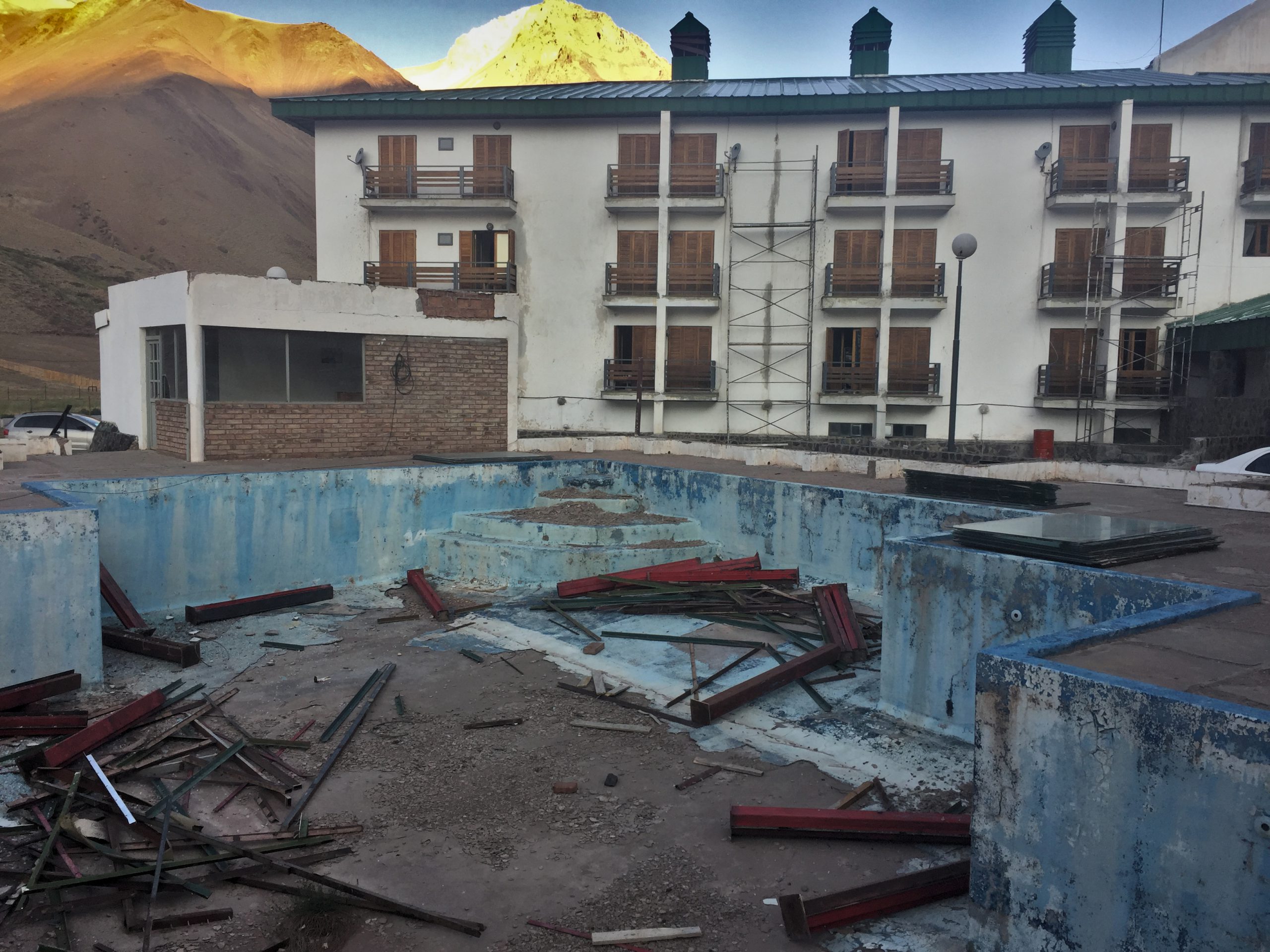
After a comfortable night in the Hotel Ayalen, I took my last shower, put in a few hours of work, and set off for Confluencia, Aconcagua’s approach camp. While I initially shared the trail with lots of day hikers and tourists, I eventually left them behind and reached the camp after about two hours.

By dinner time, I was convinced by other climbers to spend the next day on an acclimatization hike to Plaza Francia, rather than going directly to base camp. Plaza Francia lies up a side valley and has a stunning view of the mountain’s south face. But more importantly, it provides an opportunity to ascend to roughly the same level as base camp while still being able to descend to spend the night – the key to a proper acclimatization routine.

I started the climb to Plaza Francia just before the sun came over the mountains, and don’t have many photos from the early morning. But as I climbed along the edge of the glacier, I caught my first view of Aconcagua’s imposing South Face. Only one or two expeditions a year attempt this imposing face that rises almost 3,000 meters (10,000 feet) to the summit.

Though the hike certainly aided my adjustment to high altitude, it also helped build my confidence. I felt strong after making good time to Plaza Francia and felt ready to tackle the higher camps on the mountain. Early the next morning, I left for basecamp.

The hike from Confluencia to base camp (known as Plaza de Mulas, 4,370 m/14,340 ft) is about 16 km (10 mi) horizontally and about 1,000 meters (3,300 feet) vertically. I shouldered my pack and set off at dawn, spending almost seven hours alone on the hike, except for the occasional mule team passing me in a cloud of dust. The climb to Mulas is a long hike up a valley, followed by a brutally steep uphill section to the finish. Just as your map shows that the camp is around the corner, the trail takes a turn up a steep and rocky slope. It’s the mountain’s first cruel trick.

Though I feared the solitude of the approach hikes would be a permanent theme throughout the trip, I was “adopted” at base camp by an all-female expedition led by Sunny Stroeer of AWExpeditions and Dreamland Safari Tours. In comparison to my solo climbs on Elbrus and Orizaba, it alleviated the boredom to have friends at base camp. Sunny’s expertise and experience on the mountain likely saved me from several missteps along the route the summit.
After a rest day and a few emails to the office from base camp at Mulas, I did the first “carry” to Camp 1 (5,050 m/16,570 ft), known as Canada. I took up about a week’s worth of food, the warm clothes I would need up higher and some water before returning to base camp to stay another night. The next day I carried my remaining gear up, pitched the tent, and relaxed for the rest of the day. Each trip took me 2-2.5 hours from base camp, leaving lots of the day for staring out at the stunning view and reading books on my Kindle.

The walk to Camp 1 doesn’t take especially long, but continuing to ascend the mountain is unwise before adjusting to the altitude. When I tried to carry some more gear up to Camp 2 the next day, I had to turn back with a headache and try again the day after.
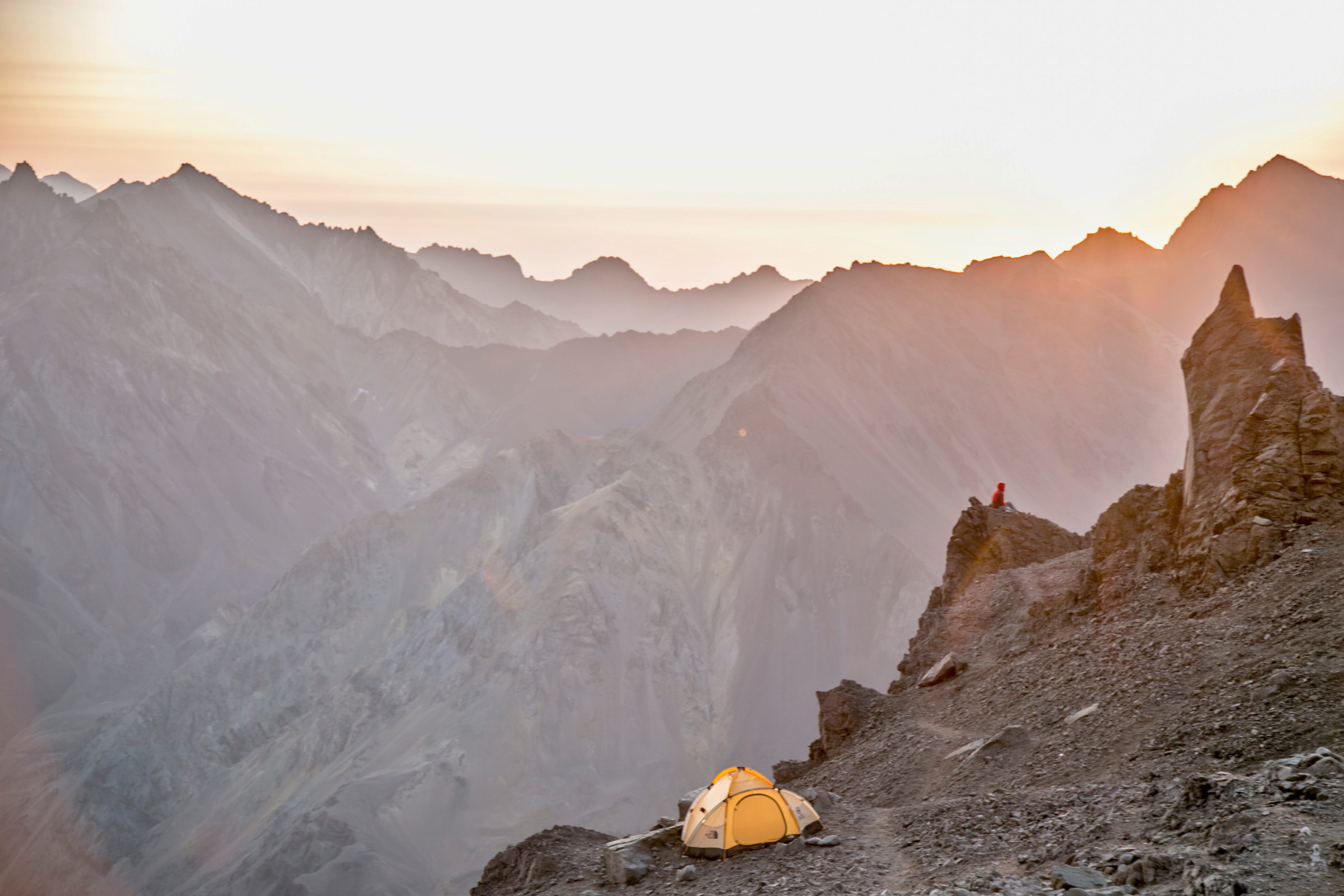
Camp 2 is known as Nido de Condores (5,570 m/18,270 ft), the Condor’s Nest, after its inhabitants that seem to be the only fauna living up here. It’s about a two hour climb from Camp 1, and unlike that camp has a source of (very alkaline and somewhat salty) water nearby.

Immediately after I arrived at Camp 2, I dropped my heavy gear and hiked up to the base of La Travesia, The Traverse, at around 5,915 m (19,406 ft) before coming back down to sleep. After a rest day and a second acclimatization hike, this time to 6,421 m (21,066 ft and the highest altitude I’d ever reached), I felt like I was ready to try for the summit. I had a decision to make here – move to Camp 3 (6,000 m/19,960 ft) and spend a few hours trying to sleep before the final push, or just try for the top from right here at Camp 2.

I had previously thought of Camp 3 (known as Colera) as being a good place to rest just like the others, but I was told that few people get a good night’s rest there due to the altitude. To complicate things further, there was no water this season, meaning I would have to carry extra up from Camp 2. I wasn’t thrilled by the idea of doing another carry day, getting a poor night’s sleep, and then attempting the summit. I felt like I had performed well so far and that I could handle the longer summit day, but I’d never attempted so much elevation gain at so high an altitude. It would be a big test.
I woke up at 3am on my 25th birthday. I put too much water into the freeze dried scrambled eggs I’d been saving myself as a birthday treat, but choked down the soggy mess anyway. By 3:15am I had my boots on and was out alone in the cold. The next two and a half hours as I climbed to Camp 3 were the most isolated and lonely part of the climb. There wasn’t a single other person in sight, and it was all to easy to second-guess myself. Would I have the strength to make it to the top?
Most of the climbers who had spent the night at Camp 3 were already on the move when I passed through just before 6am. I joined the stragglers. Unfortunately the large groups of climbers caused a traffic jam on The Traverse, a diagonal upward-sloping crossing of an exposed rocky slope. that took time to pass. In retrospect, I should have been grateful for the reduced pace. It likely helped me to save my energy for the next section.

At 10:15am I reached La Cueva (The Cave), which is an overhanging rock with enough space for plenty of climbers to rest at 6,650 meters (21,817 ft.) before the final summit push. Every step marked the highest I’d ever been above sea level.
I spent about 45 minutes at La Cueva gathering my strength before forging ahead into the Canaleta, a steep boulder field that marks the toughest part of the climb. Its edge provided a vertiginous view of the south face, plummeting a mile and a half to the glacier below. Progress was slow here. Each step required two or three deep breaths before moving my foot up a little further.

I scrambled over the last ridge and onto the summit plateau right at 1pm on my birthday after 9 hours and 45 minutes of climbing. For a few minutes, I had the top to myself, alone at the highest point in the hemisphere.
The sun and light winds made it easy to stay on top and enjoy the view. In total, I spent about an hour at the summit. I mentioned to a group of Argentinian climbers that it was my birthday, and they sang me Feliz Cumpleaños on top and toasted my success with frigid water and a Clif bar.

But my high-altitude birthday party had to come to an end sometime. I couldn’t stay up here forever, and an altitude-induced headache was starting to set in. Back down I went. And after another short rest at La Cueva, I decided to take the fast route down – a vertical kilometer of loose rock known as scree. By plunging my boots into it to absorb each step, I could descend much faster than walking the long way down. A section of the route that had taken seven hours to climb took less than an hour to descend. I was back at my tent in time for a dinner of freeze-dried chili mac.
I always find the walk home to be the least enjoyable part of the climb. The summit high wears off several hours later, and you realize that there’s a multi-day walk back to civilization. All that gear that you brought up the mountain in two separate trips now has to go back down in one go. And so I slogged back down the mountain. One pack in front, one in back, and a duffle bag stacked atop it all. I think my legs burned even more during the descent back to base camp, where I spent the night and treated myself to a comparatively luxurious dinner that didn’t involve pouring water into a bag. Like any returning climber, I was the camp’s central source for information on weather and conditions higher on the mountain. Water sources, snow cover (or lack thereof), rockslides, and temperature are all prime concerns, and I passed along the same information I had gratefully received from others a week earlier.
Most of the previous day’s heavy burden would go back to the trailhead by mule, but I would have to cover the 15 miles on foot. The downhill grade and light pack made it a relaxed walk, especially after all the week’s hard climbing. I never though such a long hike would feel so easy. The outfitting company gave me a ride back to the hotel, where I started to catch up on email after a week away from the office. I arrived back in Mendoza late that night, exhausted. But I’m pretty sure it was the best birthday I’ve had.



Really well-written and detailed report. Aconcagua is on my bucket list! Distinctly remember seeing the peak while landing in Santiago and when summiting Cerro El Roble in 2014. Hope all is well.
Thanks so much for sharing your adventure! I really enjoyed reading it – and your writing style. Congratulations for completing this exciting climb – especially that you reached your goal on your birthday. So cool!
Cole, it was almost as if Grammy and I were making that climb with you,we even felt tired after reading the adventure. We envy not being young and adventurous like you and what wonderful memories you have created in your short lifetime. We enjoy the blog but even enjoy the stories more getting them from you in person. We look forward to sitting with you and hearing all about it first hand and being able to ask questions.
Grammy and I love you and want you to be careful and stay safe. Like I always say “we want to talk with you, not read about you”. Thanks Grammy and Chuck