Read Time:5 Minute, 41 Second
In April 2018, I visited the island of Hispaniola, which is shared by the Dominican Republic and Haiti. I arrived in Santo Domingo, the capital of the Dominican Republic, and spent a few days exploring the city’s colonial and modern attractions.
Santo Domingo was founded in 1496 by Bartholomew Columbus, Christopher’s far less famous brother. It is home to a number of “firsts” in the Americas – the first city, street, and cathedral in the New World are all found here. Much of the original defensive walls still stand, overlooking the sea and the protected harbor in the mouth of the Ozama River. In the early years of the sixteenth century, this city was home to future conquistadores including Hernando Cortez (conqueror of Mexico), Vasco Núñez de Balboa (first European to sight the Pacific Ocean), and Ponce de León (colonizer of Puerto Rico). The Governor’s Palace still stands near the city’s main square.
 |
| The Governor’s Palace (Alcázar de Colón), illuminated at night |
Santo Domingo also has its share of modern cultural attractions, including the extensive curation of the Modern Art Museum (MAM). Its five floors seemed to get more interesting as you climbed upwards.
 |
| An installation at MAM consisting of a collection of lighted toys |
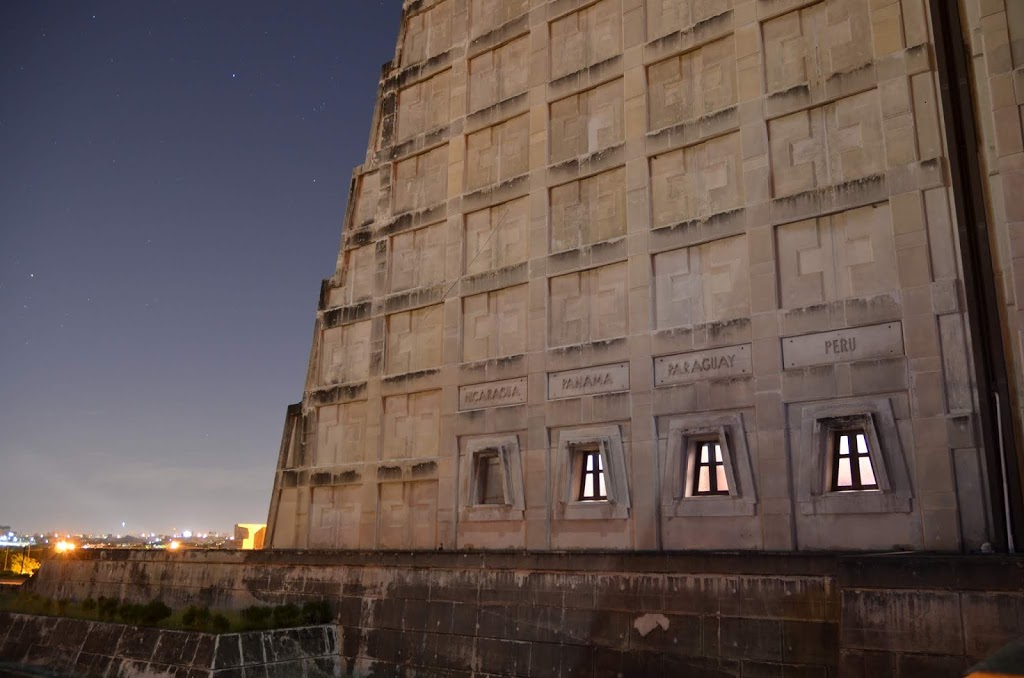
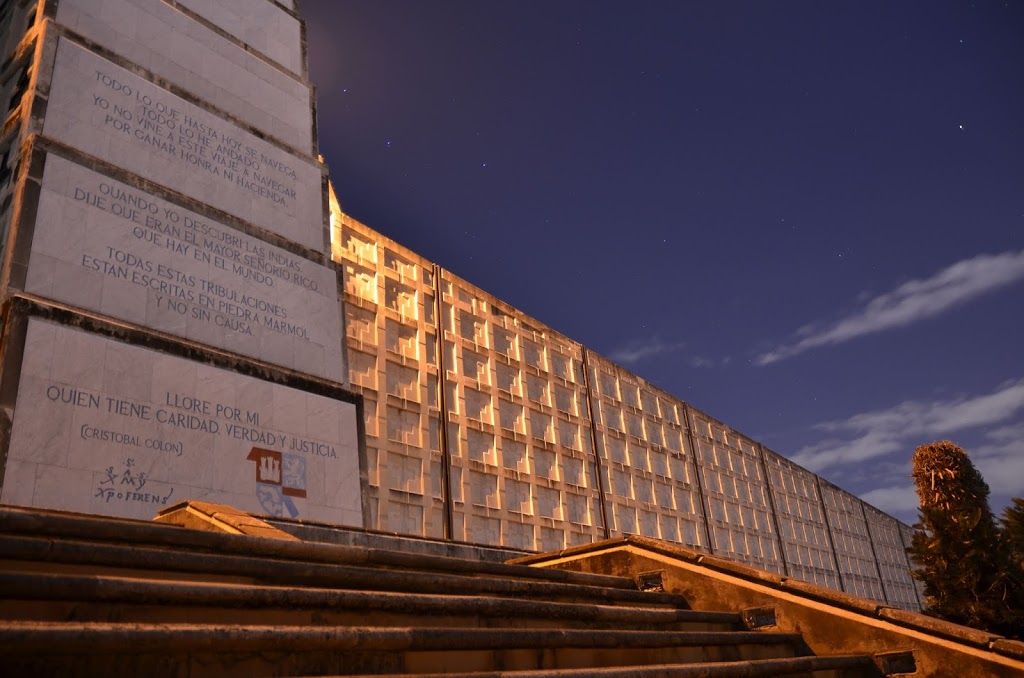
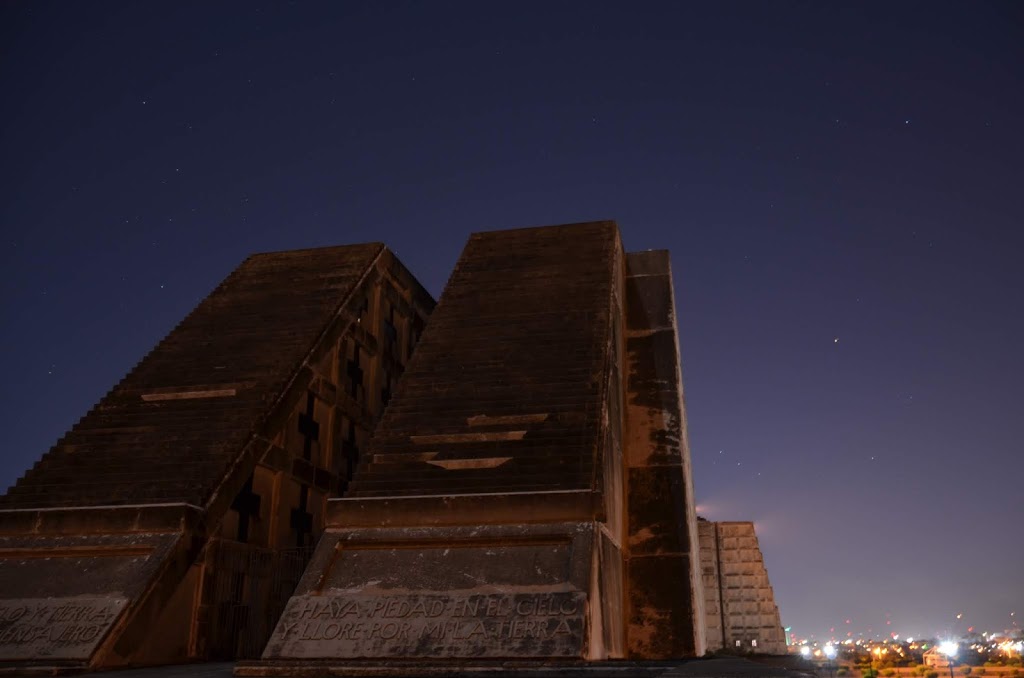
On a hilltop on the eastern bank of the Ozama River stands the Faro a Colón (Columbus Lighthouse). Completed in 1992, just in time for the 500th anniversary of Columbus’ voyage, this concrete colossus is 680 feet long. Though historians generally agree that his remains lie in Seville, the Dominicans claim that the explorer is buried here.
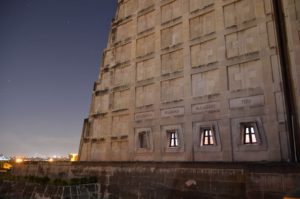 |
| The monument’s construction was funded by donations from every nation in the Americas. The names of each country appear above the monument’s windows. |
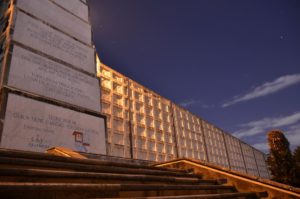 |
| On this night, the monument was only illuminated by moonlight and a few small lamps, but the massive floodlights at its center can be seen from across the sea in Puerto Rico. |
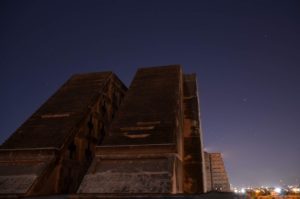 |
| The base of the cross-shaped monument with Santo Domingo’s downtown behind |
After an additional day wandering Santo Domingo’s sleepy streets, it was time for a long bus ride over the border to Haiti. After an early morning start, the bus crossed the entirety of the island to Cap-Haïtien, the second-largest city in Haiti after its capital, Port-au-Prince.
While the eastern side of the island was controlled by Spain during the colonial period, it was the French who occupied the western coast. By the middle of the eighteenth century, sugar production had made Haiti into France’s most profitable colony. Between 1791 and 1804, slaves from the colony’s sugar plantation fought a bloody rebellion against their former masters. Aided by French distractions in Europe (the Napoleonic Wars) and occasional assistance from the British, the former slaves established a republic in 1804 and promptly massacred the remaining French population.
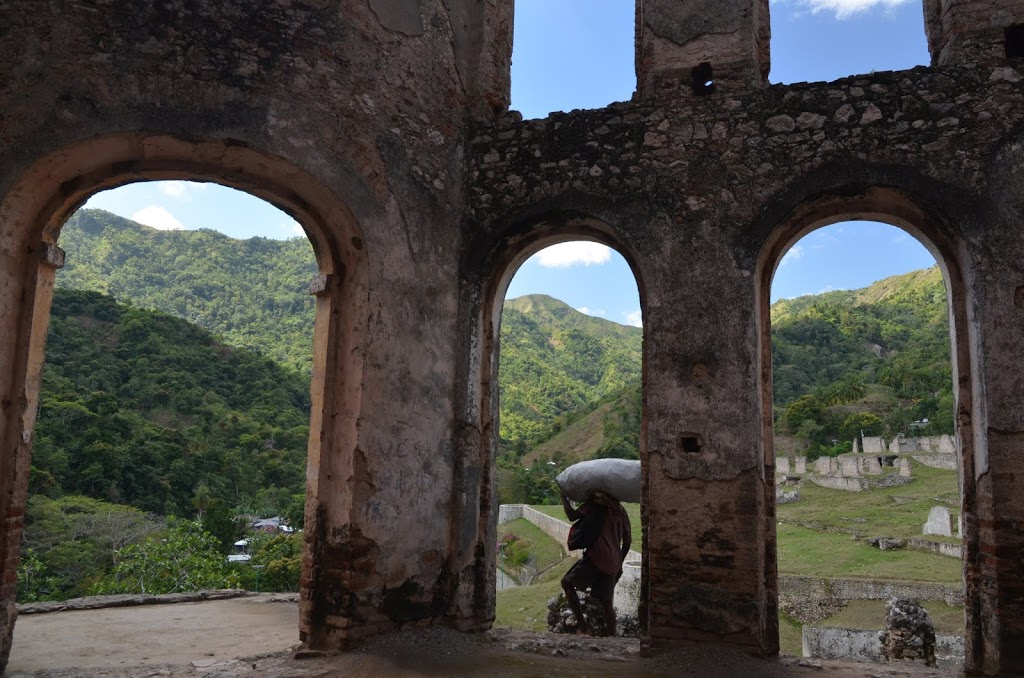
The new republic quickly fell to infighting among former commanders and eventually separated into two monarchies with their capitals at Port-au-Prince in the southeast and Cap-Haïtien on the northern coast. Emperor Henri I of North Haiti constructed a massive mountaintop fortress and palace at Milot, just outside of Cap-Haïtien, to cement his authority.
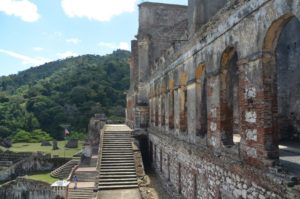 |
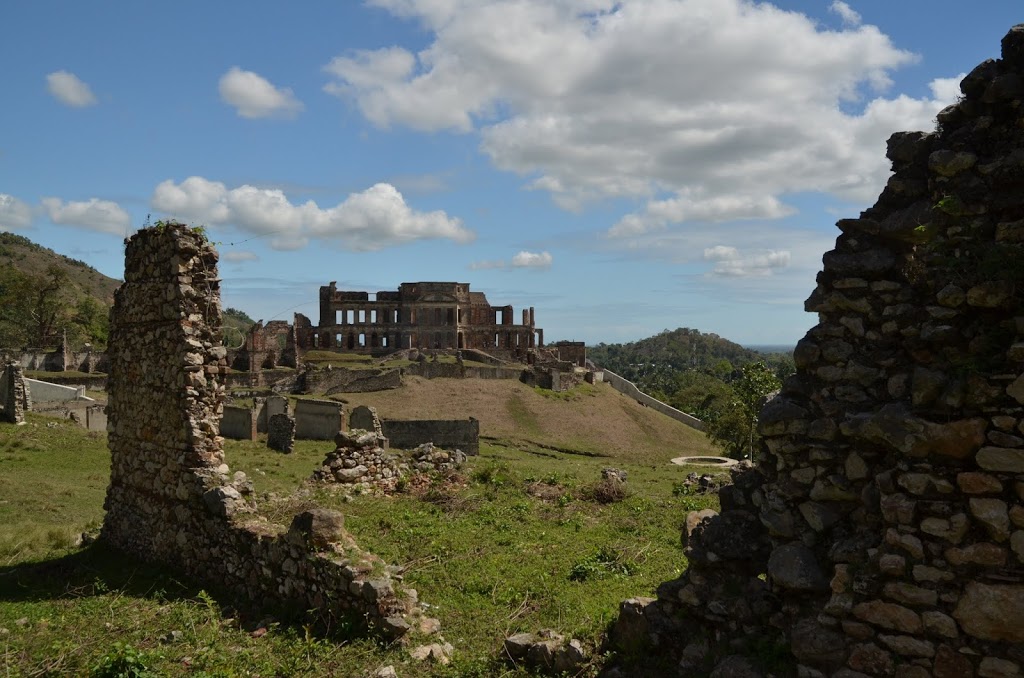
| View of the impressive Sans-Souci Palace |
Sans Souci Palace lies in ruins today, but it’s easy to imagine the grandeur of this place in its nineteenth century heyday. It has a view of the sugar plantations and the sea beyond, and its elaborate façade and fountains evoke the royal palaces of Europe.
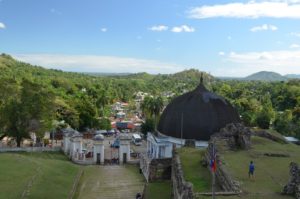 |
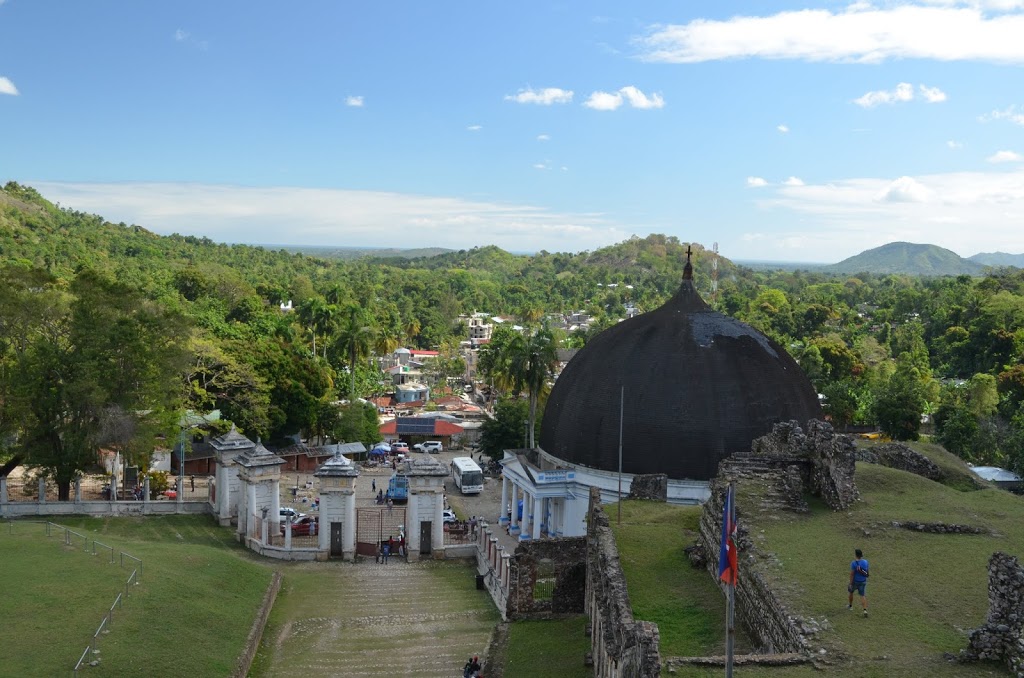
| A view of the onion-domed cathedral, with the sea in the distance |
It took thousands of workers to construct this palace, and it only served its purpose as administrative center and residence for a few years before Henri I committed suicide in 1820. Subsequently, Haiti was reunited as a single republic by Jean-Pierre Boyer. Boyer promptly invaded the then-independent republic of Santo Domingo on the opposite coast, and the island was briefly united under his rule before a Spanish army returned the eastern side to colonial control. Animosity between Haitian and Dominicans continues into the present day.
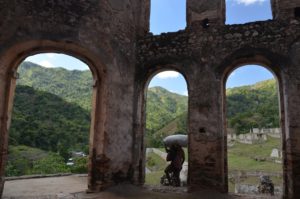 |
| View towards the mountains behind the palace |
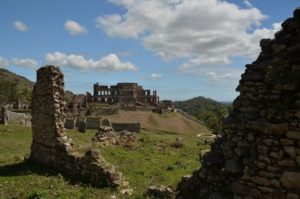 |
| Sans-Souci Palace, with the town of Milot below and the sea in the distance |
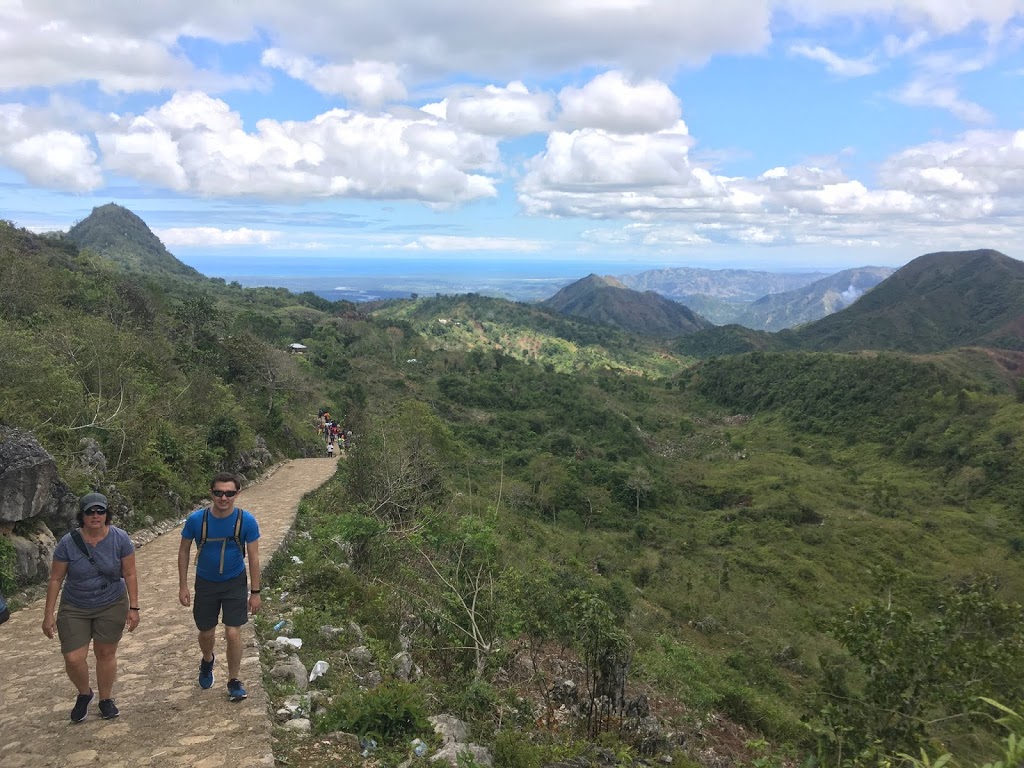
On a mountaintop above Sans-Souci Palace sits the massive Citadelle Laferrière. For over four miles (7 km), the stone road climbs relentlessly to the fortress, which towers 2800 feet (850m) above the coast below. You can pay a few dollars to take a motorcycle to the top and avoid the 2-3 hour hike, but where’s the adventure in that?
 |
| “Nearly there” – close to the fortress with the sea in the distance |
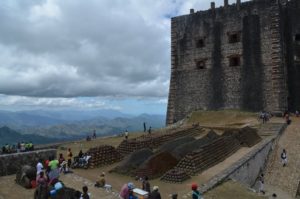 |
| The citadel was a popular destinations for local residents on Easter Sunday.
|
|
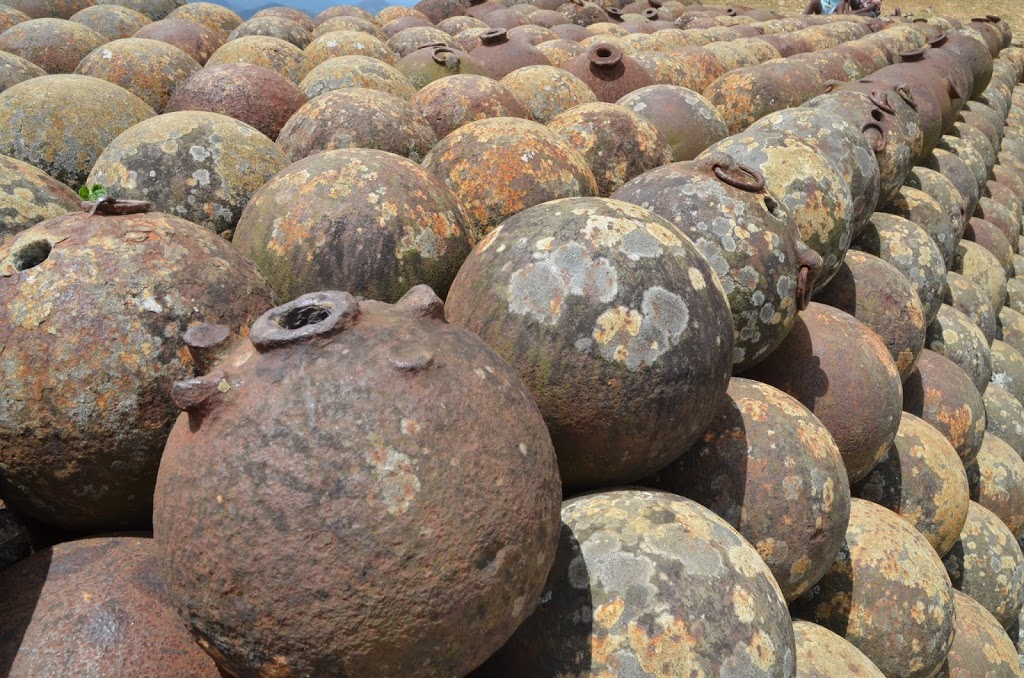
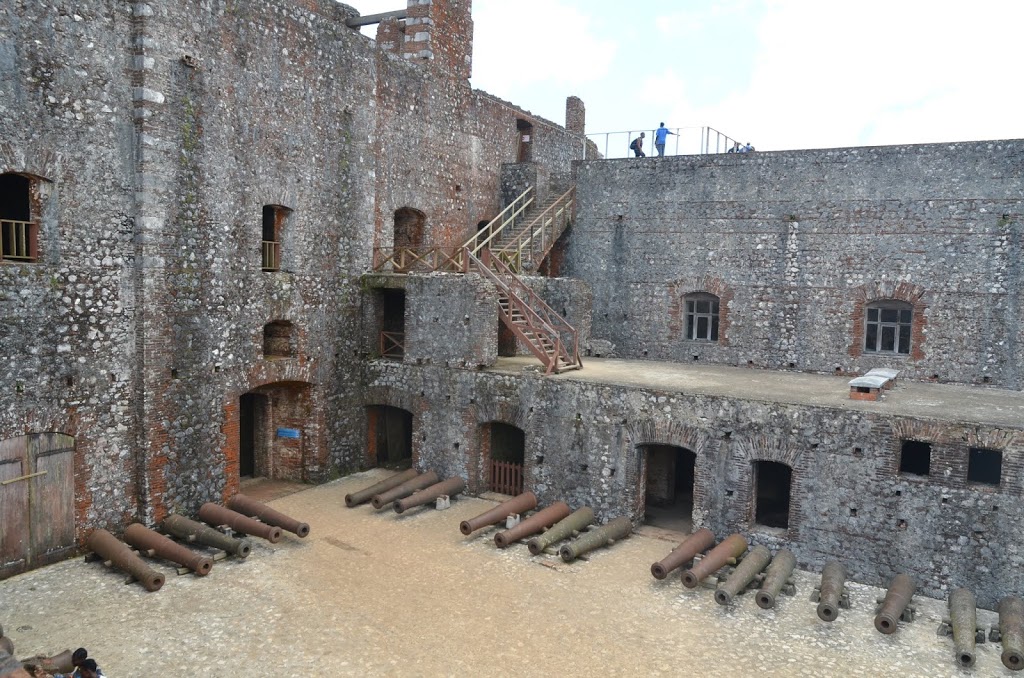
This fortress, constructed over seven years by 20,000 men, guards the most important part of Emperor Henri’s territory. It not only has a clear view of the coast and any passing ships, but also guards the valley that leads towards Port-au-Prince, where rival general Alexandre Pétion ruled. Its cannons, scavenged from the ships and territory of a half dozen European nations, remain on display along with an impressive stockpile of ammunition.
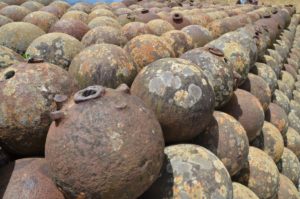 |
| A massive pile of mortar shells at Citadelle Laferrière. Fuses would be inserted into the explosive-filled shells. |
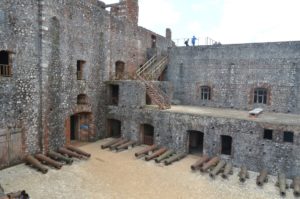 |
| The courtyard of the fortress, with some of the numerous cannons on display |
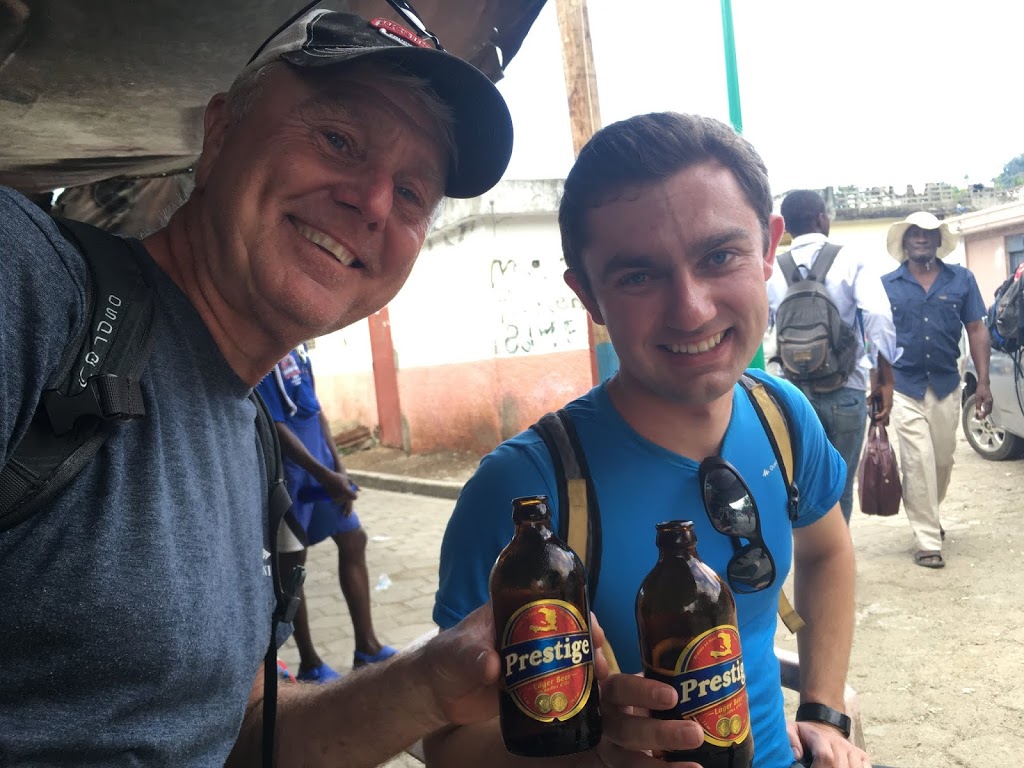
The hike downhill was tough on our knees, but there was a beer waiting for us at the end. A bottle of Prestige beer usually costs around $1, no matter where you are in the country.
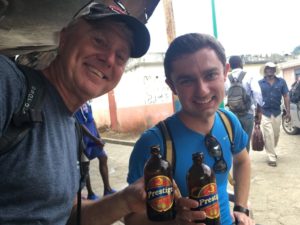 |
| A toast after a long hike |
On the day after Easter, I traveled with my parents to Jacmel on Haiti’s south coast. The long trip over the mountains towards Port-au-Prince offered impressive landscapes and a new perspective on Haiti. After an hour of driving, we could still see the Citadelle Laferrière as it stood sentinel in the distance.
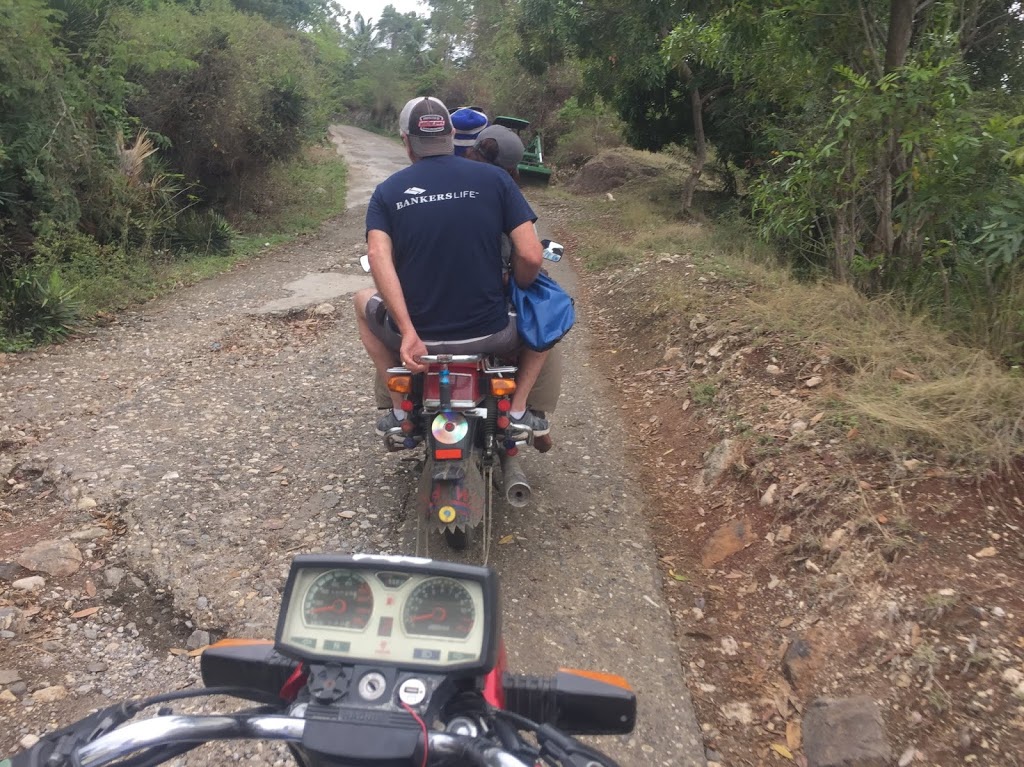
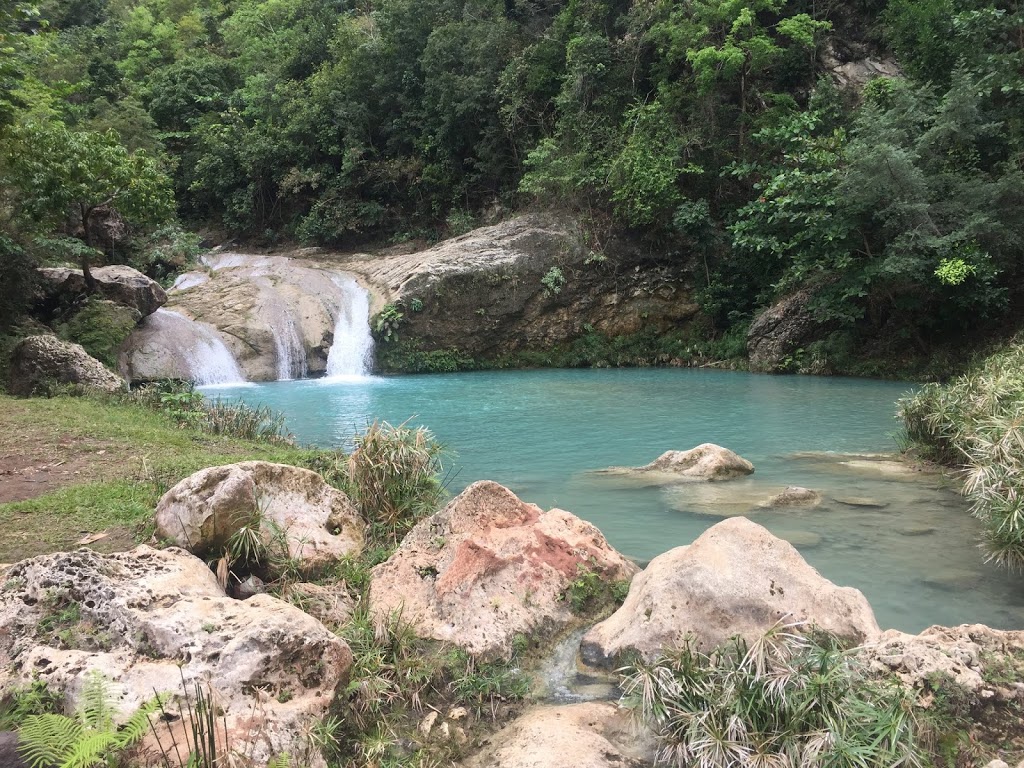
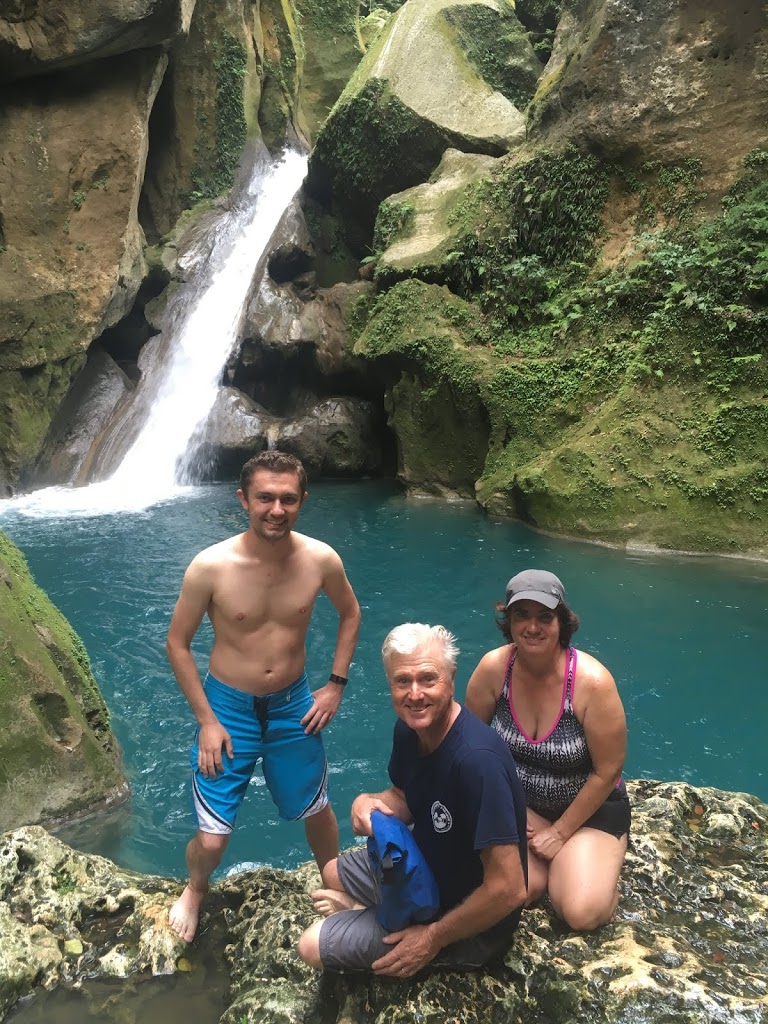
Jacmel was a convenient place to work and relax for a few days. I spent most of the days there working on my laptop by the pool. But on our last day, we hired some motorcycles to take us to Bassin Bleu, a series of fantastic waterfalls and pools in the hills above the town. My photos can’t convey the beauty of the place.
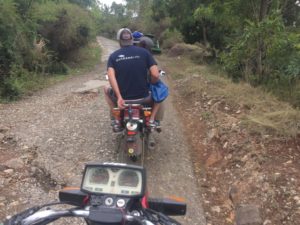 |
| Riding motorbikes up the hill to Bassin Bleu |
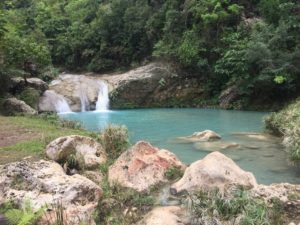 |
| One of the middle pools at Bassin Bleu |
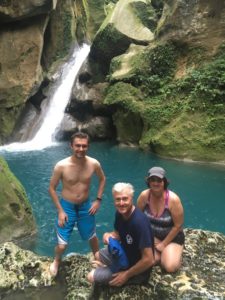 |
| With my parents at the final and most spectacular waterfall
|
Haiti’s natural beauty lives up to its nickname – the Pearl of the Antilles. I had a fantastic time visiting the country. Though tourism is thriving in the Dominican Republic, Haiti sadly sees few visitors. Its people were especially welcoming, even inviting us to a barbecue in the hotel courtyard! I was sad to depart.

Happy
0
0 %

Sad
0
0 %

Excited
0
0 %

Sleepy
0
0 %

Angry
0
0 %

Surprise
0
0 %

 0
0
 0
0