Read Time:5 Minute, 35 Second
A long day’s journey brought me from Dakar to Serrekunda in the Gambia. First I took yet another sept-place to Karang, the last Senegalese town before the border. This took most of the day due to rough road conditions. After about an hour changing currency and buying a SIM card for my phone, another taxi took me to Barra, at the mouth of the Gambia river, where a ferry was waiting to take me across the river to Banjul, the capital. The sun set as I crossed the river. Yet another taxi took me to my hotel in Serrekunda from there.
I spent most of my time in The Gambia relaxing at Solomon’s Beach Bar with a beer in my hand. It was refreshing after a relatively quick pace in Senegal, and allowed me to catch up a little on work I’d been missing.
One of Senegal’s most famous tourist attractions is the Kachikally crocodile pool in Bakau. Associated with fertility, it has long been a pilgrimage spot for women seeking children. Tourists visit today to pet the crocodiles themselves. Your guide takes you through dense undergrowth as you duck your head, and suddenly you emerge at the side of the pool with crocodiles all around you.
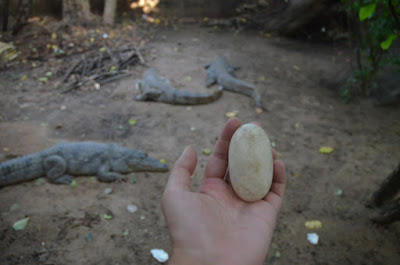 |
| A crocodile egg with three females behind. |
I was quickly warned against getting too close to any of the males, but the keeper indicated several females that were safe to approach and pet. They still have plenty of teeth, but were relatively sedate at this time of day, absorbing the heat from the ground as the light faded.
 |
| Petting a croc |
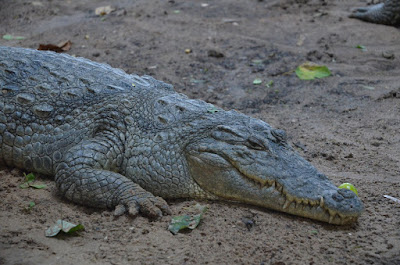 |
| A close-up of a crocodile at Kachikally. Shot with a 18mm wide lens. |
After one more day in The Gambia, I decided to move on to Guinea-Bissau, which required crossing into Senegal again, as The Gambia is entirely surrounded by Senegal on three sides and the sea on the fourth. I was stamped into Senegal, changed vehicles in Ziguinchor, and arrived in Bissau late in the day. I quickly made friends with two Dutch tourists who planned to leave Bissau on the ferry to the Bijagos Islands the next day. They agreed that I could come along.
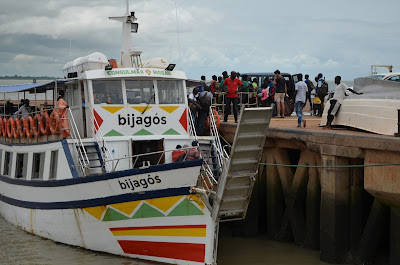 |
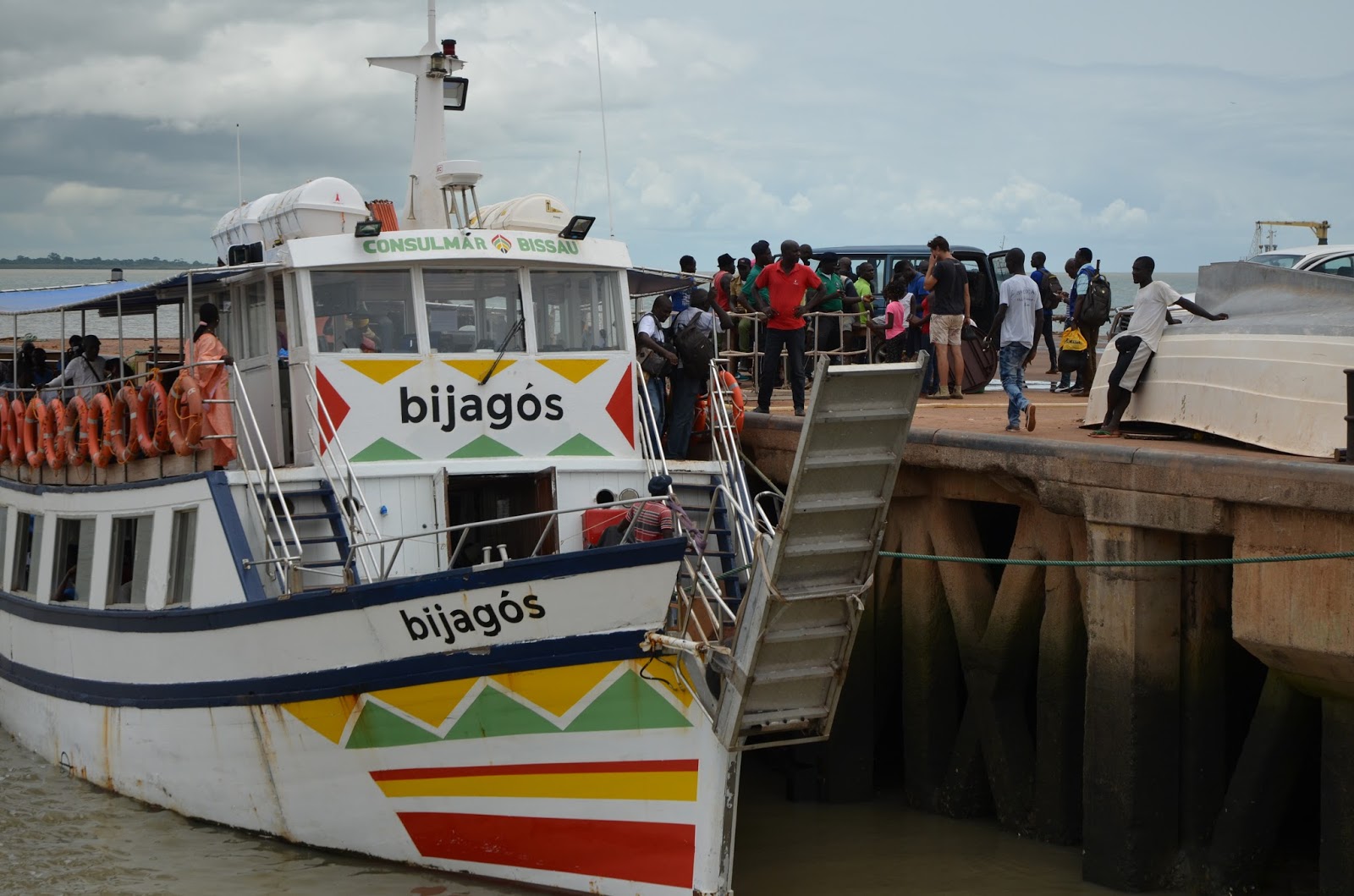
| The ferry which runs from Bissau to Bubaque in the Bijagos islands once per week. |
The ferry leaves Bissau once a week and returns two days later. If you miss it, you’re in the unfortunate position of having to hire another boat. It would be a short stop in Bubaque, but it turned out to be one of the highlights for me.
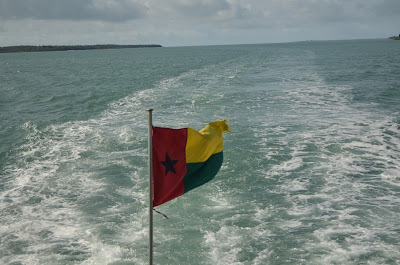 |
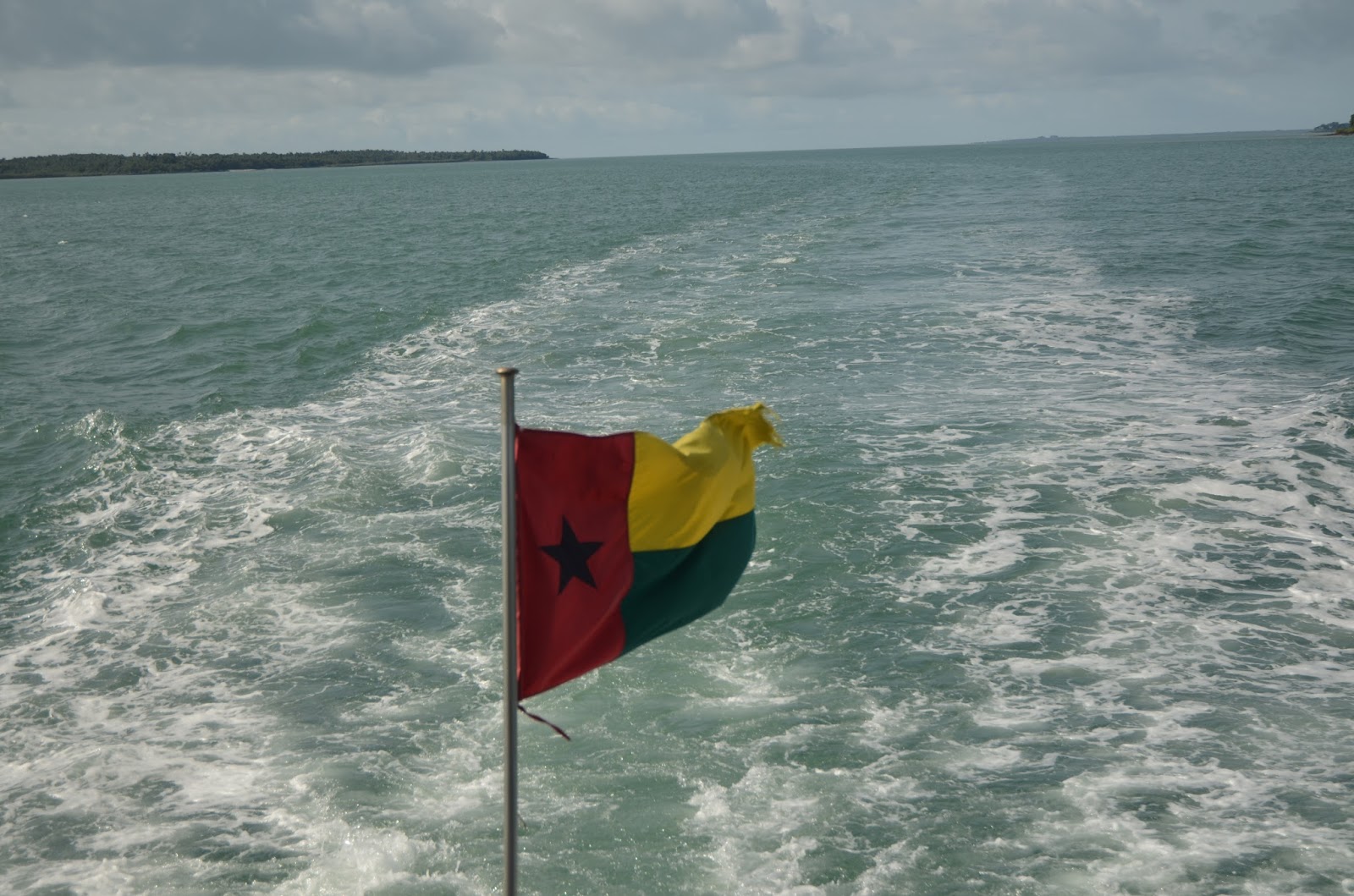
| The flag at the stern as we pass several small, uninhabited islands. |
We arrived in Bubaque in the late afternoon and set about finding a hotel where we could stay two nights. After we had found one, we started organizing a boat trip for the next day. A fisherman agreed to take us to one of the other islands where we could go swimming on a beach.
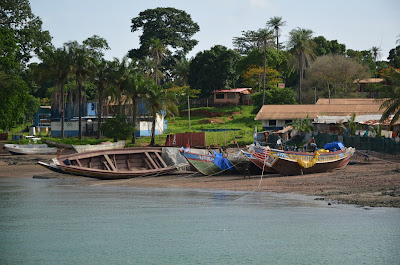 |
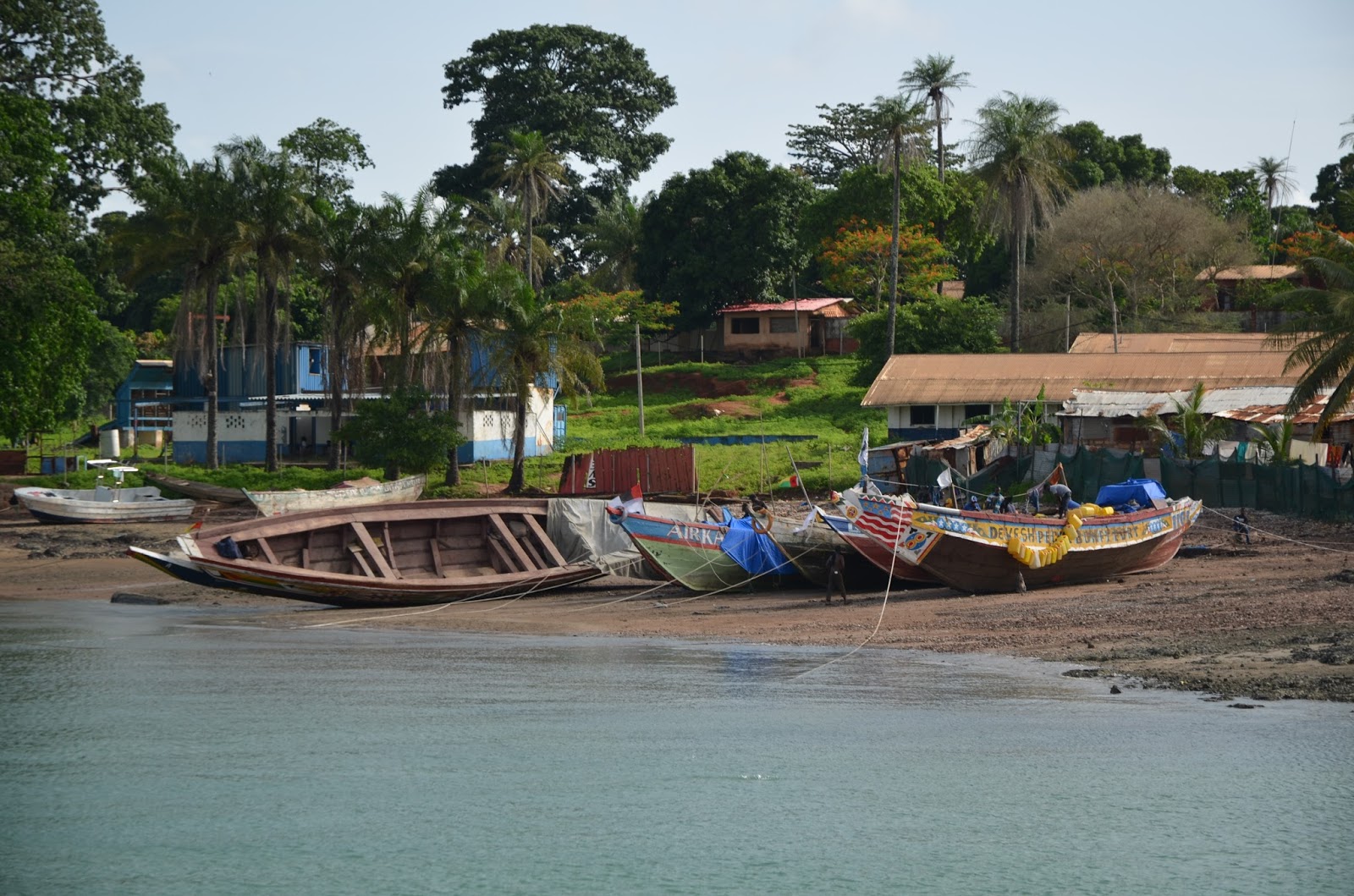
| Fishing boats in Bubaque harbor |
The fisherman took me and the two Dutch travelers several miles to a beach on the back side of the near-uninhabited island of Rubane. The pristine white crescent of sand was straight out of a idyllic postcard. Just off the beach there was a small sandbar with a few shrubs on it. I decided I had to attempt to swim to it. I thought it was about a 100m swim, but I’m a poor judge of distance – it was 600m. The channel was helpfully shallow, and I walked about halfway before kicking off the bottom starting to swim. I had dramatically underestimated the strength of the current.
 |
| A cow grazes in the middle of town on Bubaque |
The current in the deeper part of the channel picked me up as soon as I started kicking, dragging me to the south and away from the beach. I gave up trying to reach the sandbar and swam as hard as I could towards the beach, fighting the current. Finally my feet touched sand again and I started to wade out of the water, shuffling my feet to scare off the stingrays living on the bottom. It wasn’t enough – I felt a sharp pain in the bottom of my foot and knew instantly that I’d been stung.
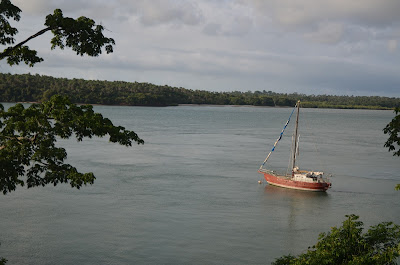 |
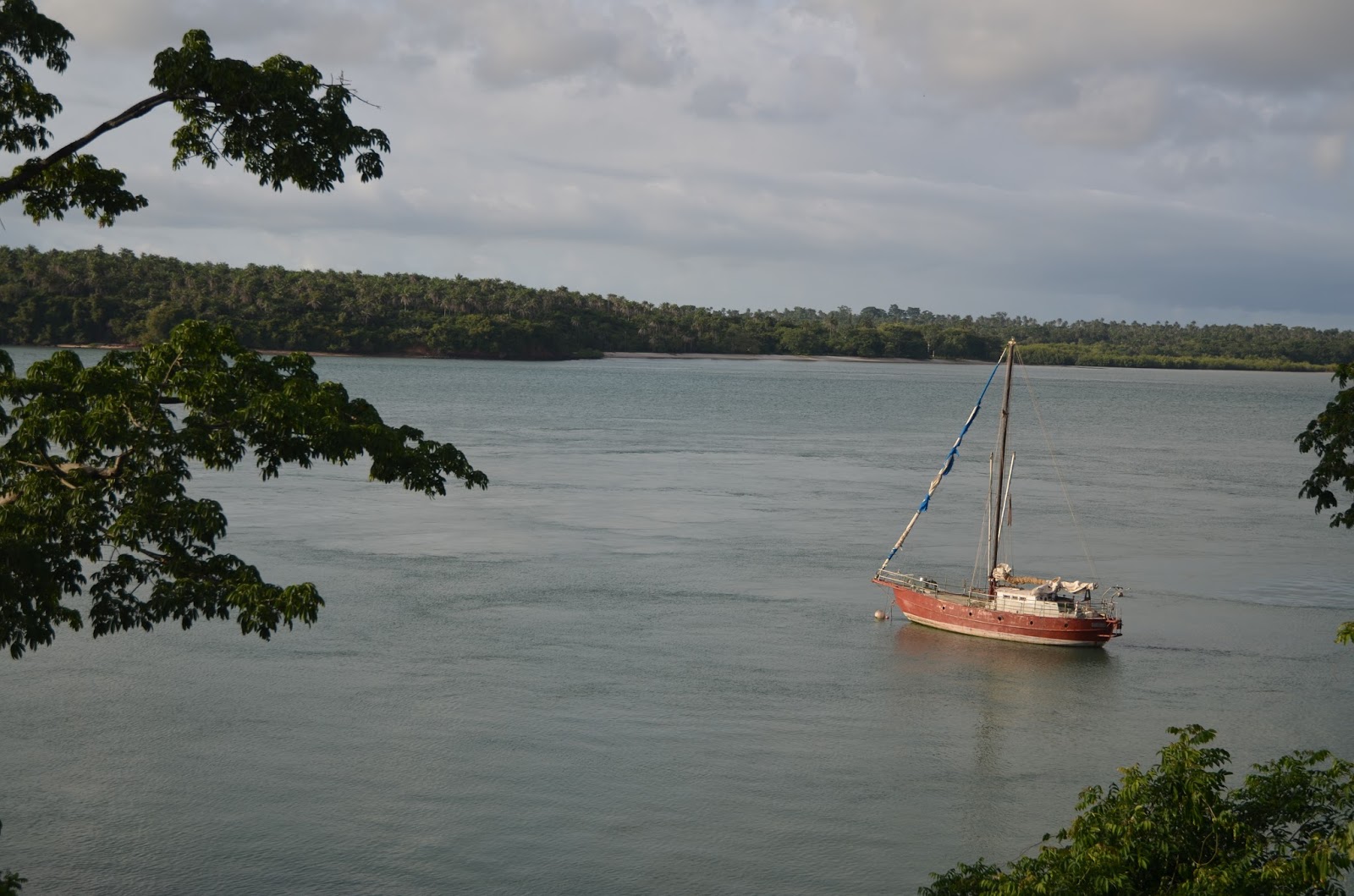
| A sailboat at anchor in Bubaque, with Rubane in the background |
I made it ashore and waited for the boat to be pulled ashore. The intensity of the pain increased, and I could feel the poison spreading up my leg, the muscles of my quadriceps cramping up. I was helped into the boat and we began to make our way back to Bubaque. A friendly man on a motorbike took me up the hill to the island’s “hospital” – a concrete building with dirty, blood-stained floors built by the EU as part of a development project. I don’t know if the staff had formal qualifications, but the “doctor” was skillfully suturing a long gash in a boy’s leg as I arrived. My own medical kit proved to be invaluable where the hospital’s supplies were lacking – iodine to disinfect, gauze to soak up the blood, and sterile bandages to dress the wound. I was billed about $3 for my brief stay.
The intense pain continued for two more hours – about three in total. I rested up on the veranda of our hotel. I would walk with a limp for another week until the swelling subsided. There’s still a small scar from the whole incident, but I didn’t let it slow down my exploration of the island.
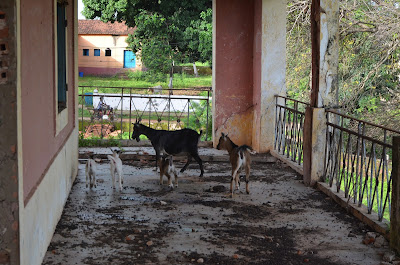 |
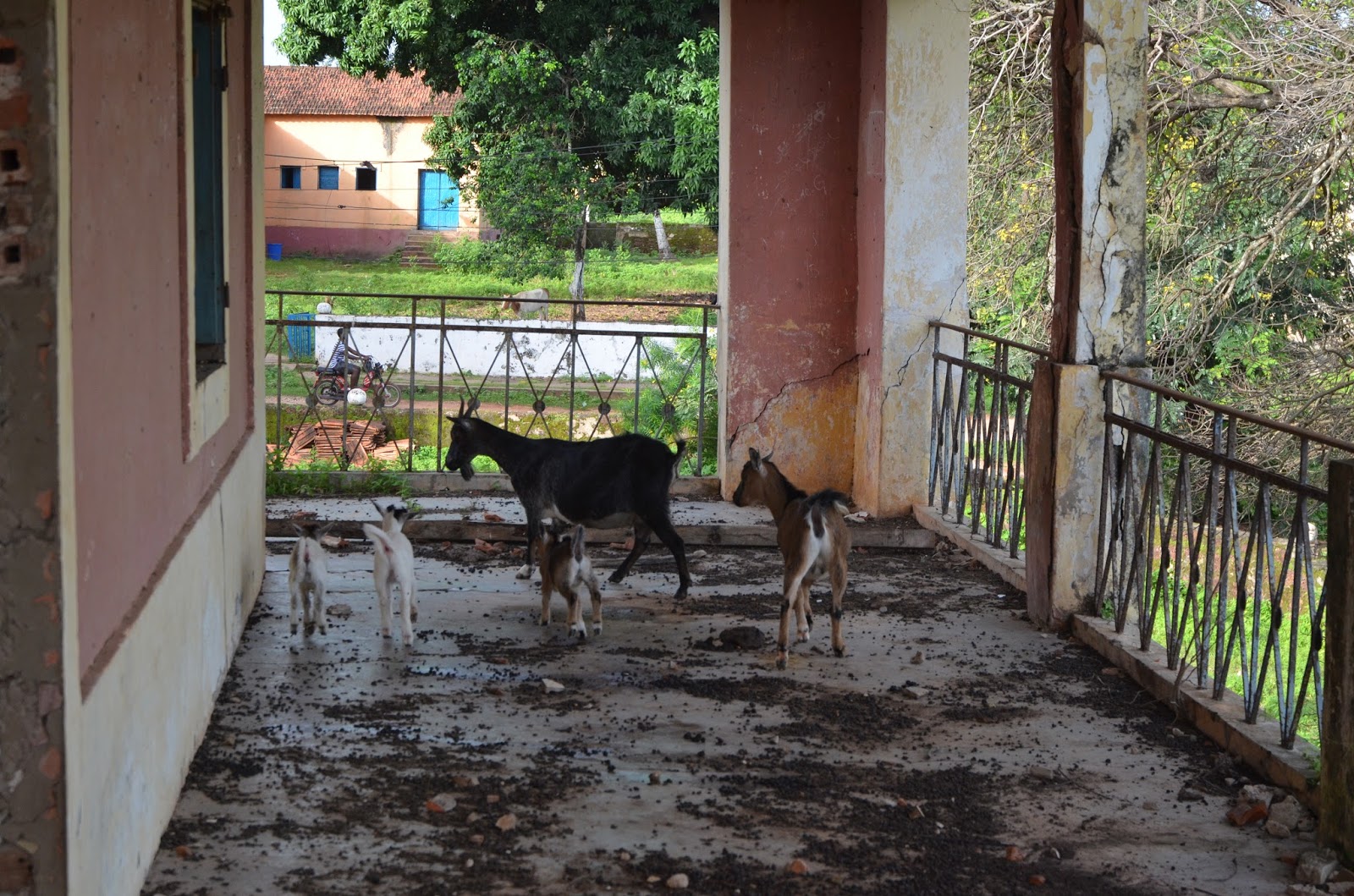
| Goats on the balcony of a grand old German house |
One of the oldest buildings on the island was built by the Germans, who constructed a palm oil factory on the island. There’s still a massive safe on the ground floor, too heavy to move. The lower level clearly functioned as an office, while the upper level with its kitchen was sleeping quarters and living space. It’s only current residents are goats.
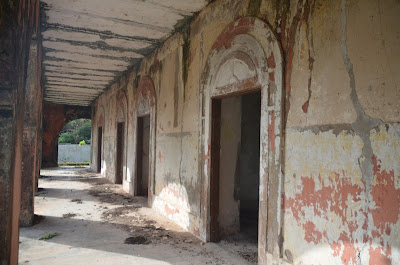 |
| The wraparound verandas keep rainwater out of the interior. |
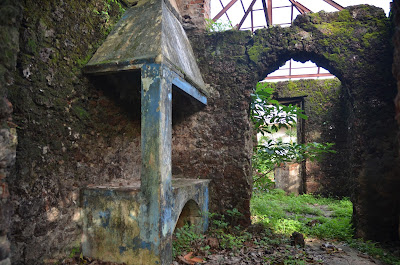 |
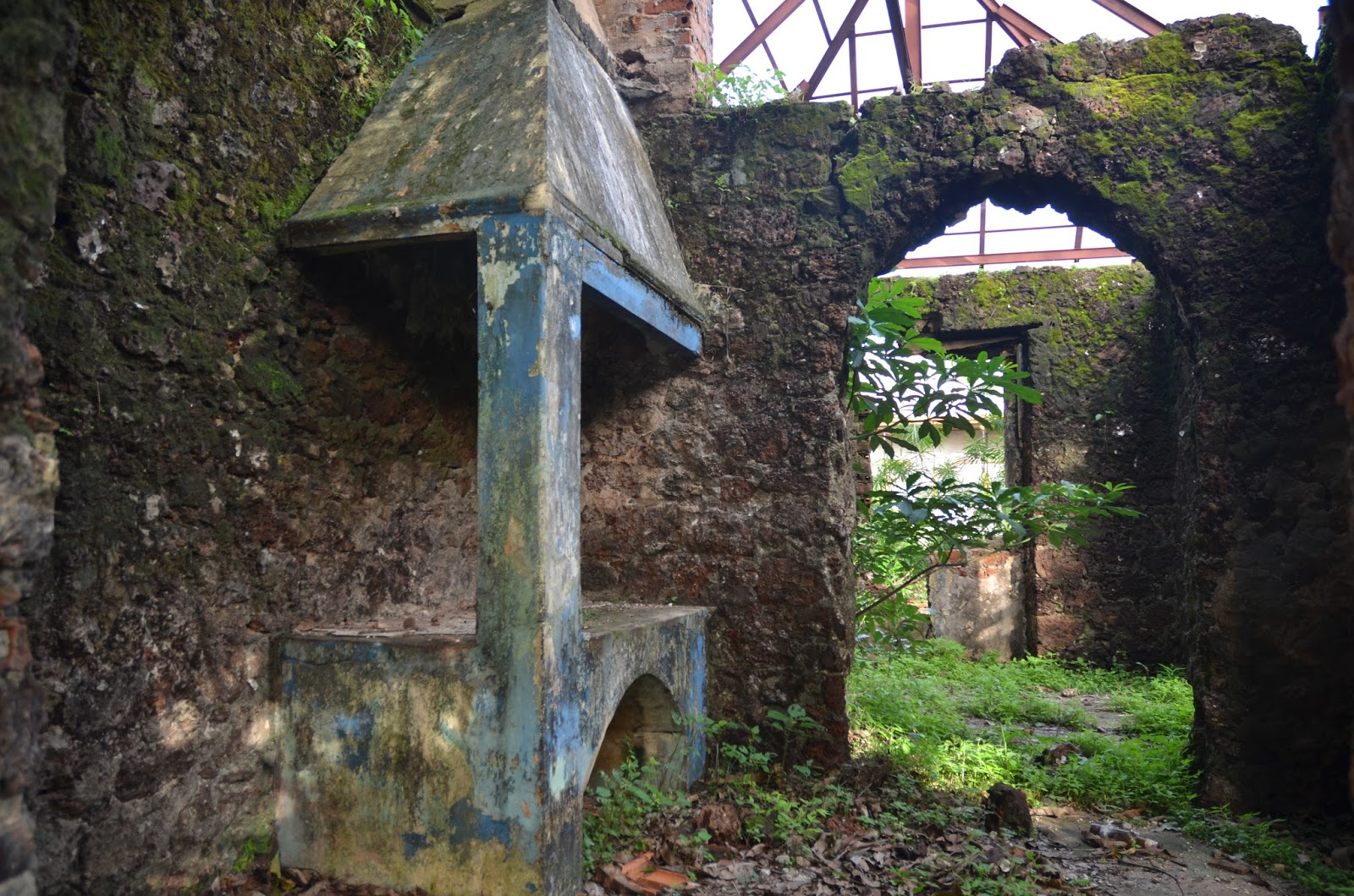
| The kitchen of another residence, detached to keep the heat away from the living quarters |
The following morning, I limped to the ferry as it returned to Bissau. We had been incorrectly informed of the time, so we had to make a mad dash before the boat left. After the four hour trip back to Bissau was complete, I got to spend a nice afternoon in the old town before I departed the next morning.
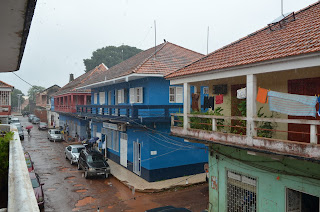 |
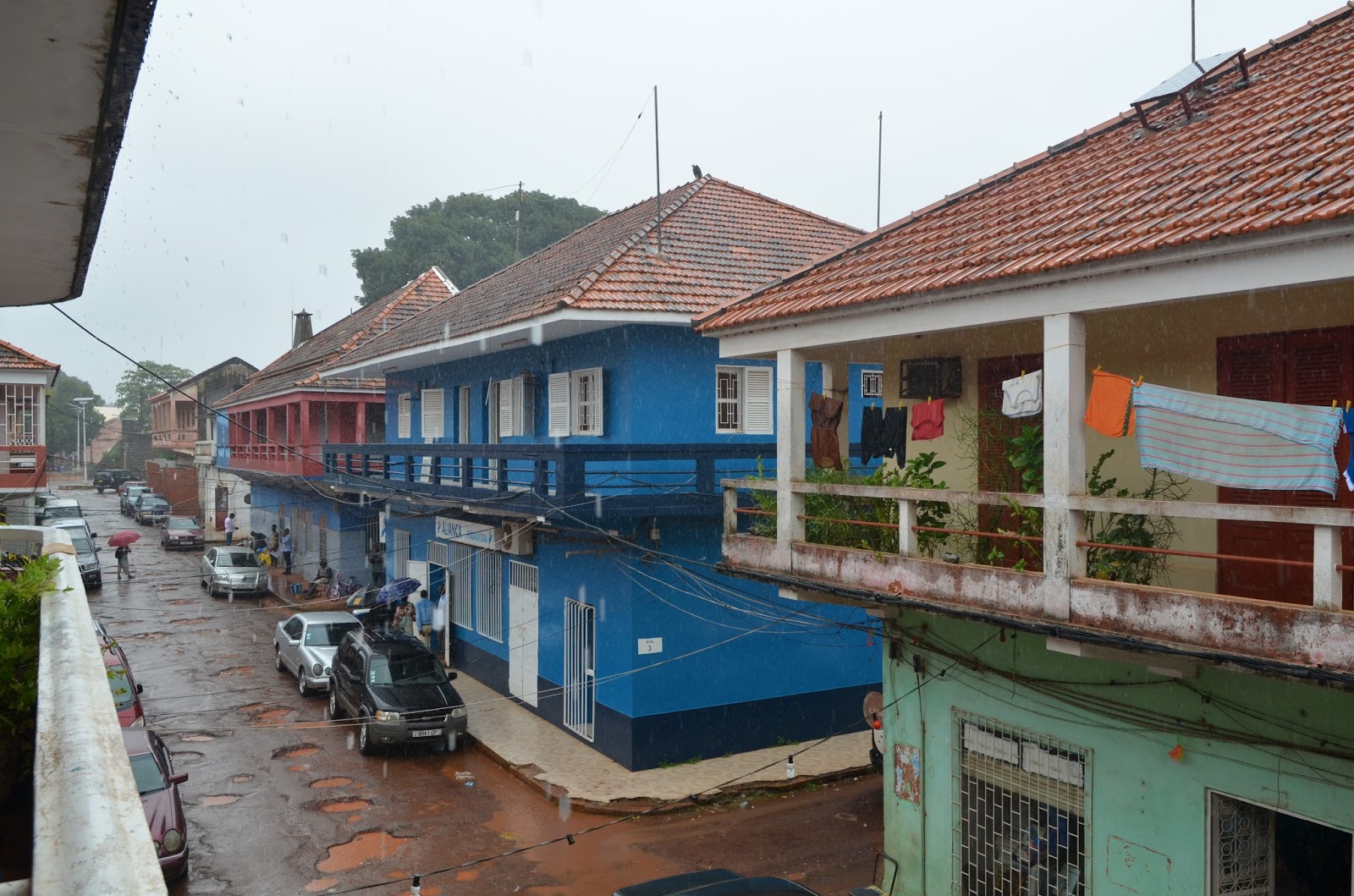
| The old city of Bissau, built by the Portuguese. Note the wraparound balconies that shield the sidewalks below from rainwater. |

Happy
0
0 %

Sad
0
0 %

Excited
0
0 %

Sleepy
0
0 %

Angry
0
0 %

Surprise
0
0 %
 0
0
 0
0