Read Time:4 Minute, 27 Second
I arrived on Senegal’s shores aboard a canoe that ferried me the short distance across the river from Mauritania. A horse and cart brought me the short distance to the waiting cars bound for Saint Louis. Like most road journeys in Senegal, I would be traveling by sept-place (French for “seven places”). These decrepit Peugeot station wagons ply the roads of Senegal, frequently crammed with far more than seven passengers. Often passengers will choose to wait for the next vehicle rather than ride in a rusty hulk that could break down without warning. The car that brought me to Saint Louis was supremely uncomfortable, but thankfully we avoided a breakdown.
The island city of Saint Louis was the capital and cultural hub of West Africa during the French colonial period. Today this status has shifted to Dakar, the new capital, but the traces of its former grandeur remain, especially in the French old city.
My sept-place dropped me off on the mainland, and I went home to dinner with one of the gracious passengers. He offered to help me find a hotel in the centre. We drove across the Pont Faidherbe, the sole bridge linking the island to the mainland. The central span rotates to allow the passage of ships headed up the river.
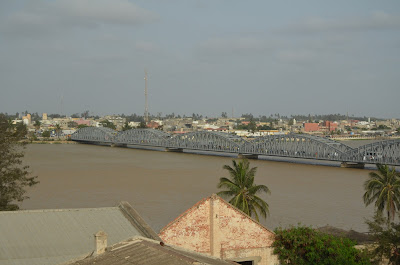 |
| The Pont Faidherbe from the roof of my hotel, one of the tallest buildings around. |
After struggling to find a place, I decided to splurge on the Hotel la Residence, perhaps the best in the city. The charming colonial decor evokes the history of Senegal’s colonial period culture, the airy atrium provided a pleasant place to relax, and the bar was stocked with locally-produced lager for the evenings. During the day, I explored the old town and its brightly painted buildings.
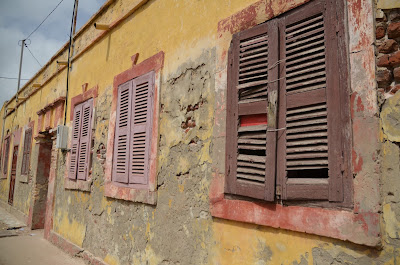 |
| A brightly painted home near the main mosque |
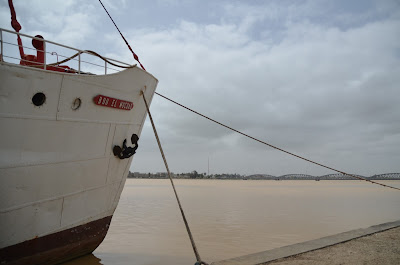 |
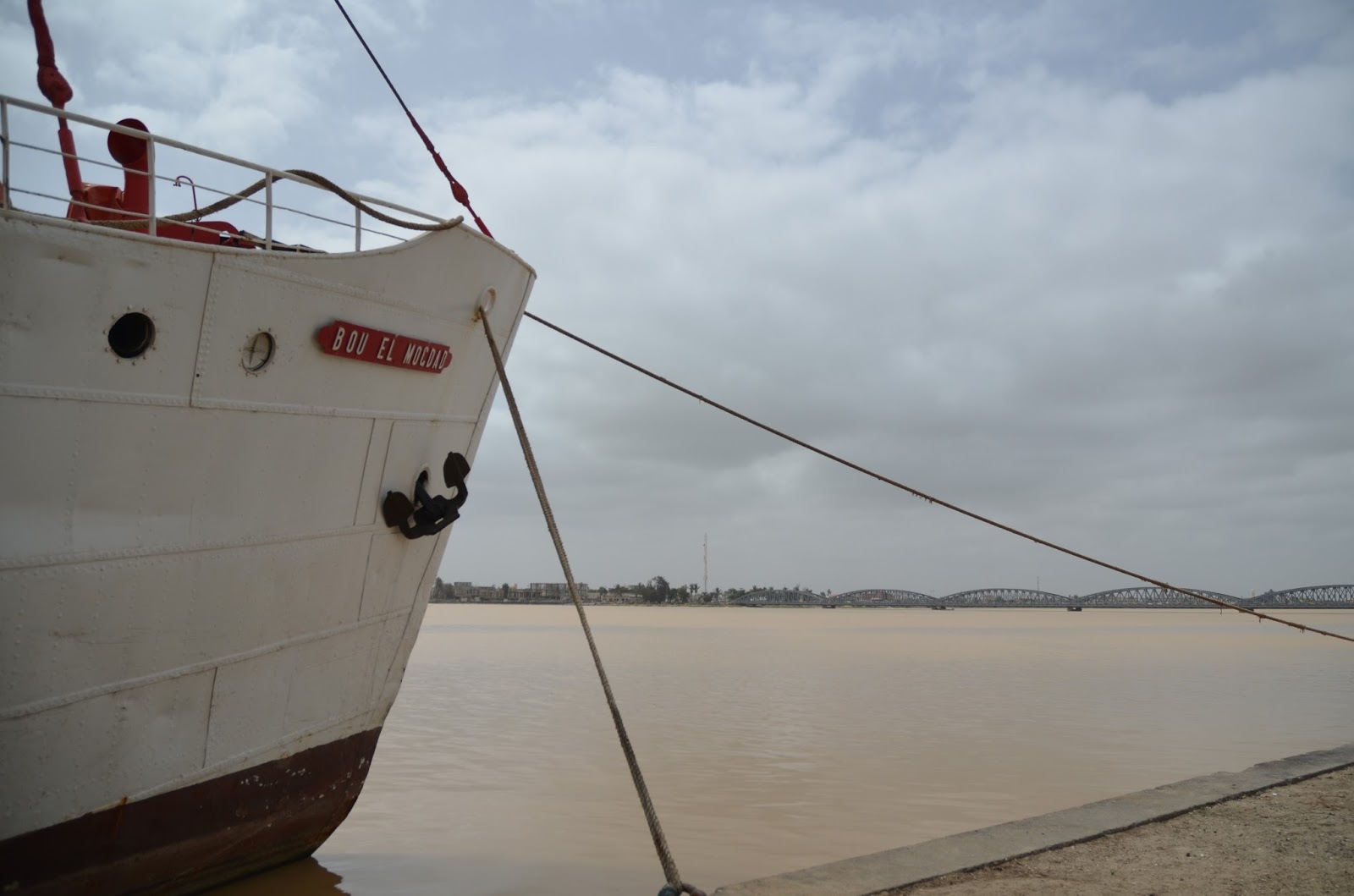
| A cargo ship moored upstream of the Pont Faidherbe, which will rotate to allow its departure to the sea. |
After two days in Saint Louis, another sept-place brought me to Dakar, Senegal’s vibrant capital. Located on a narrow peninsula called Cap Vert, the city is always pressed for space and full to the point of overflowing. It continues to expand along the peninsula towards the mainland.
The Cap Vert peninsula has only two hills, known in French as Deux Mamelles – “two breasts” – because of their shape. One is occupied by the Les Mamelles Lighthouse, which first guided mariners on April 4, 1864. The light is visible for 53km (32 mi) out to sea, one of the most powerful lighthouses in Africa due to its important location.
 |
Main lens of the lighthouse.
|
While it was first illuminated by a wood fire and later by a 6000-watt incandescent bulb, today a small halogen bulb the size of a finger provides all the light. During the day, the cupola with the lens is covered to avoid starting fires with sunlight, but there is a spectacular view of the city from the top.
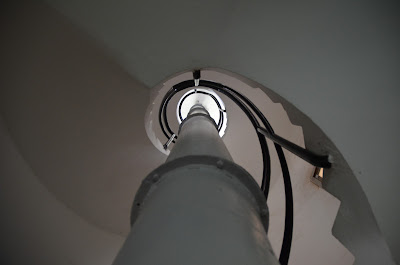 |
| The internal staircase of the Mamelles Lighthouse
|
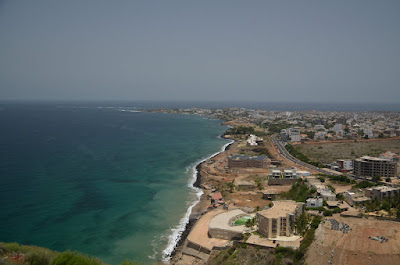 |
| View of the Dakar coastline, looking towards Cap Vert, the westernmost point in Africa |
The other “breast” sat empty for many years, but in 2006, construction began on a massive statue, The African Renaissance Monument. A prestige project for Senegal’s President Wade, the monument was and still is criticized for the massive expenditure of public funds involved. It was constructed by a North Korean company, and the orchids that cover the hill are species named for Kim Jong-Il and Kim Il-Sung.
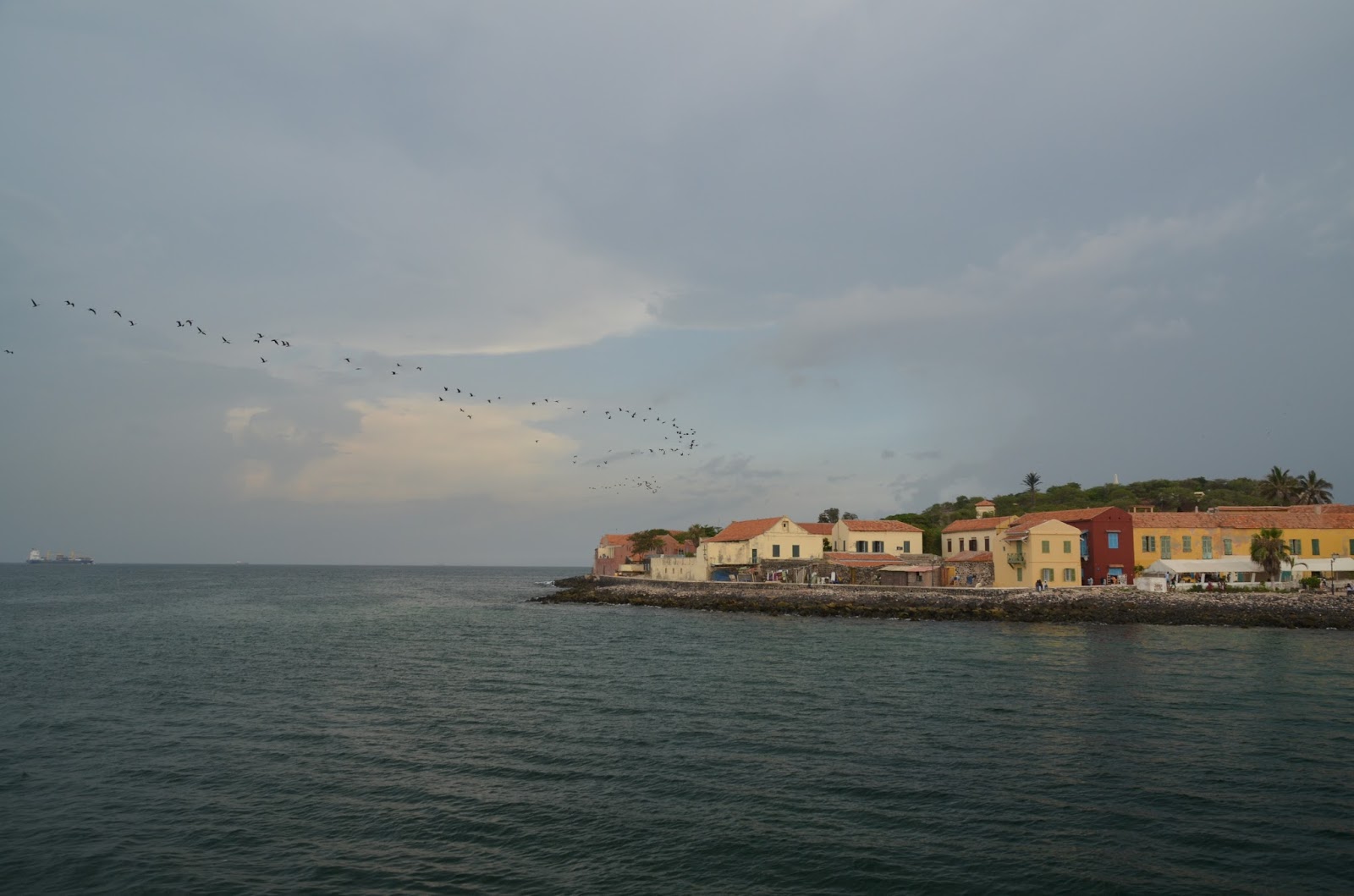
One of the highlights of my whole journey was visiting Île de Gorée, a tiny island in Dakar’s harbor. The fort here was a strategic trading post and defensive position from the eighteenth century through WWII. It’s referenced in “Senegal” by Akon, who spent many of his early years in the country and considers it his hometown.
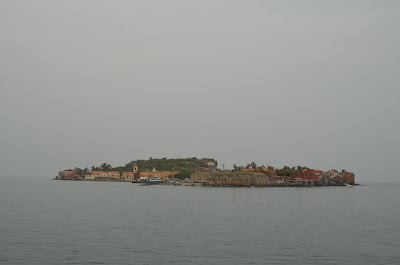 |
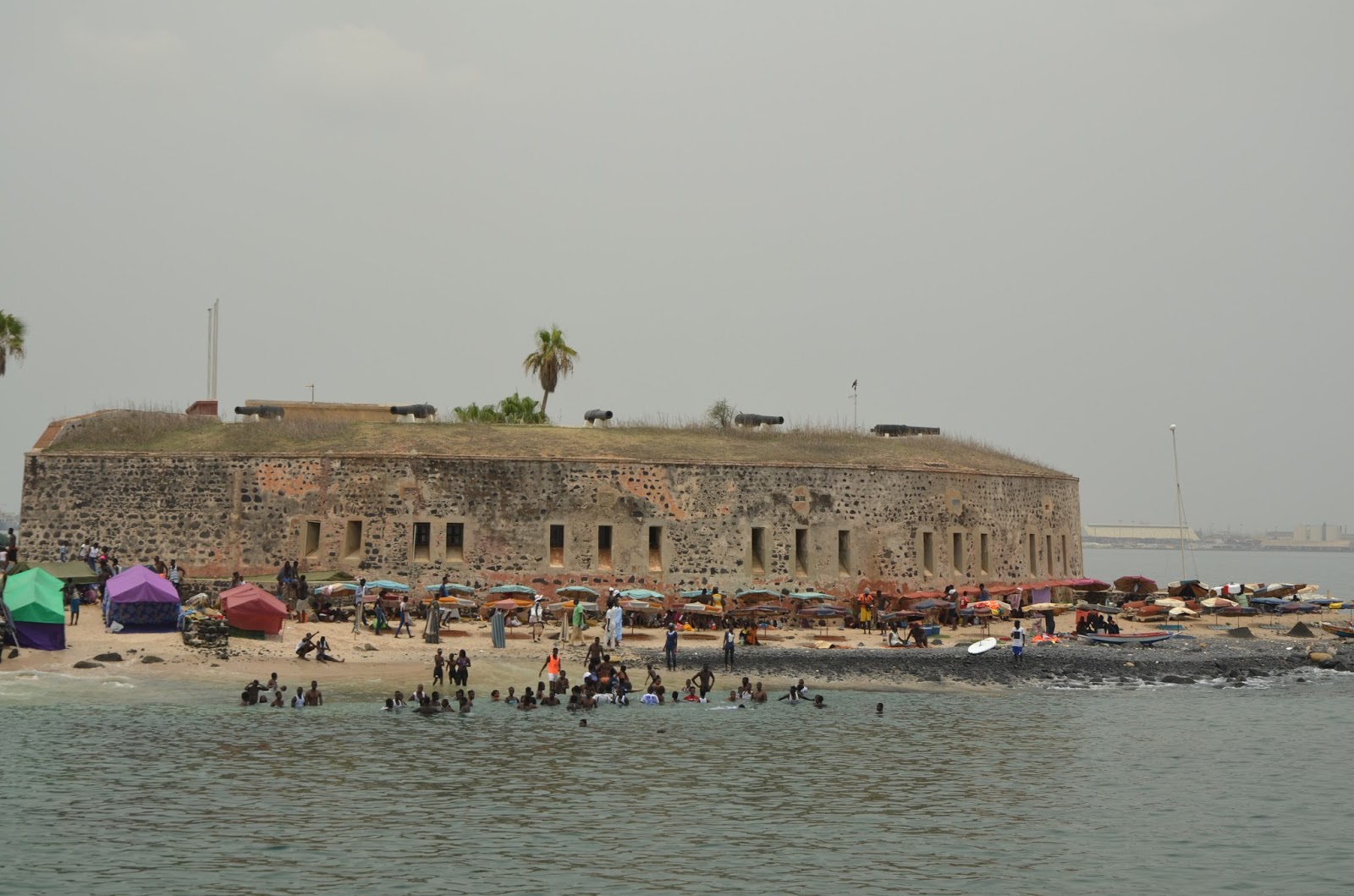
| A view of Gorée from the approaching ferry |
The side towards the harbor is guarded by a fortress, which has now been converted to a museum. Families swim in the ocean as the old cannons keep watch.
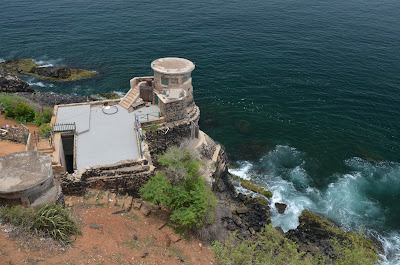 |
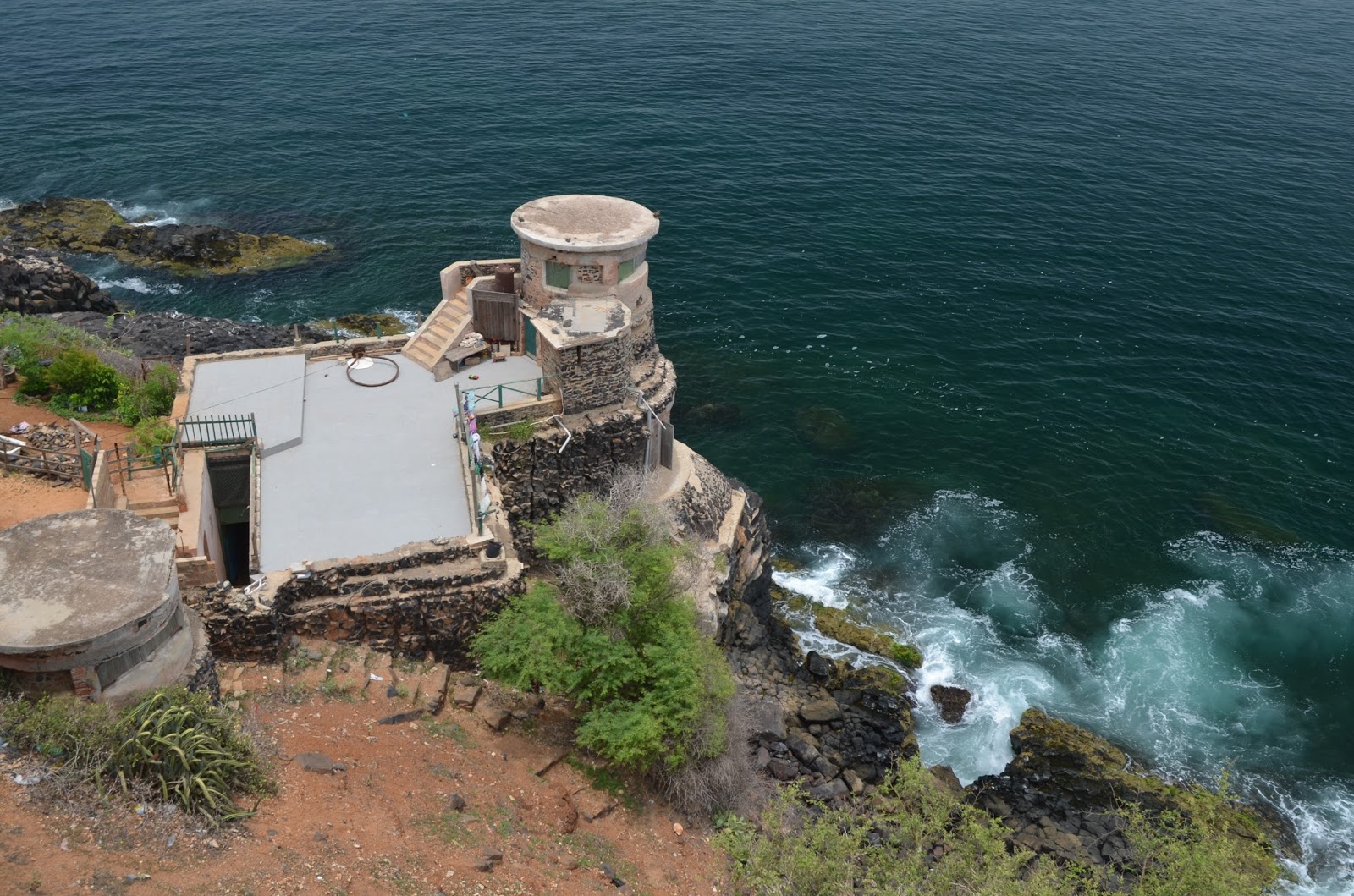
| An old WWII-era gun installation converted into a home with a beautiful sea view. |
A more recent fort stands atop the island’s highest point with its weapons aimed out to sea. The main battery is a pair of 240mm Model 1902 guns, which were removed from an obsolete French battleship and dragged to the top of the hill to be placed atop their turrets. Each weighs 29 tons and has a barrel 41 feet long. Their maximum range from a ship was over 14 miles, but their elevation on the island gave them even greater range to attack enemy ships.
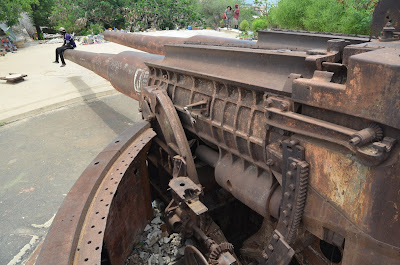 |
| A resident of Gorée sits atop one of the huge naval guns. |
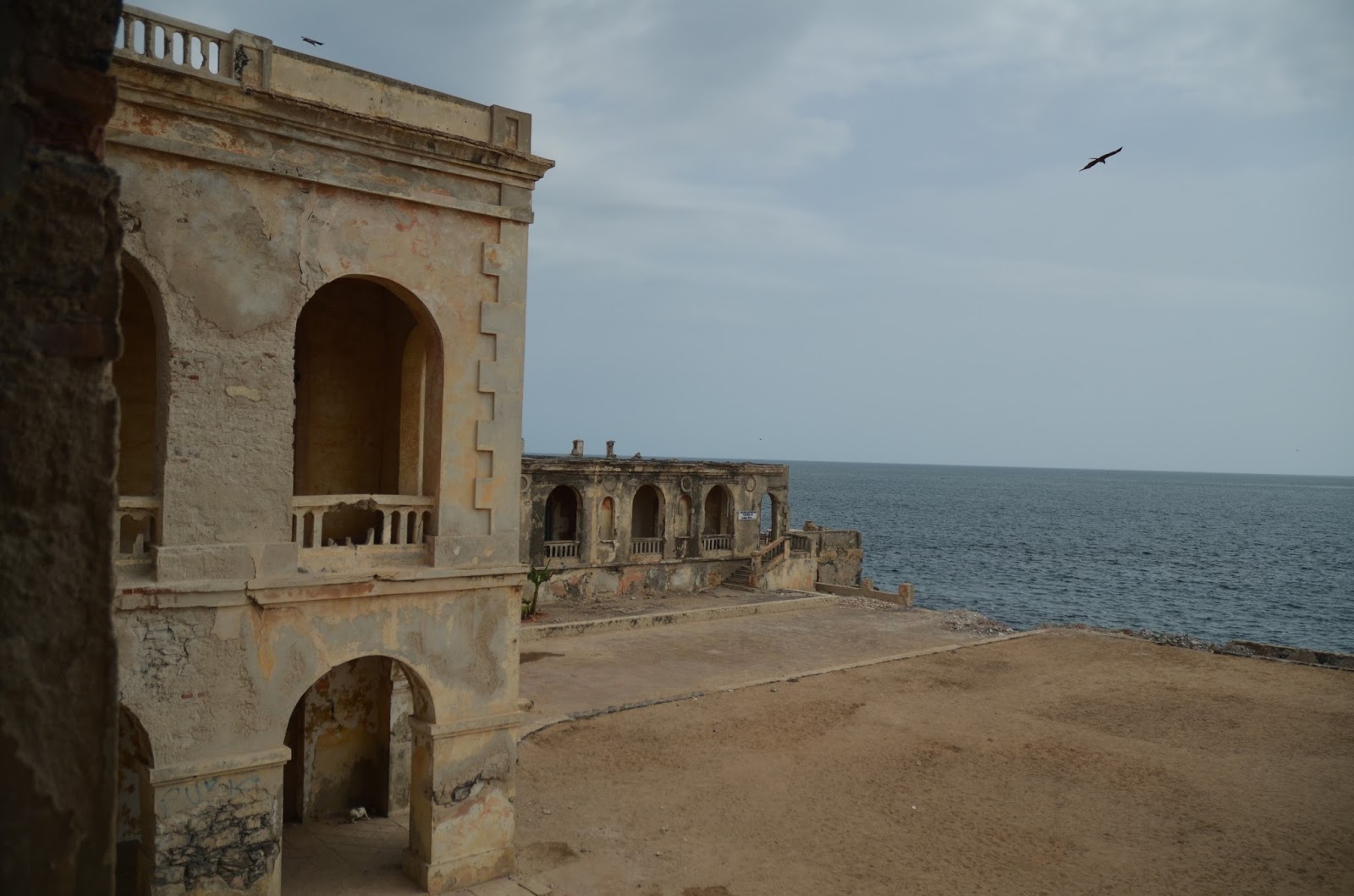
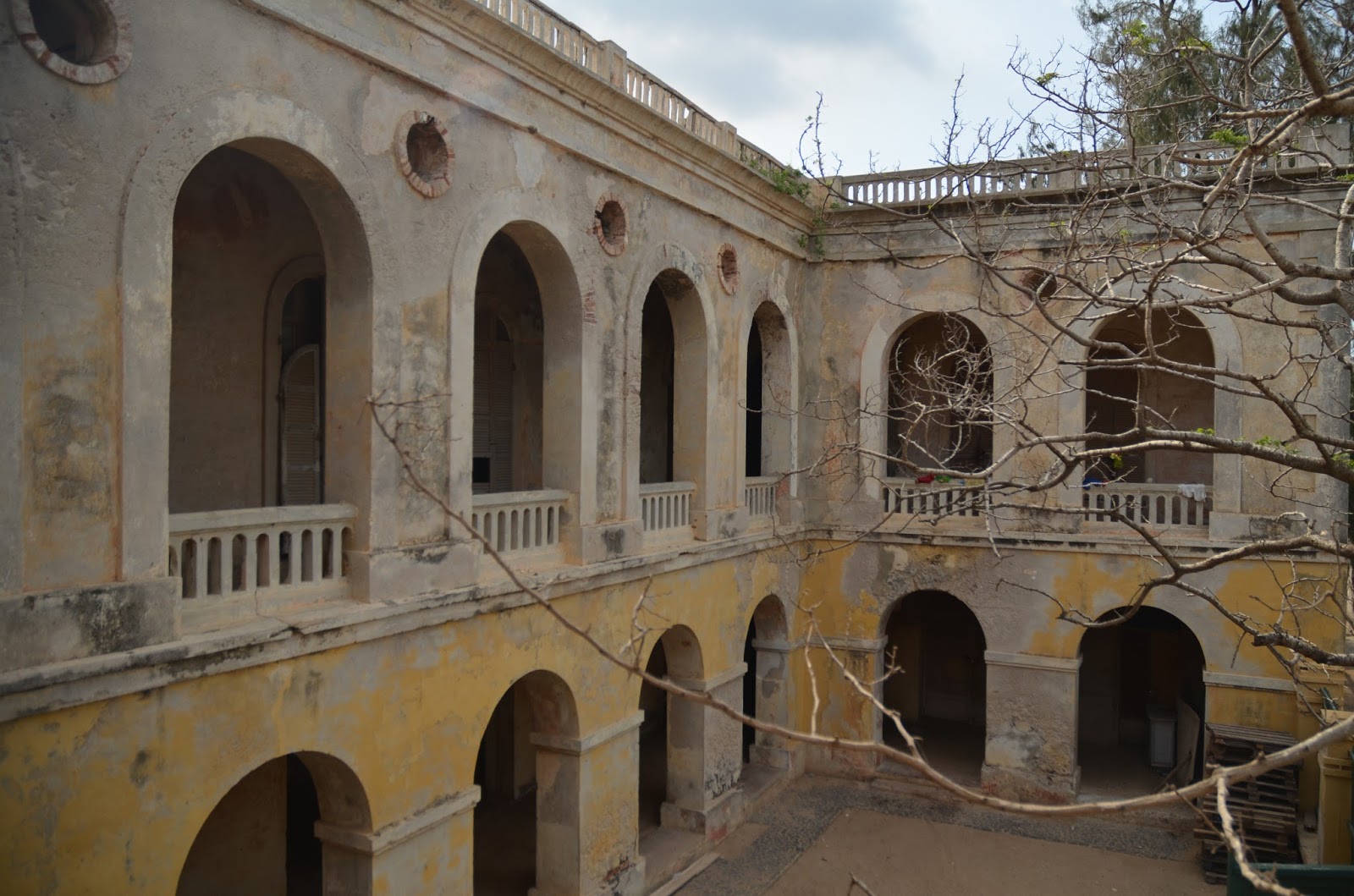
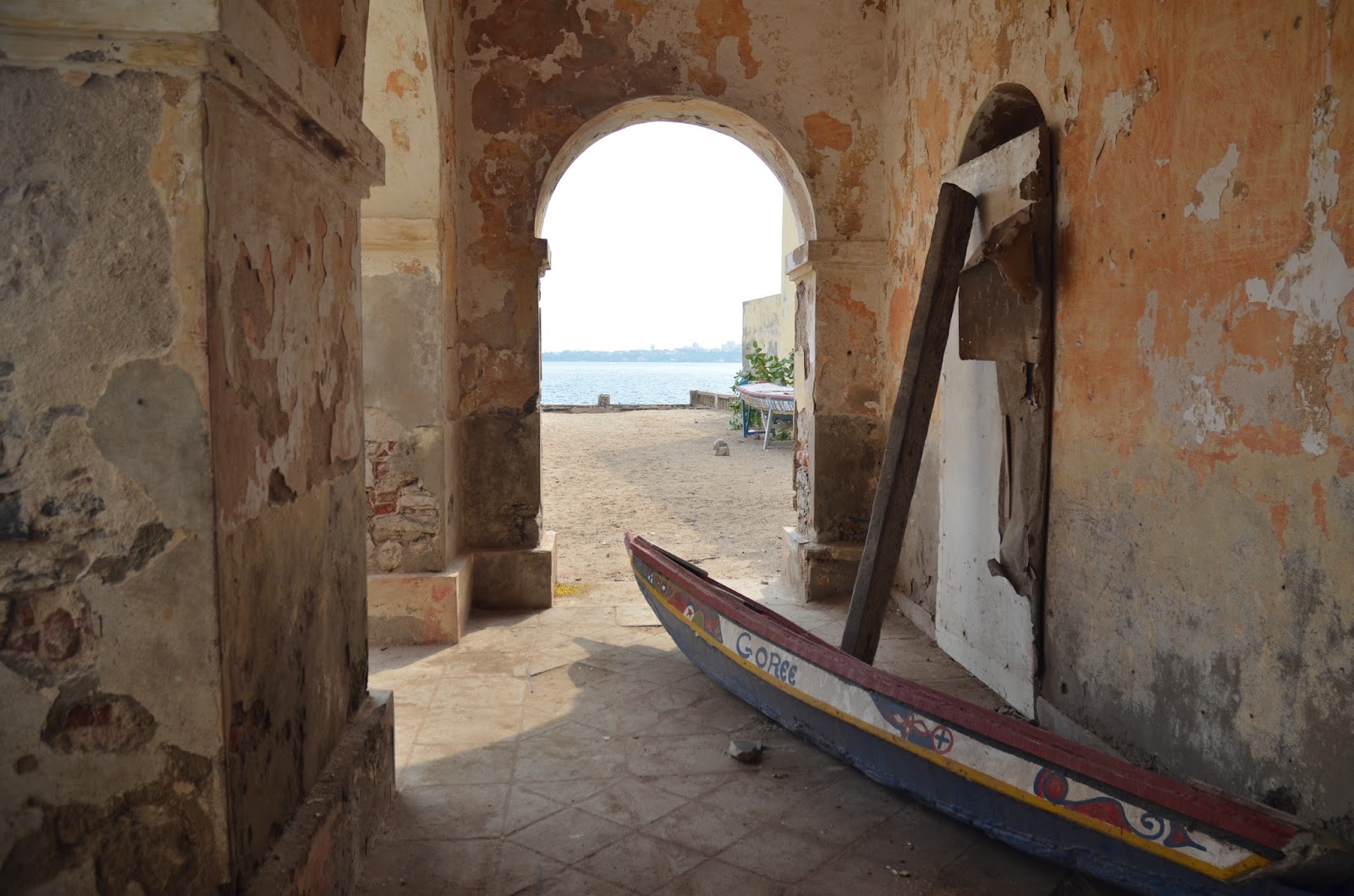
The now-abandoned and deserted governor’s palace provided a beautiful view of the sea. Though the stucco is crumbling today, it must have been a grand sight to behold in its day.
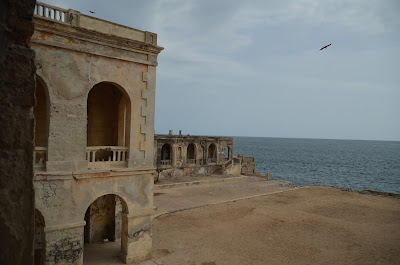 |
| The sea behind the Governor’s Palace |
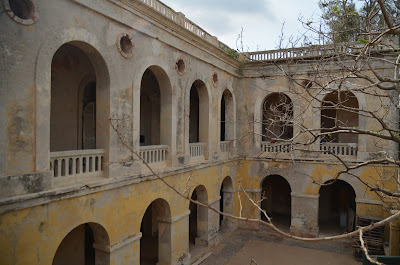 |
| The inner courtyard of the Governor’s Palace |
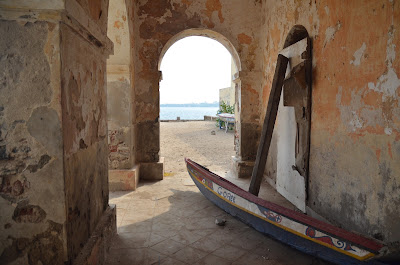 |
| A canoe in an old corridor with the city of Dakar behind |
I greatly enjoyed my day on Gorée, but I had to continue with my journey. I left the following morning for the long day’s journey to The Gambia.
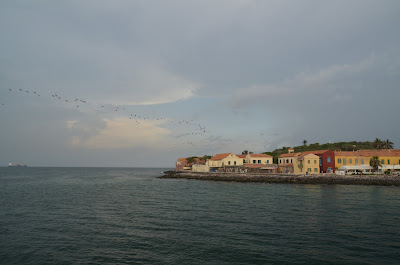 |
| Sunset over Gorée’s colorful buildings |

Happy
0
0 %

Sad
0
0 %

Excited
0
0 %

Sleepy
0
0 %

Angry
0
0 %

Surprise
0
0 %
 0
0
 0
0