0
0
 0
0
Read Time:4 Minute, 25 Second
The journey from Samarkand to Bukhara by shared taxi was my first experience with refueling a vehicle in Uzbekistan. Because the country has extensive natural gas reserves but relatively little oil, many cars have either been converted or designed to run on gas instead of gasoline or petrol. Fueling cars with combustible gas is potentially hazardous, and the risk is compounded by the prevalence of smoking among the male population. When an Uzbek car is being fueled, all passengers must get out and wait in a designated area about 30 meters (100 ft) away. Each fueling bay is separated from the others by concrete blast walls to prevent an explosion at one pump from causing a chain reaction.
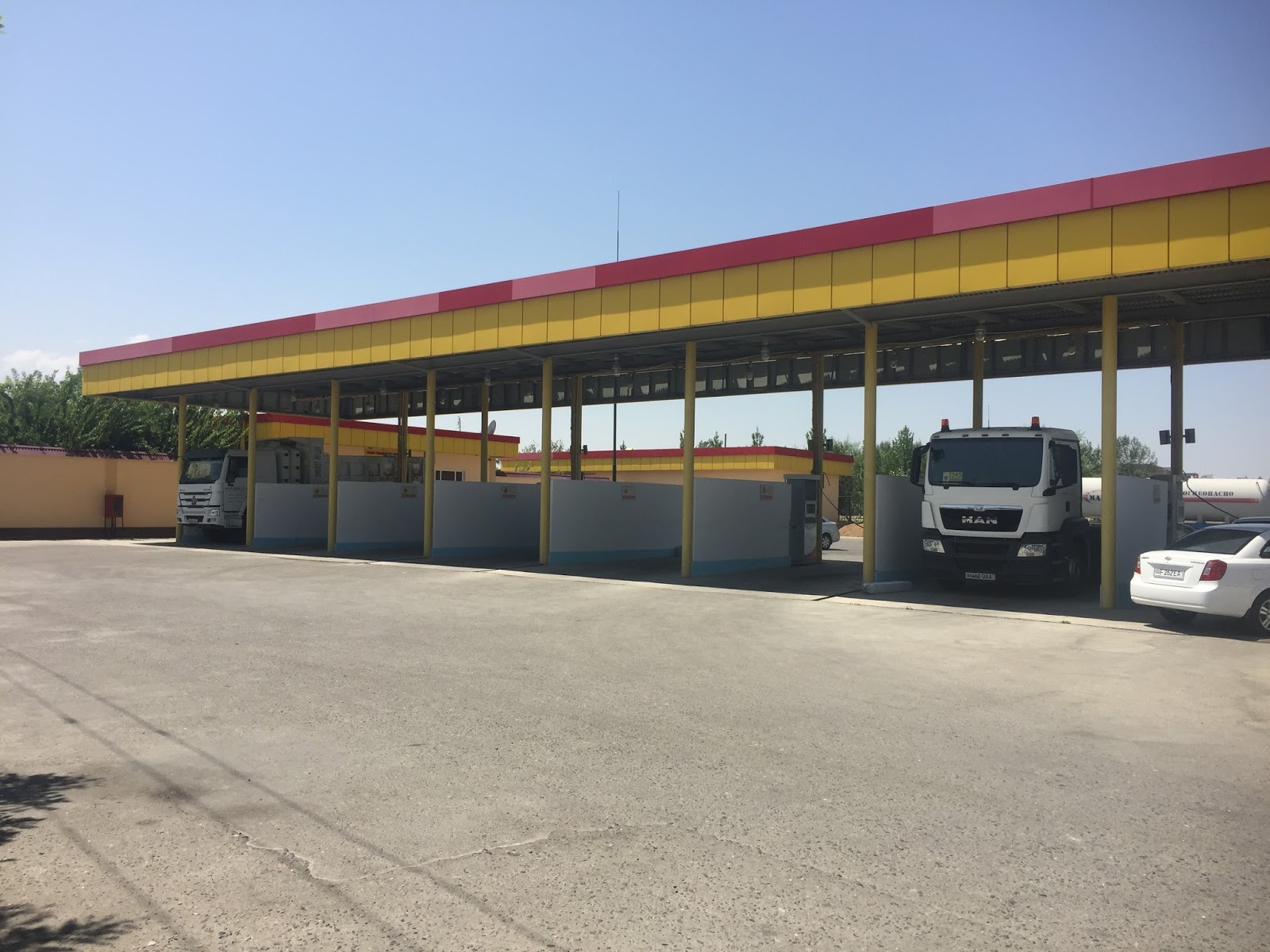 |
| A typical fuel station in Uzbekistan, with the pumps separated by blast walls |
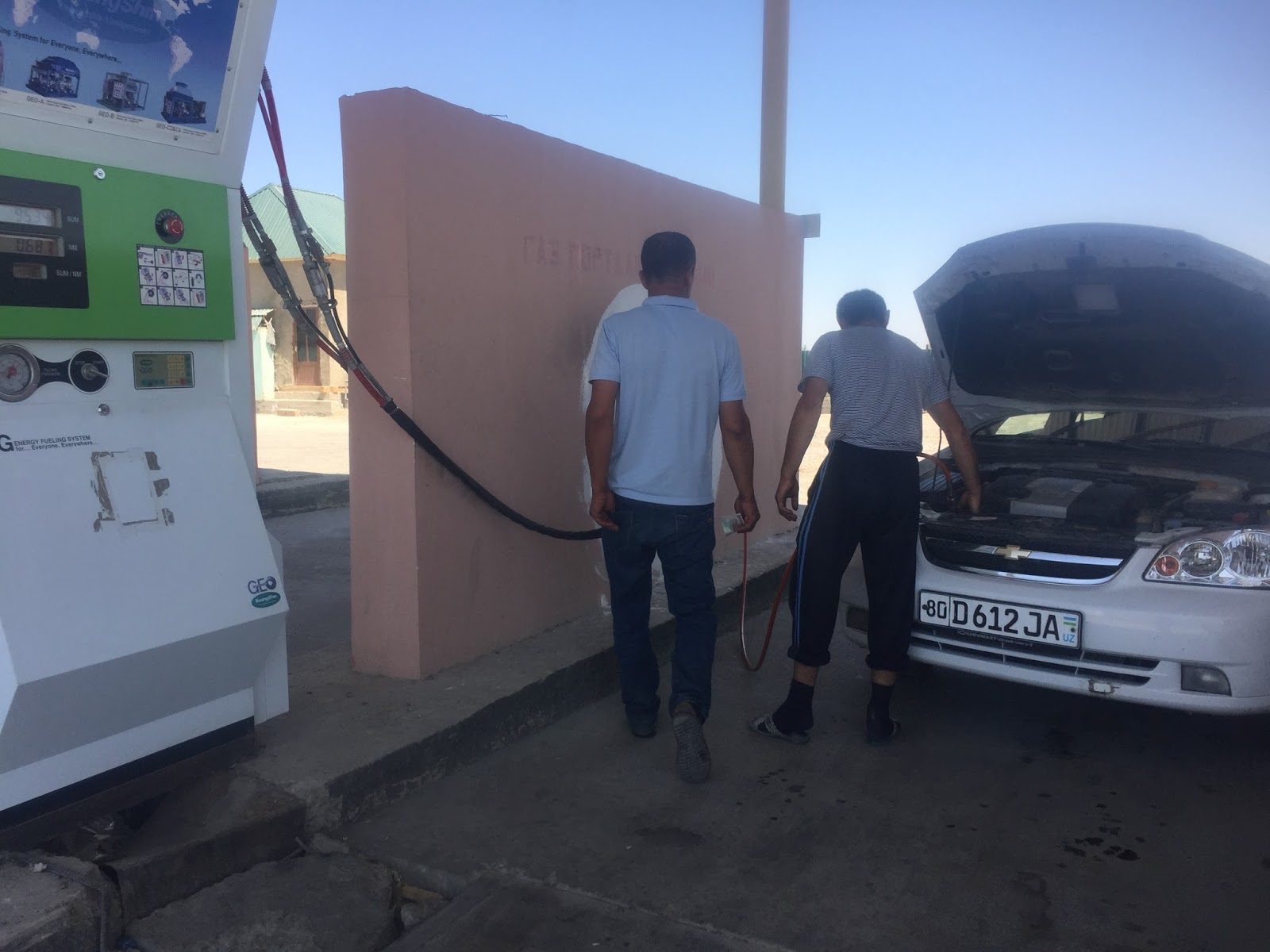 |
| Fueling the car. The port to refuel the vehicle is located under the hood. This photo was snapped discreetly – passengers aren’t supposed to be so close, and I was told to move away after this was taken. |
Bukhara, like Samarkand, was an extremely important city along the ancient Silk Road trade route from China to Europe. Its importance faded as that trade route weakened, and its leaders gradually came under Russian influence. As part of the Russian Civil War, the Red Army overthrew the last Emir of Bukhara, Mohammed Alim Khan, and made the territory part of the Soviet Union.
The photo below, taken in 1911 by Russian photographer Sergey Prokudin-Gorsky, depicts Mohammed Alim Khan a few years before he was deposed by the invading Red Army. It is one of the earliest color photographs in existence.
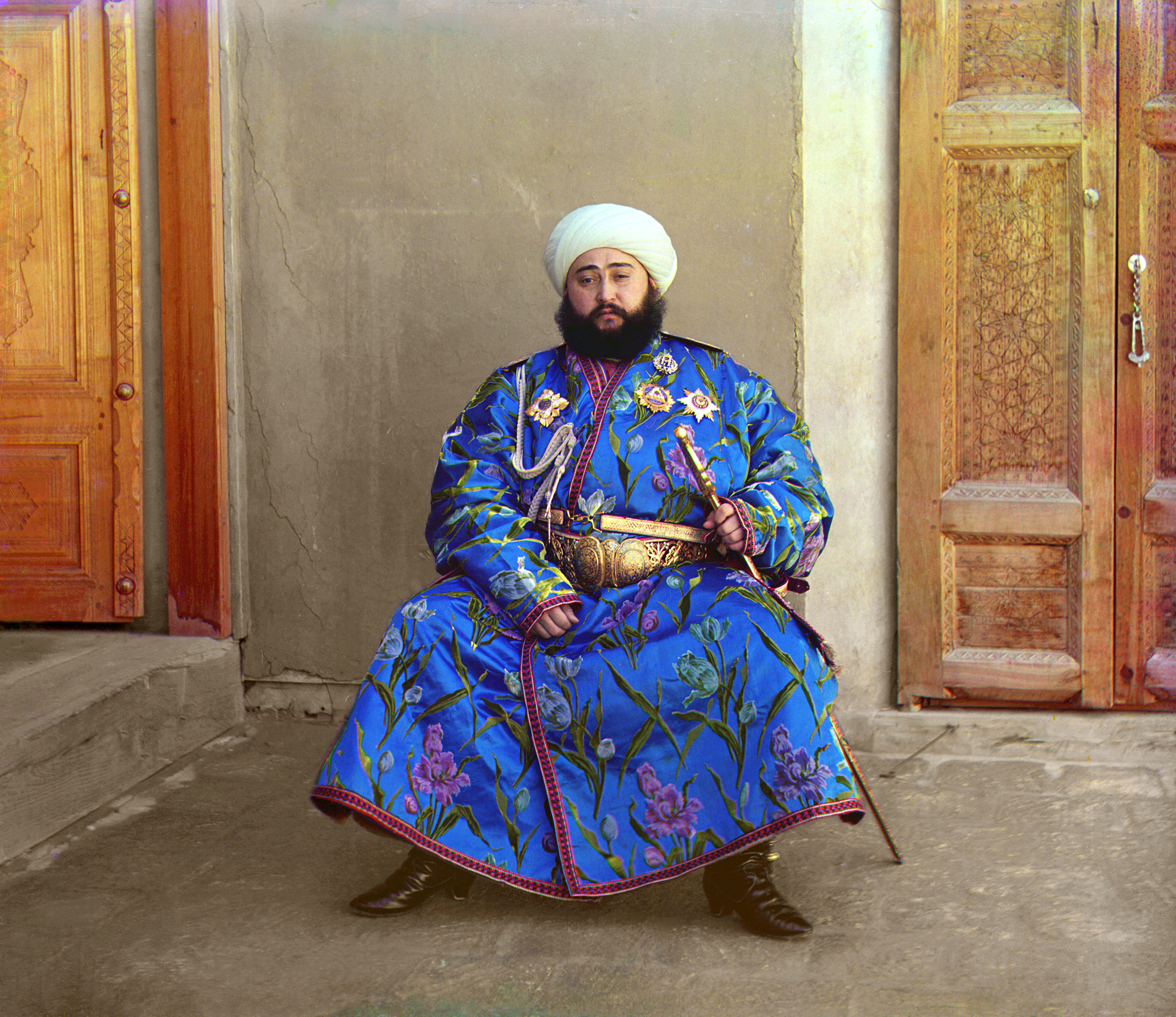 |
| Mohammed Alim Khan, Emir of Bukhara, by Sergey Prokudin-Gorsky. Digital image created from his negatives by the Library of Congress. |
Many of the madrassas, minarets, and forts in Bukhara have been restored to their former glory. The Mir-i-Arab Madrassa is still functioning as a religious school, and visitors are only allowed into the entryway where they can see the students playing in the courtyard. The exterior of the building is magnificent.
 |
| The Mir-i-Arab Madrassa in Bukhara |
Sharing a central plaza with Mir-i-Arab is the Po-i-Kalyan Mosque and its famous minaret, which was finished in 1127. The mosque, like most other major buildings in Bukhara, was destroyed by Genghis Khan as his troops swept through Central Asia, but he spared the towering minaret. Because it was spared, it is now the oldest structure remaining in Bukhara. The mosque was rebuilt in the 16th century. Before the Soviet invasion, it was also used as an execution site. Prisoners were thrown from the circular gallery atop the tower.
 |
| The Kalyan Minaret |
In the center of Bukhara is the Ark, an imposing walled citadel that also served as the Emir’s palace. This was the last place to fall to the Red Army during their relatively quick 1920 invasion. The modern weaponry of the Bolsheviks, including artillery and aircraft, quickly overwhelmed the ill-equipped Bukharan defenders. Some parts of the Ark have been restored to their former state.
 |
| The ornate ceiling of the Emir’s personal mosque inside the Ark |
A rather unusual building near the Ark is Chor Minor. Though its name is Persian for “four minarets”, its tower are not minarets. It is unclear where the inspiration for this unique and interesting building came from, but it is a major landmark of Bukhara today.
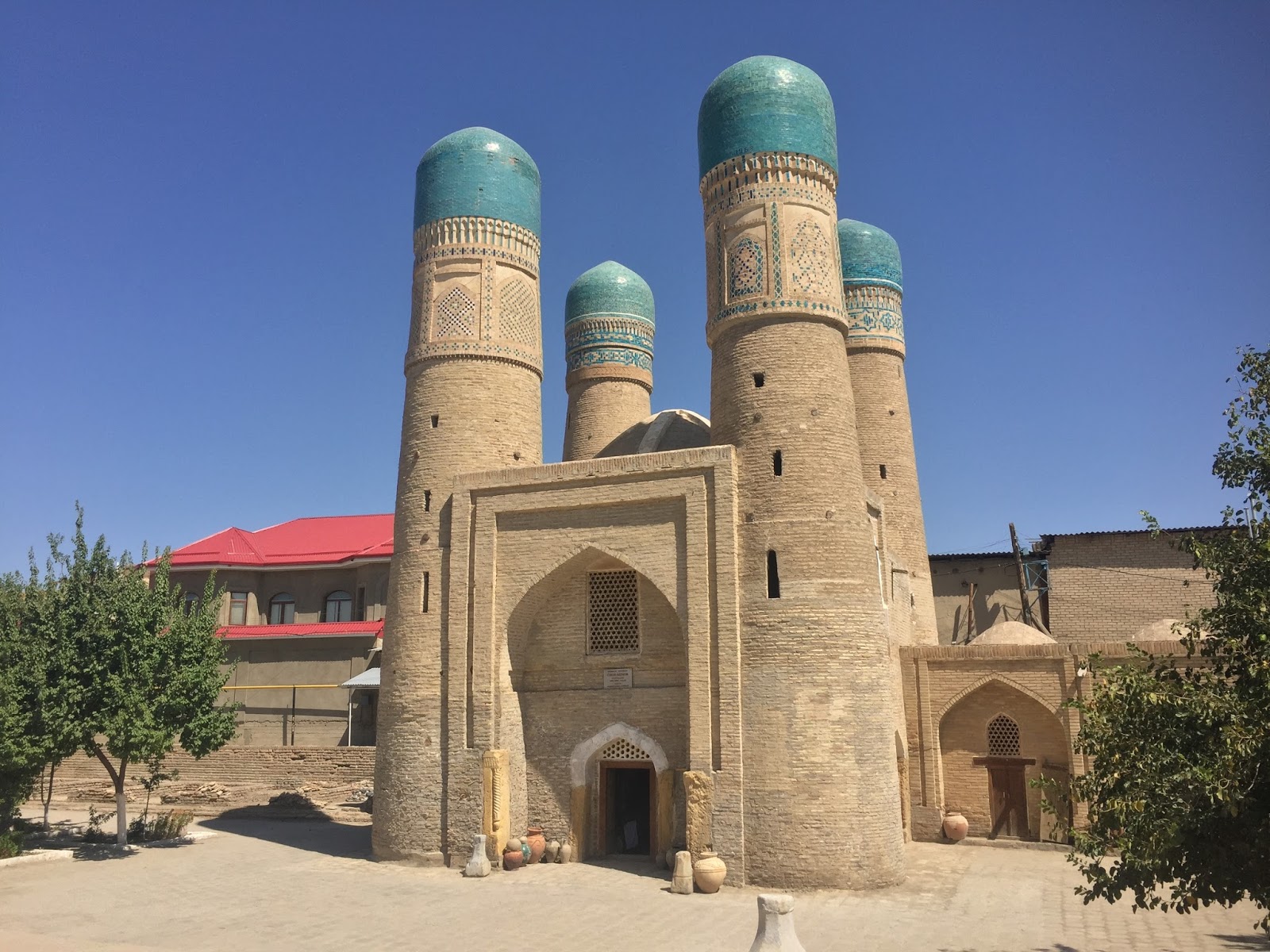 |
| Chor Minor, Bukhara |
Standing across the street from the Ark is a water tower built by the Soviets in the 1920s. It stands as an interesting counterpoint to the medieval citadel opposite it, and was constructed by the Soviets to show the superiority of their modern way of life.
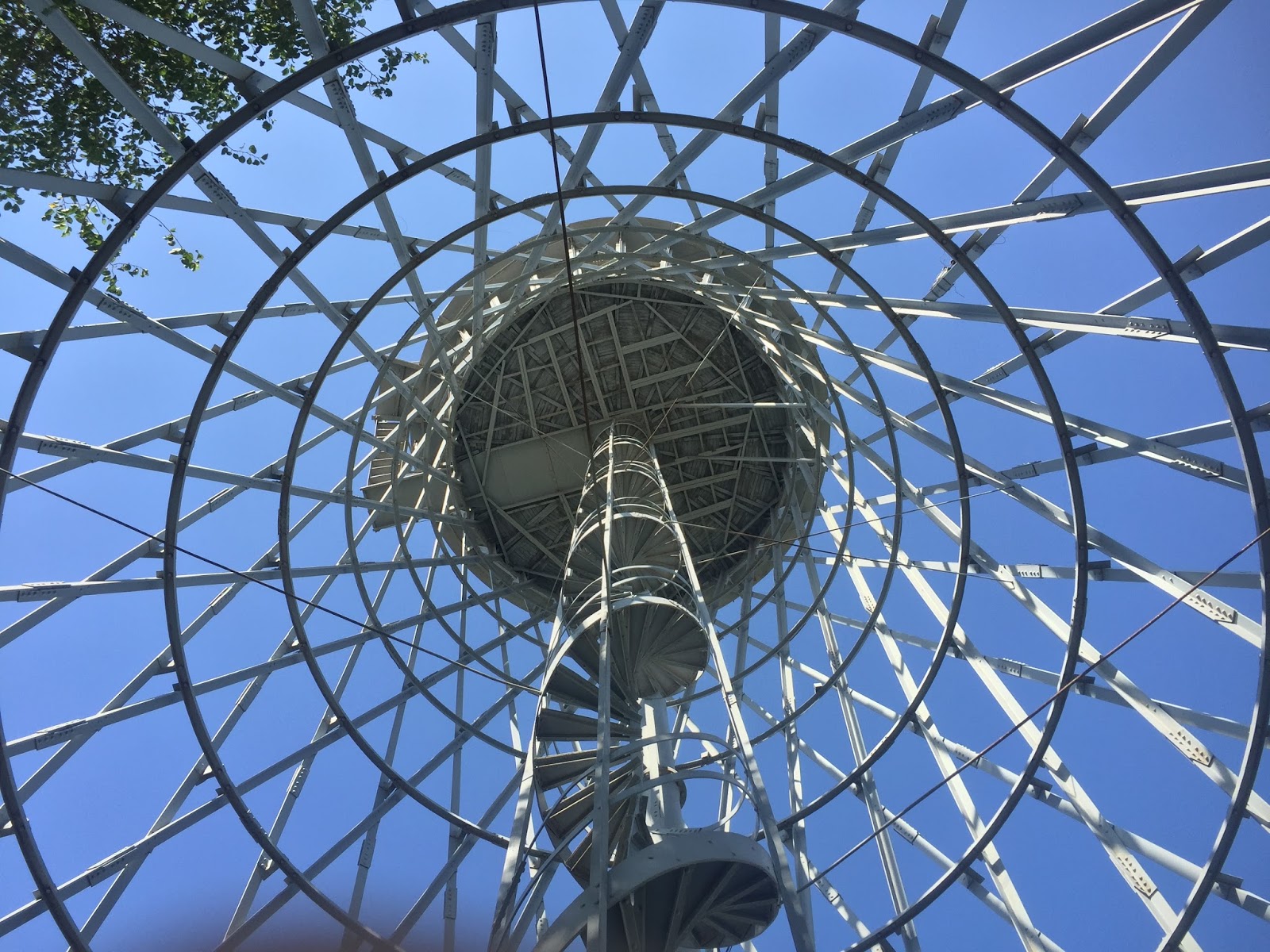 |
| Bukhara’s water tower from below. It no longer holds water and is topped by a flat deck. |
Two more shared taxis, another mildly terrifying refueling stop, and a stop at the worst toilet I have ever seen in the world brought me to Khiva, another Silk Road caravan city and center of its own Khanate until it fell to the Red Army like its neighbors in Bukhara.
Khiva also has a far more sinister association with the slave trade, particularly in the minds of Europeans, who first heard of this place through the fantastical tales of 19th century adventurers.
The old walled city of Khiva contains all the major historical sites and is very compact. It can be crossed on foot in only ten minutes. I highly recommend visiting here because its buildings are just as impressive but are much closer together and easy to visit.
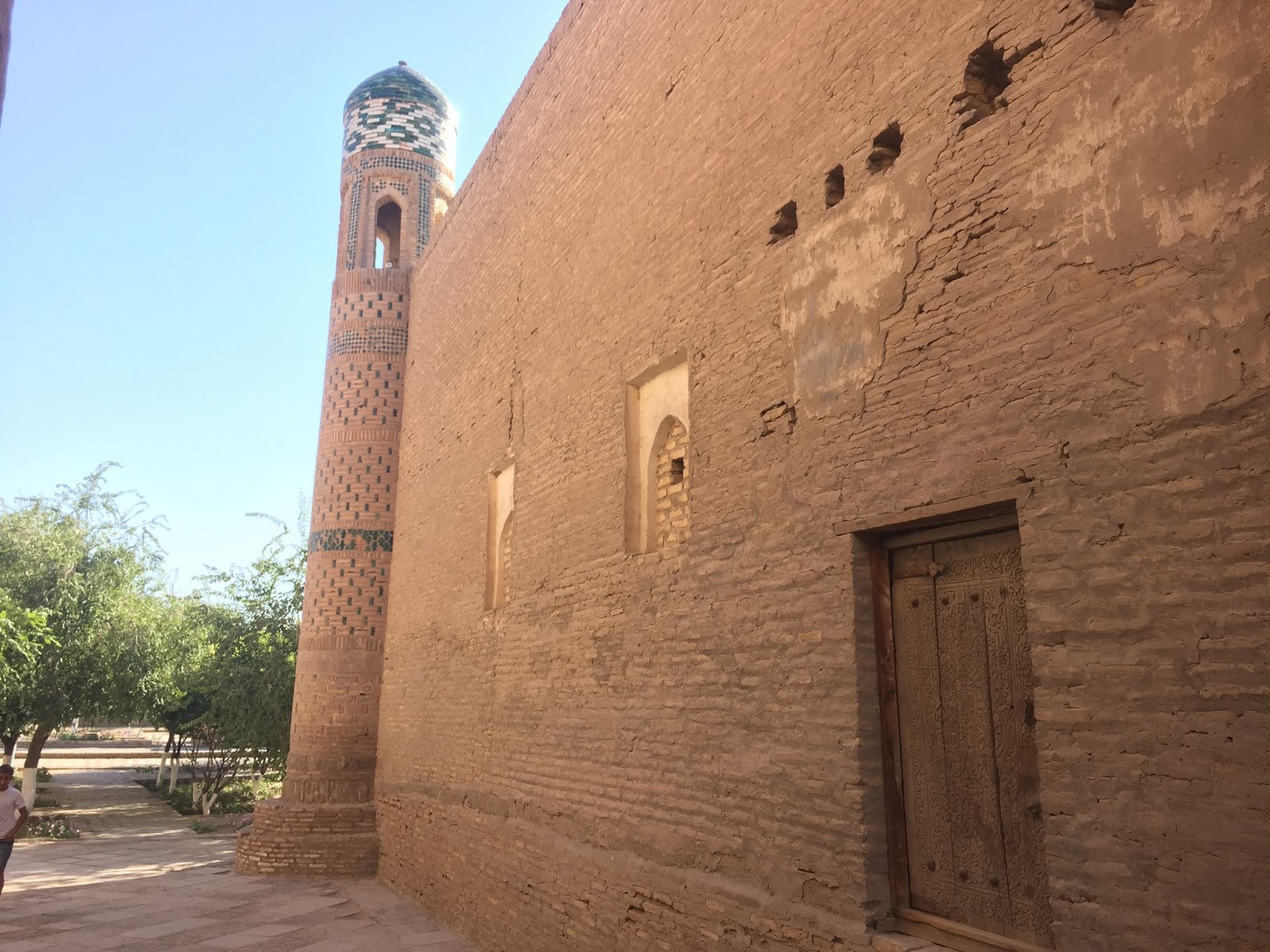 |
| A minaret and old wooden door from a small side alley in Khiva |
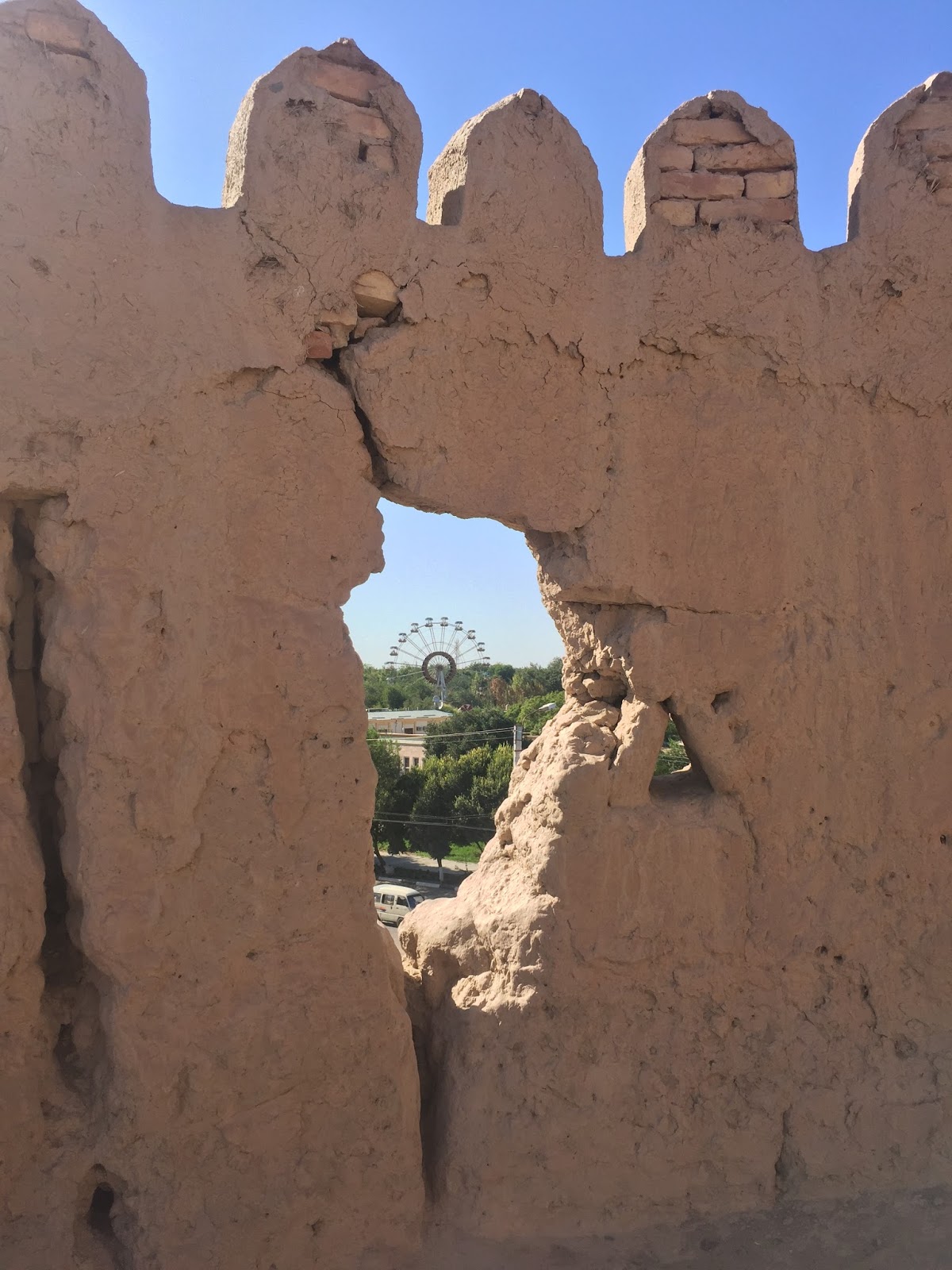 |
| View from atop the old city walls, looking out towards a Soviet-built Ferris Wheel |
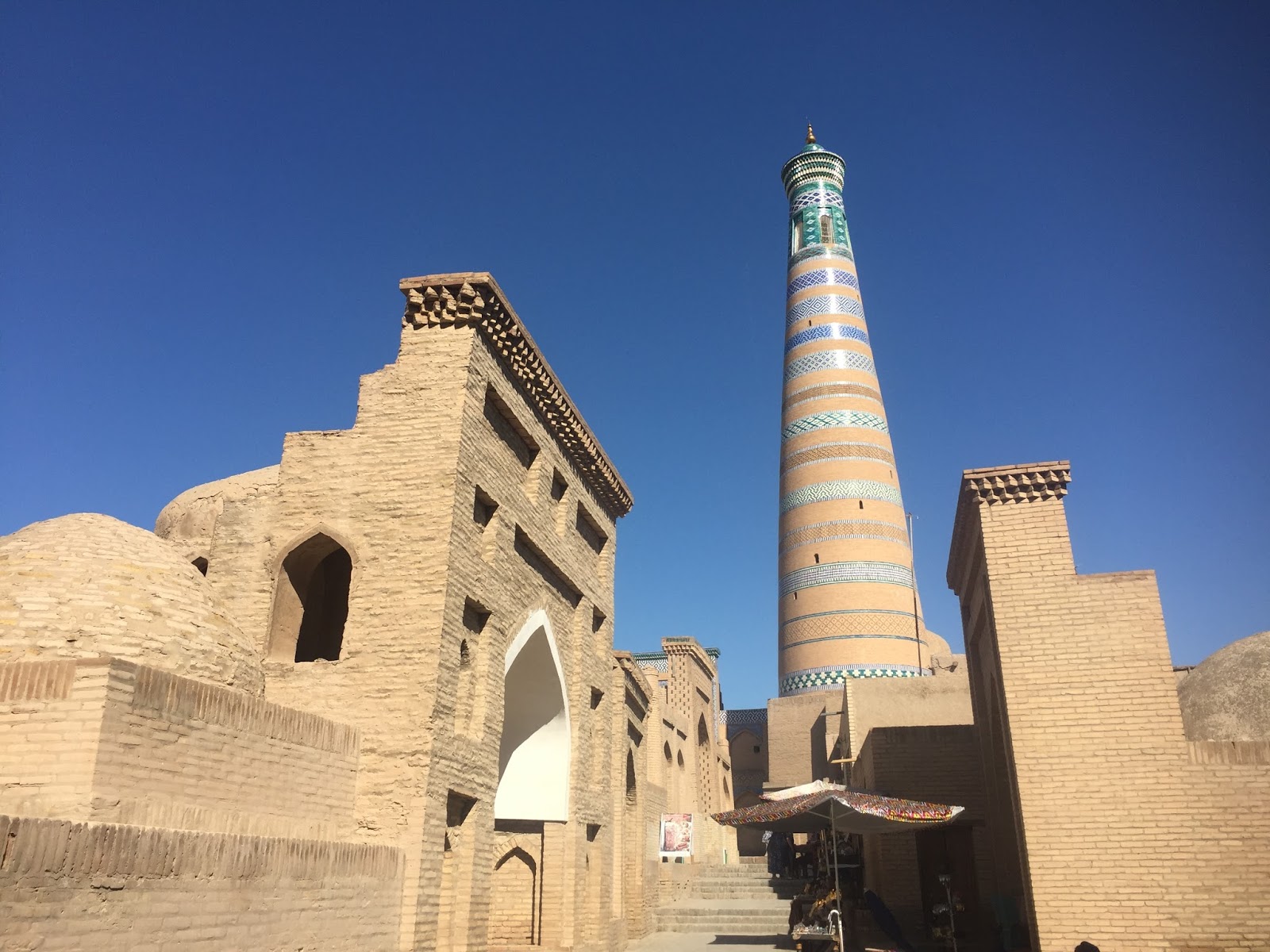 |
| The Islam Kohdja Minaret, the tallest in the city, has beautifully decorated tile bands. |
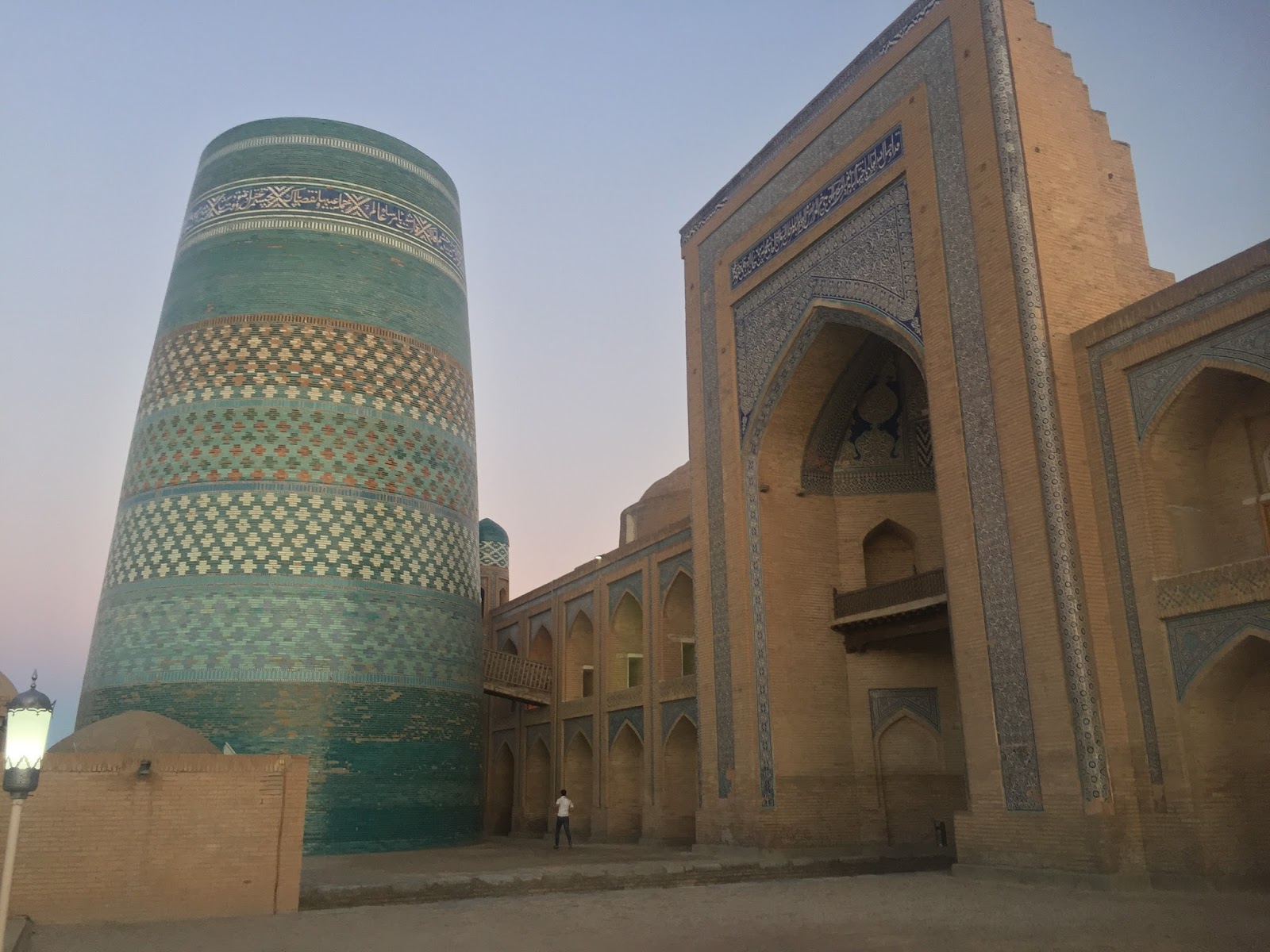 |
| The sunset illuminates Kalta Minor, an unusual cylindrical minaret. It is the most striking structure in Khiva. |
 |
| Another view of Kalta Minor, showing the bridge used to access its internal stairway |
I enjoyed my time in Khiva because this marvelous city is very accessible and easy to walk around. It was nearly time for my flight back to the United States, but I still wanted to make one more stop in Nukus, one of the farthest-flung cities in Uzbekistan.


Happy
0 %

Sad
0 %

Excited
0 %

Sleepy
0 %

Angry
0 %

Surprise
0 %