0
0
 0
0
Time for a few long-overdue blog posts. I was in Spain from November 21 to 26 and had a great six days there. The first four days of the trip were spent in Barcelona and the second two in Madrid.
I was up well before dawn on Friday morning to board a train to Gatwick Airport south of London. London has six airports – all are approximately equally inconvenient. Currently the government here wants to expand London’s airport capacity by adding a new runway, whether at Heathrow, Gatwick, or a new airport. Gatwick is currently the busiest single-runway airport in the world (followed by San Diego, my hometown) and Heathrow’s pair of runways are reaching capacity. The plan to build a seventh inconvenient airport seems silly to me.
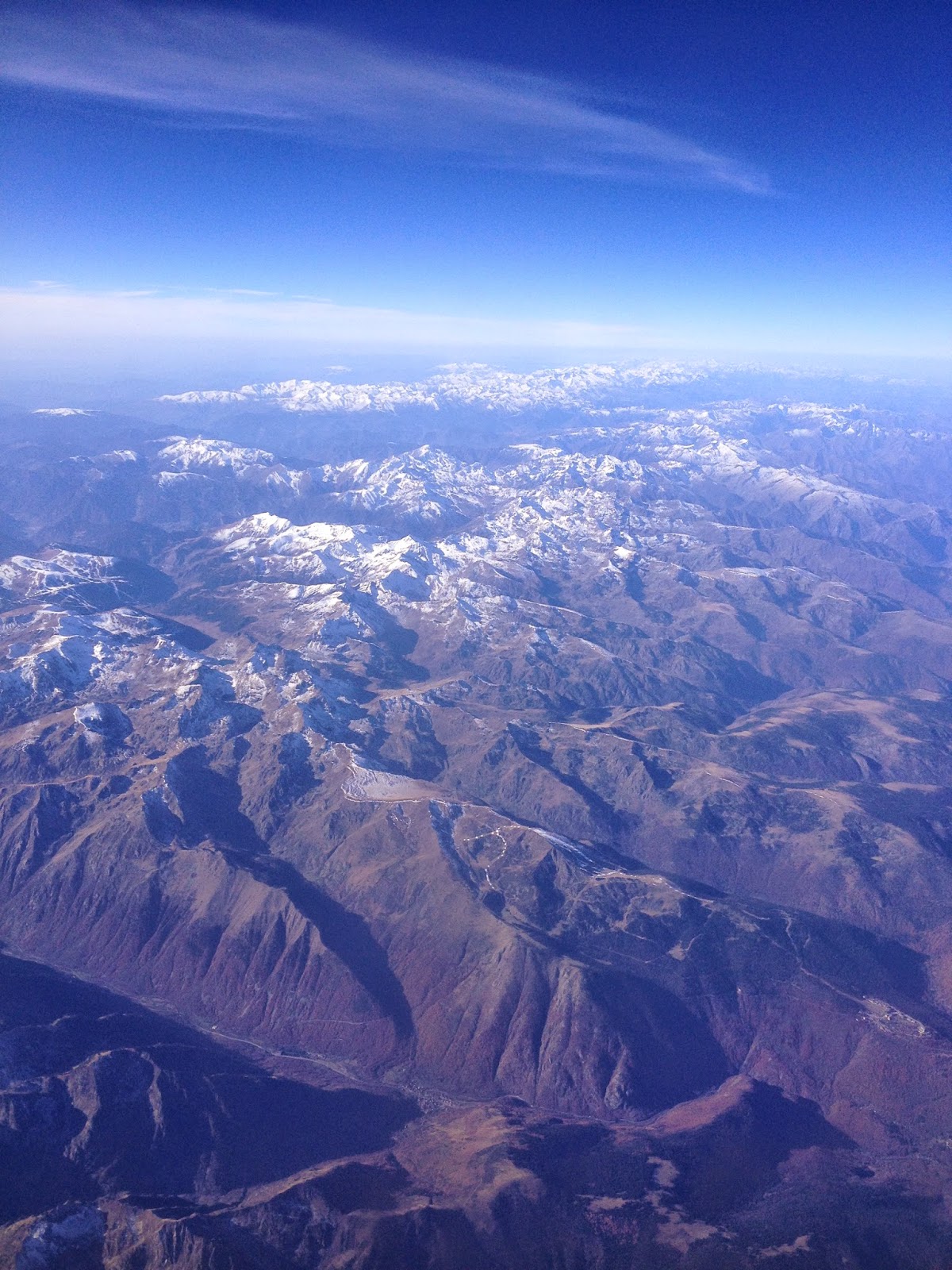
My flight on Vueling was fairly uneventful. I slept through most of the trip, but woke up as we crossed the Pyrenees into Spain.
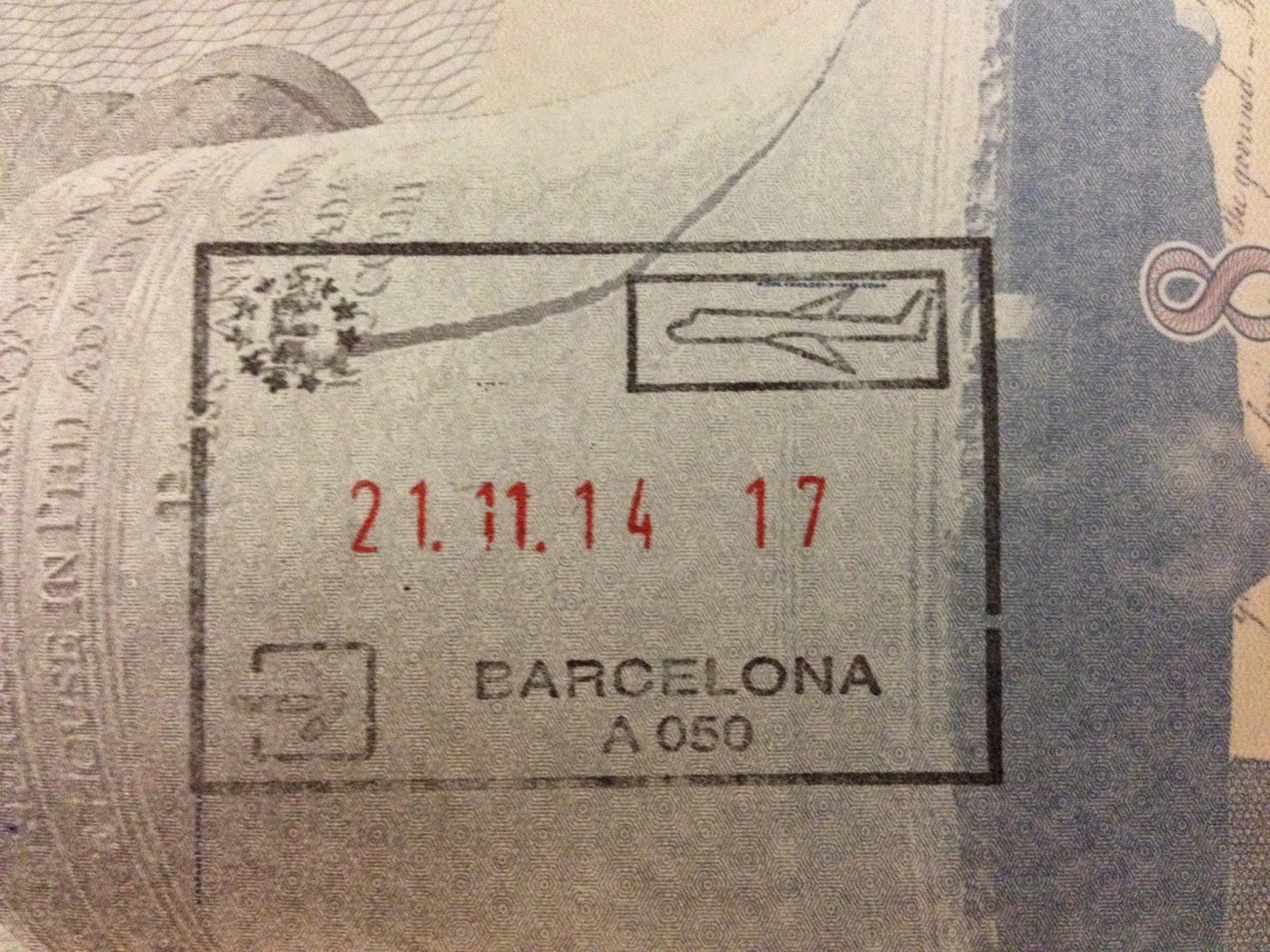
I cleared passport control and customs in record time, reminding me that this is a tourist town.
On the bus ride into the city, I was immediately struck by the number of Catalonian flags flying from balconies. Barcelona is within Catalonia, a region of Spain with an entirely distinct language (Catalan) and culture. Ten days before I arrived, Catalonia had held an extremely controversial referendum on independence from Spain. Initially, the Catalonian authorities wanted the vote to be binding, but this was blocked by the Spanish judiciary. The results of the referendum were little more than an opinion poll, with 80% in favor of Catalonia becoming an independent nation. It’s important to note that turnout was exceptionally low, so the results are probably skewed towards the more vocal pro-independence side.
My friends and I got off our bus at the Plaça Espanya, with its imposing towers and art museum on the hill behind. There’s also an arena and monument behind the spot where I took this picture.
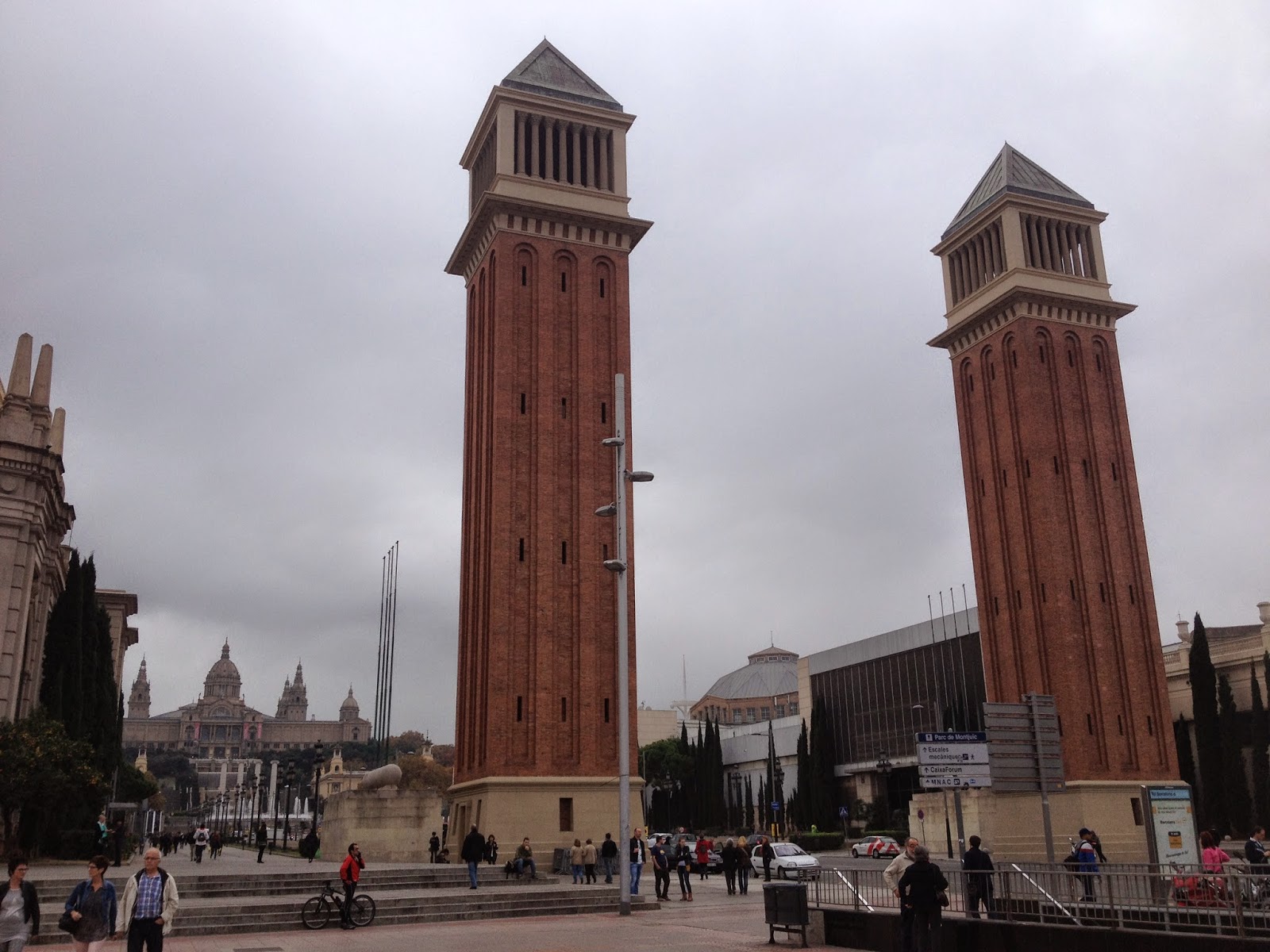
We made our way through Barcelona’s winding streets to our hostel, arriving in the late afternoon.

 |
| Our hostel had this slightly disturbing sign on the bathroom door |
A late dinner and a night out at a local bar concluded our first day in Barcelona. The next morning, we went by the city’s cathedral, which would be the starting point for our walking tour of the city the next day.

And we spent plenty of time exploring the winding medieval streets.
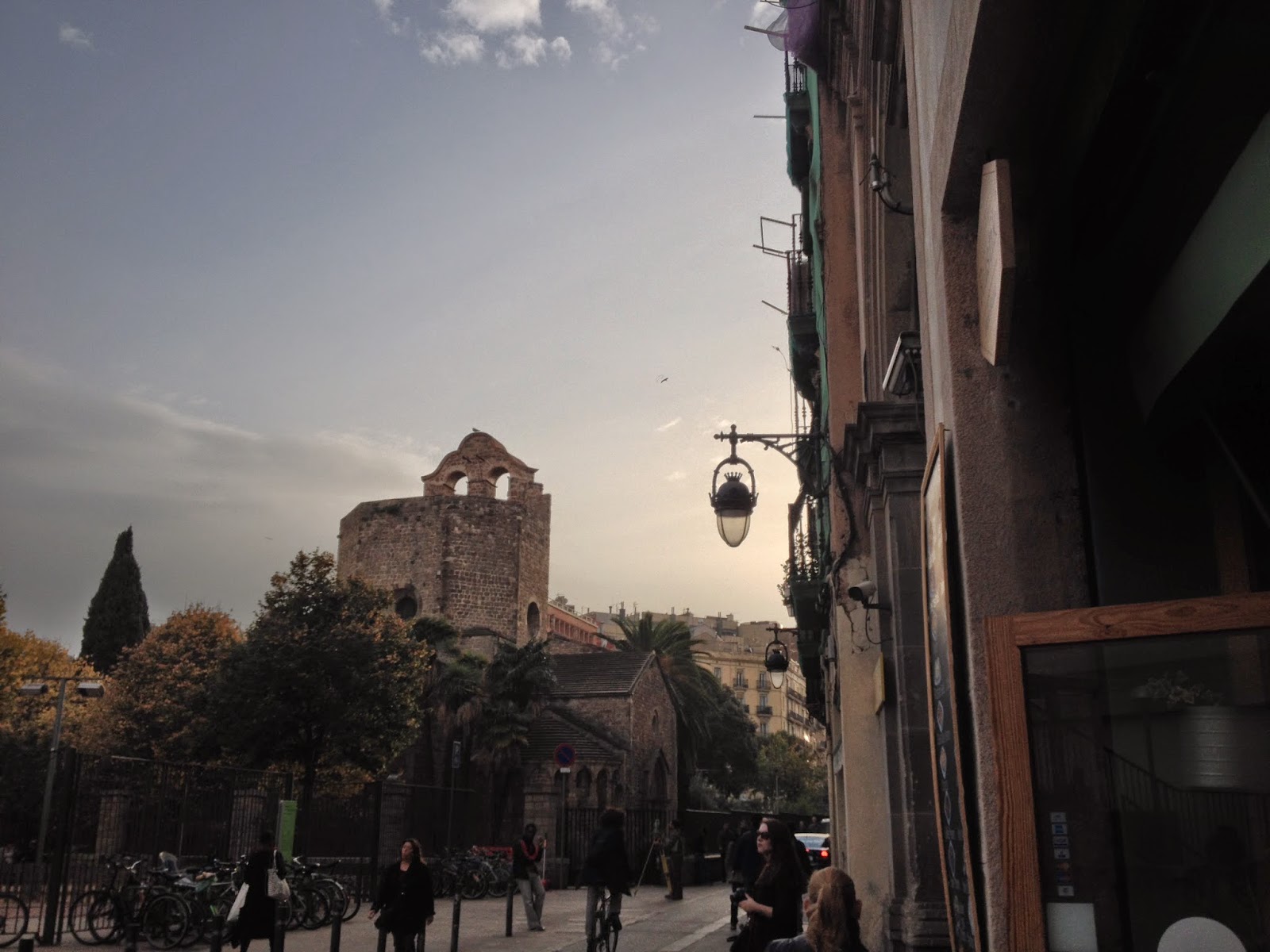
In the evening, we walked to the top of Montjuïc, a large hill overlooking the city. After an arduous climb, we reached Castel Montjuïc, a fortress with a commanding view of the city and the harbour. The fortress at the summit controlled the surrounding region of centuries.

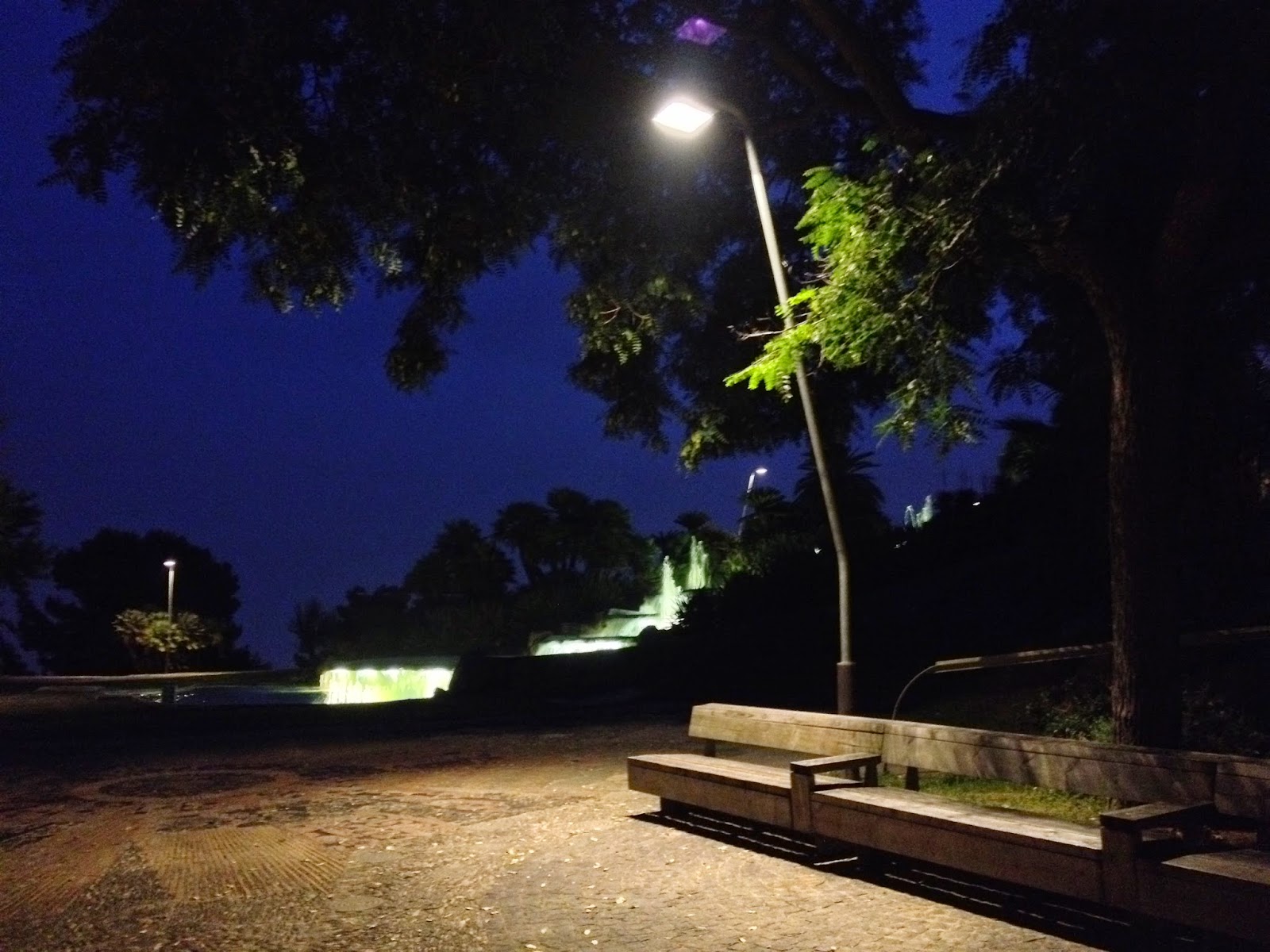
We walked down after nightfall, so I had the chance to play photographer once again. This was one of the better photos I took.
The next day, our walking tour left from the Barcelona Cathedral. This time, I had a chance to take some photos of the interior.
 |
| View of the nave from the entrance |
 |
| The side of the nave with its neo-Gothic piers and windows |
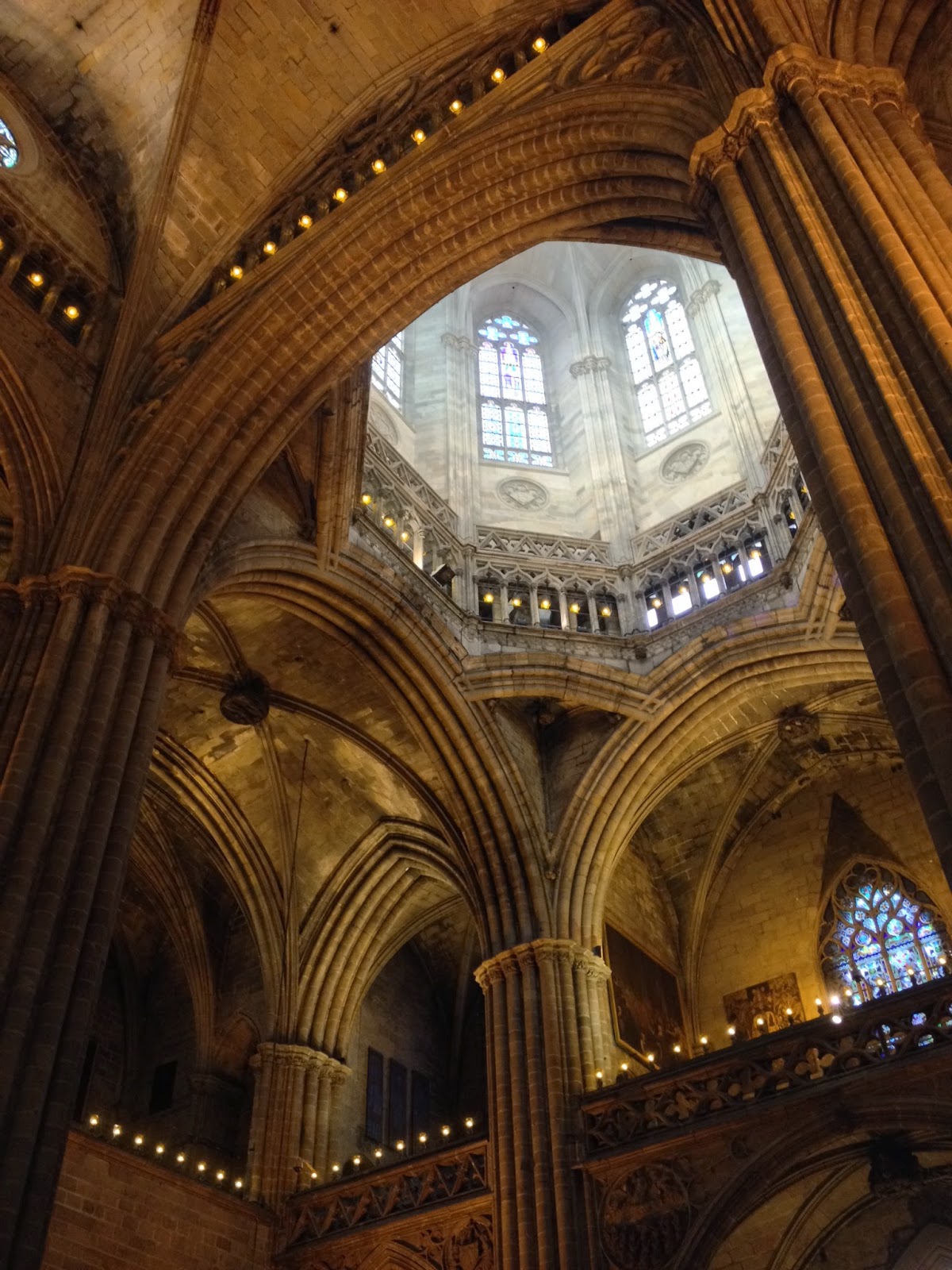 |
| The octagonal dome near the entrance |

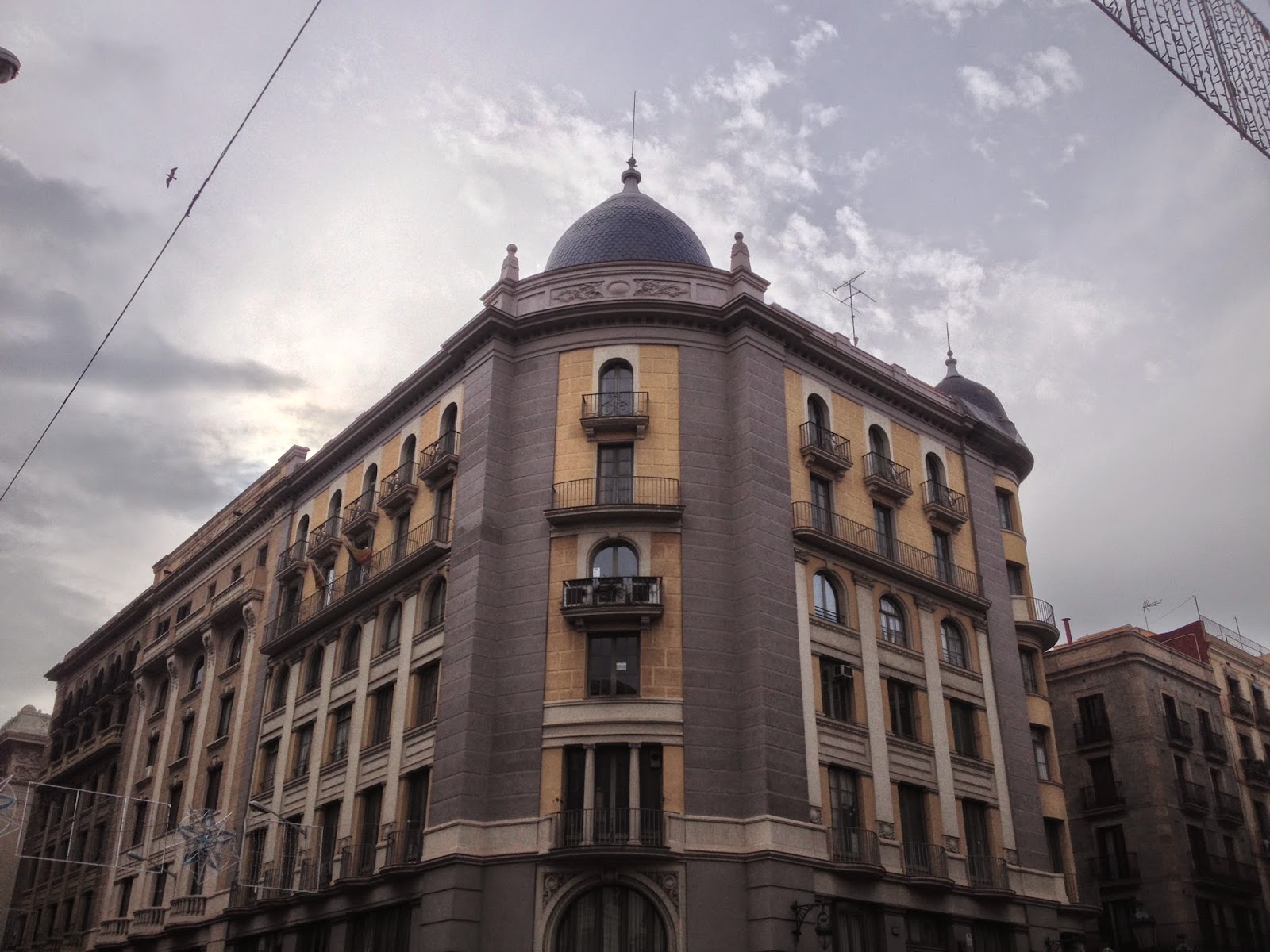
I took a few photos of interesting buildings during the walking tour as well.
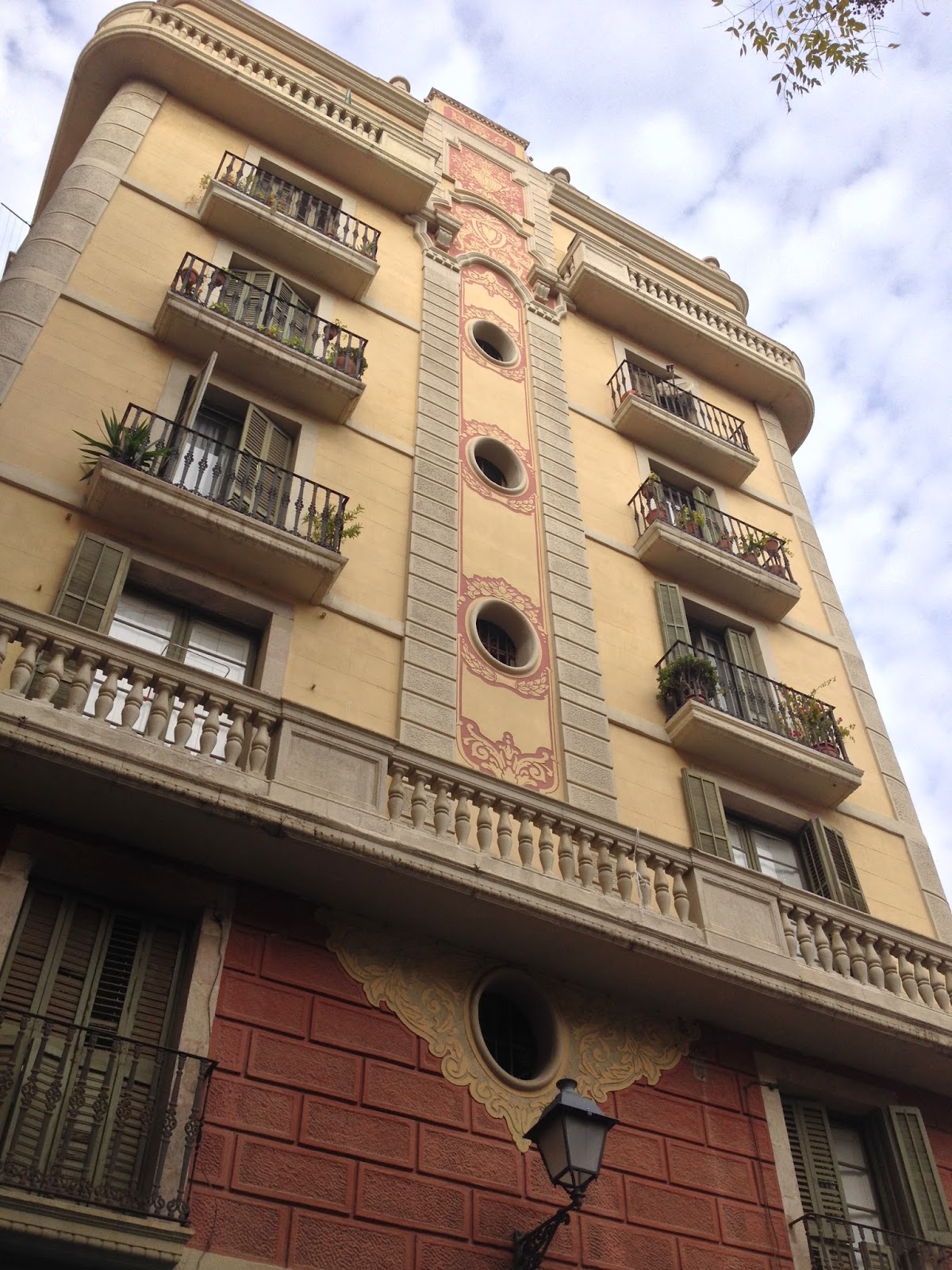
We walked around the outside of what was formerly the royal summer residence. It was here that Columbus asked Ferdinand and Isabella to fund his journey to “India” and here that, upon his return, he laid out the spoils and riches he had taken.
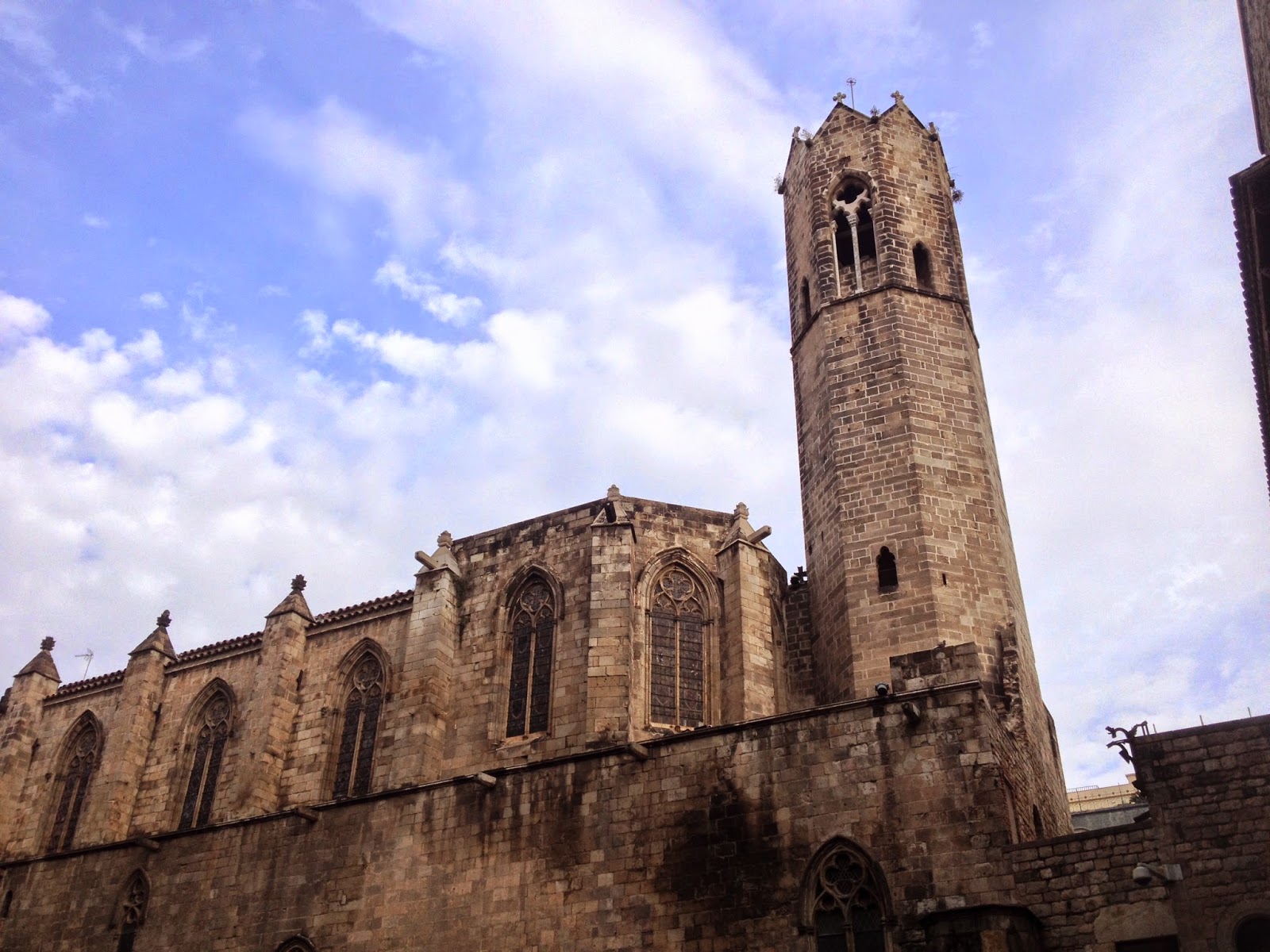
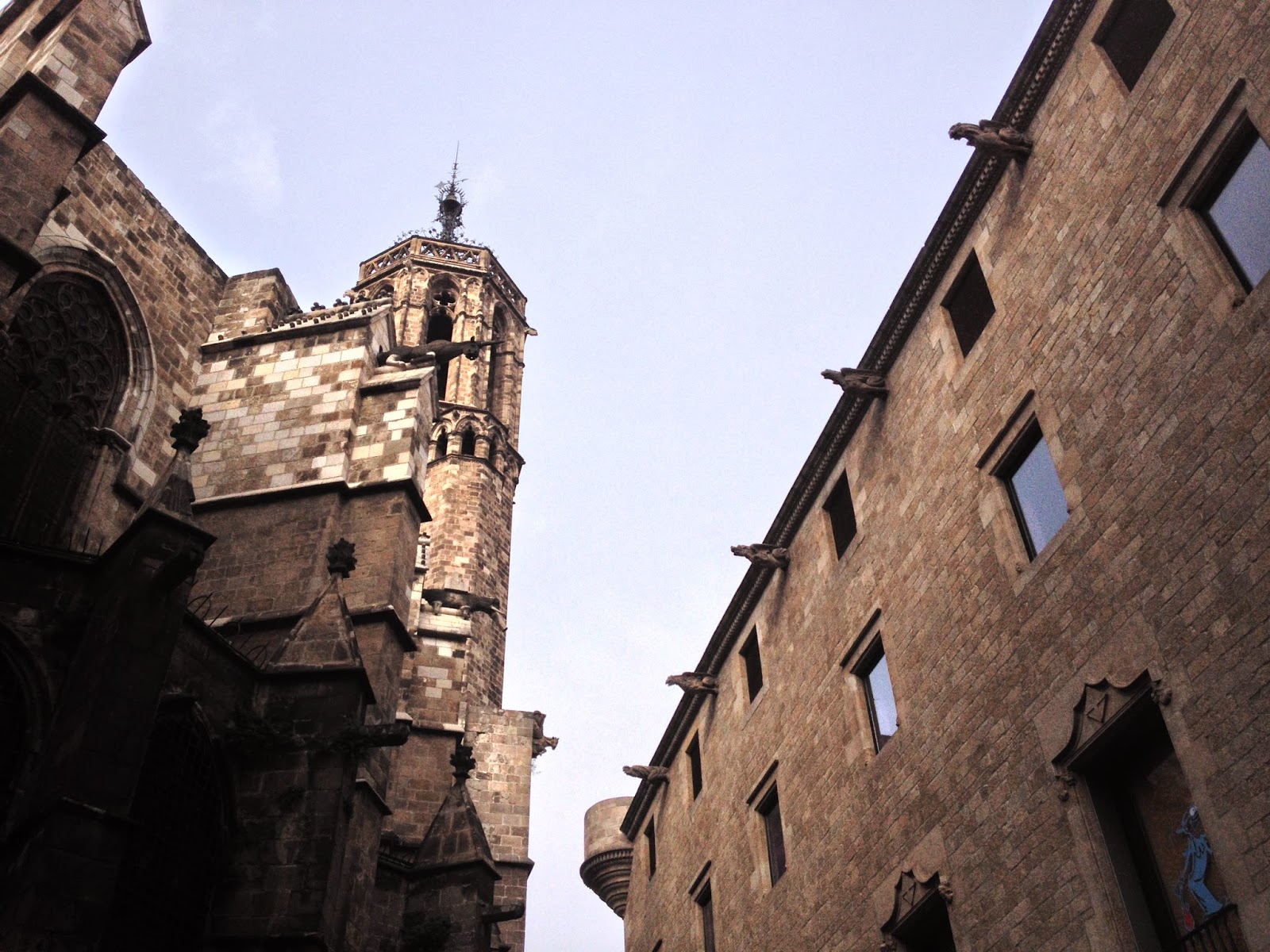
Adjacent to the palace was the court where the Inquisition tried heretics. I took a photo in the courtyard.


I honestly don’t recall what this building is, but I took a pretty good picture of it.

After our walking tour concluded, we walked past Barcelona’s Arc de Triomf and into the Parc de la Ciutadella.
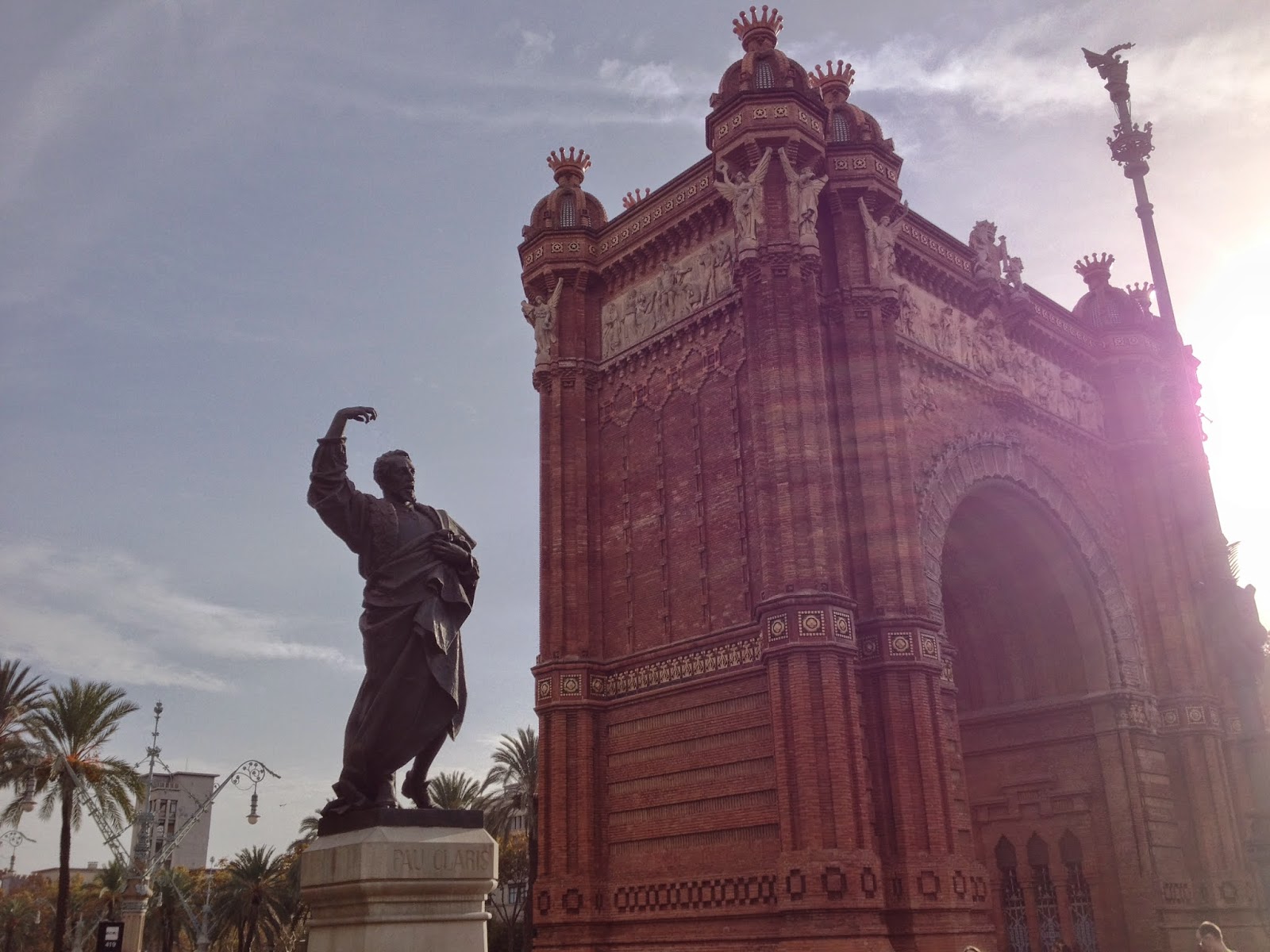
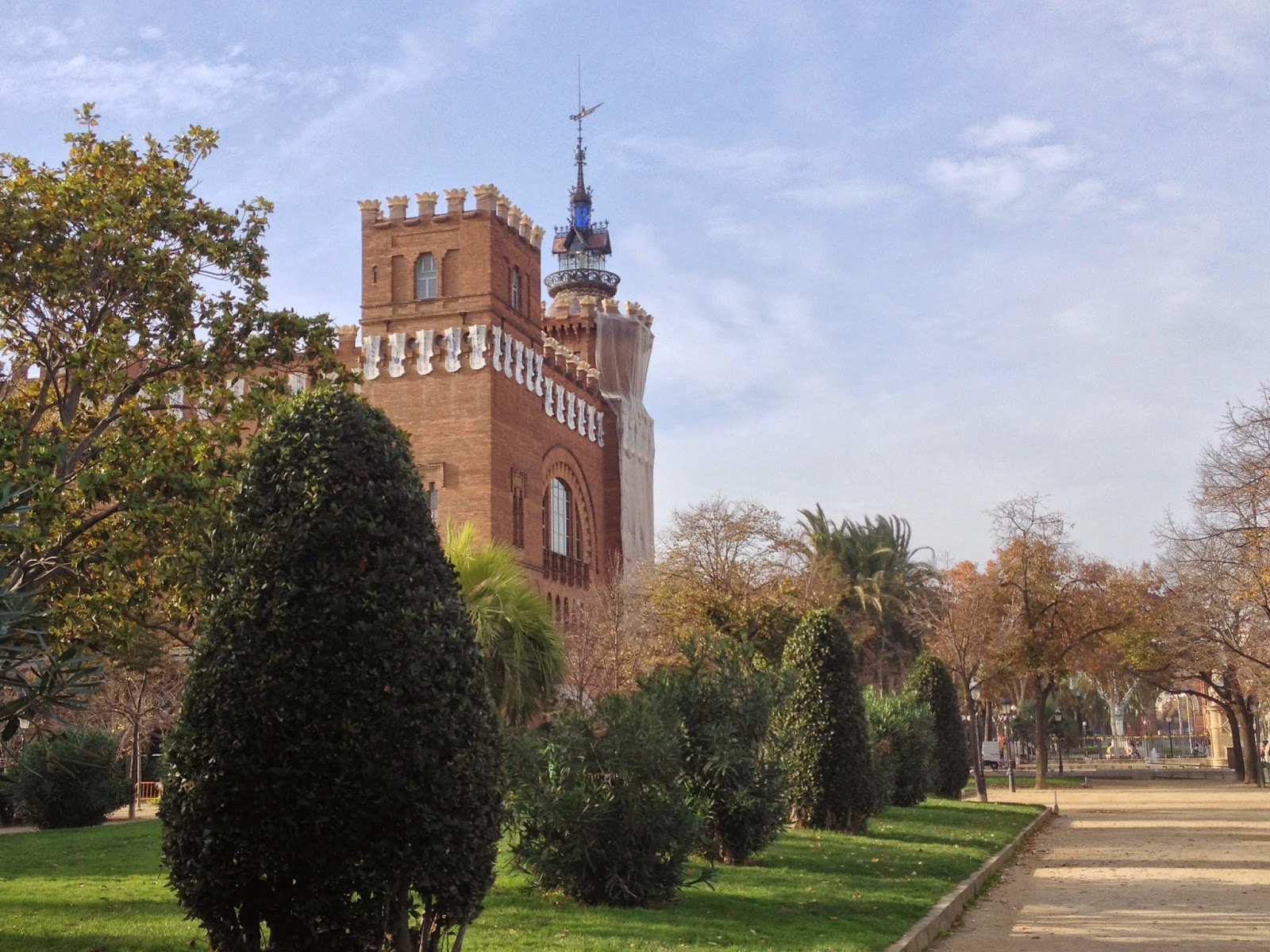

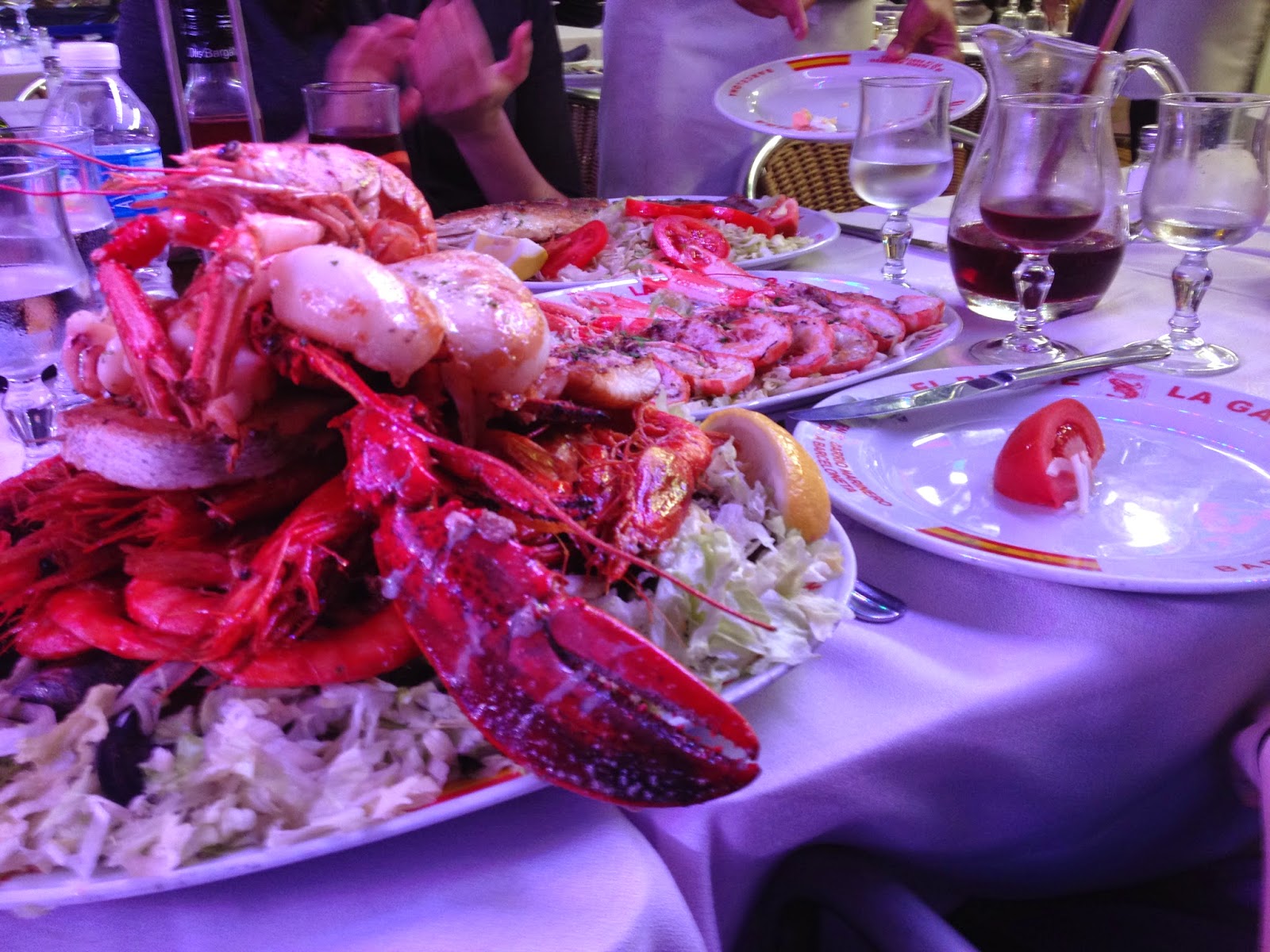
And we finished off the night with a massive seafood dinner. The platter in the front left and the one in the center were meant for four people, but a friend and I ate it all.


From there, we walked about 30 minutes into the city to see the Sagrada Familia basilica, probably Barcelona’s most famous landmark. It is the masterpiece of the architect Antoni Gaudi. Construction began in 1882 and it still over a decade from completion. If you’re interested in how the finished cathedral will look, The Guardian has a great news story.


Cell Phones (they actually had all the major carriers on-site)
I’ve never before been to a store where you can purchase a can of beans and an Armani suit in the same place. Now I have. Is my life complete?
That evening, we caught the overnight train to Madrid. During the day, high-speed AVE trains run roughly hourly, completing the trip to the capital in around 2.5 hours. The overnight “Estrella” train is slower, leaving after 10pm and arriving in Madrid a little after 7am the next morning. It has both a second-class carriage (airplane-style seats that recline somewhat) and couchette cars (six berths to a compartment). A word to the wise: always book the couchette cars two days in advance as my friend did. Otherwise, you’ll get a horrible night’s sleep in second class as I did. Renfe, the Spanish train operator, closes booking for the couchette cars two days before departure, but this deadline wasn’t published anywhere in English that I could find.
On to Madrid.