0
0
 0
0
Read Time:2 Minute, 48 Second
This weekend, I’ve made two more trips out of London – a Saturday trip to Bath and a Sunday trip to Stonehenge.
On Saturday morning, after less than two hours of sleep (not much time in bed), two friends and I caught a pre-dawn train to Bath from Paddington Station. These early trains are significantly cheaper – sometimes almost half price – but usually require leaving home before 5:30am. After a quick breakfast at the station, we boarded our train and were on our way. Five episodes of South Park later, we arrived in a very misty Bath.


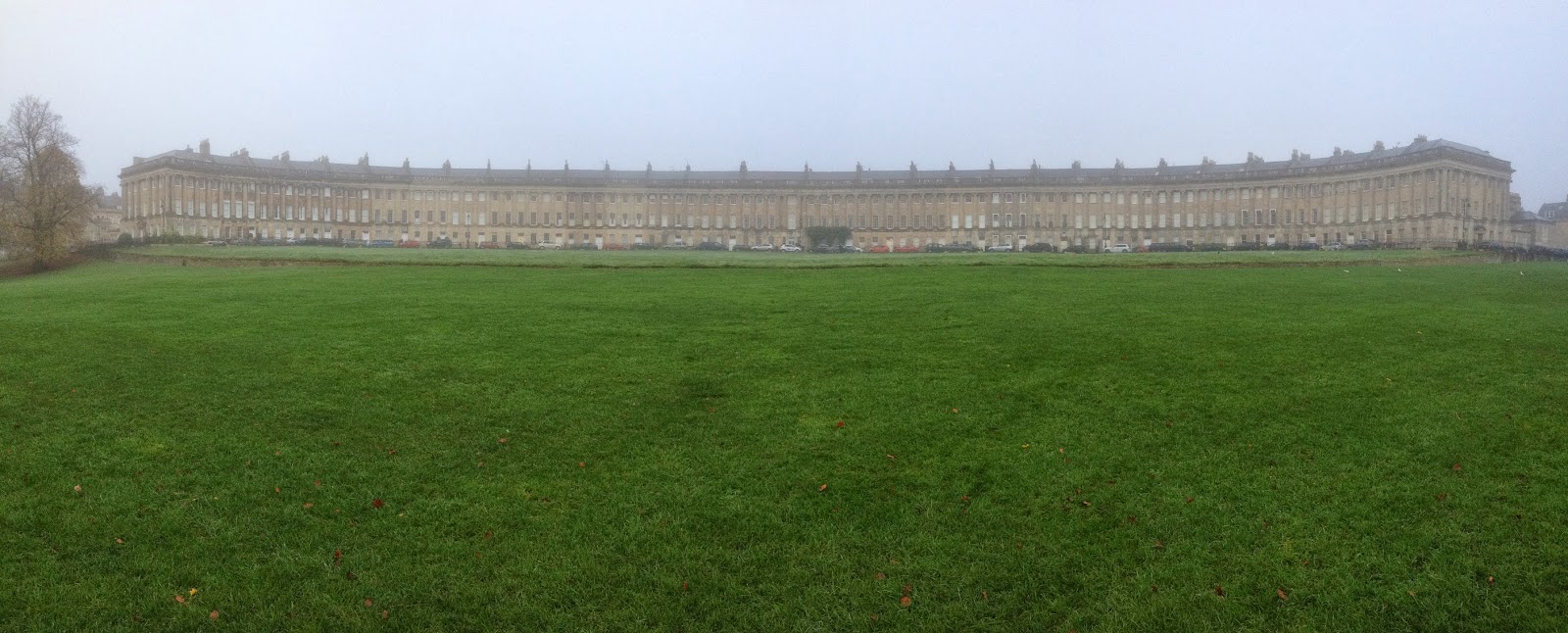
It was still before 9am, so we decided to see some of the outdoor sights first. Virtually the entire town of Bath is constructed in the Georgian style because large portions of the city were demolished and rebuilt in the second half of the 18thcentury. The entire city is quite beautiful, but there are several especially significant areas. The first of these that we visited is The Royal Crescent, which is a semicircular series of town homes next to Victoria Park, the city’s largest.
A similar scene can be found at The Circus, which we visited later in the day. Instead of a semicircle, these form a complete circle around a central square, in which several large trees have grown. It’s quite a beautiful spot.


With a few more minutes to waste before the city of Bath awoke, we enjoyed breakfast and tea in a cafe before buying our tickets to enter the Roman Baths, the city’s chief attraction and namesake. Because we’re somewhat mischievous university students, we decided to listen to the children’s audio tour instead of the normal one. In the middle of the tour, we found ourselves laughing hysterically at a description of an animal sacrifice, complete with extremely graphic sound effects. Thanks to Melissa for getting me this hilarious recording.
The Romans built the temple complex at Bath because they believed that the deity Sulis Minerva lived in the waters of the bubbly warm spring. It’s likely that Sulis was a Celtic deity that merged with Minerva after the arrival of the Romans, indicating that the site was sacred long before Caesar’s invasion. Worshippers threw curses written on thin lead plates into the spring’s main pool, believed to be home to the goddess. The water from the spring was piped into several other baths, of which the Great Bath is the most spectacular.
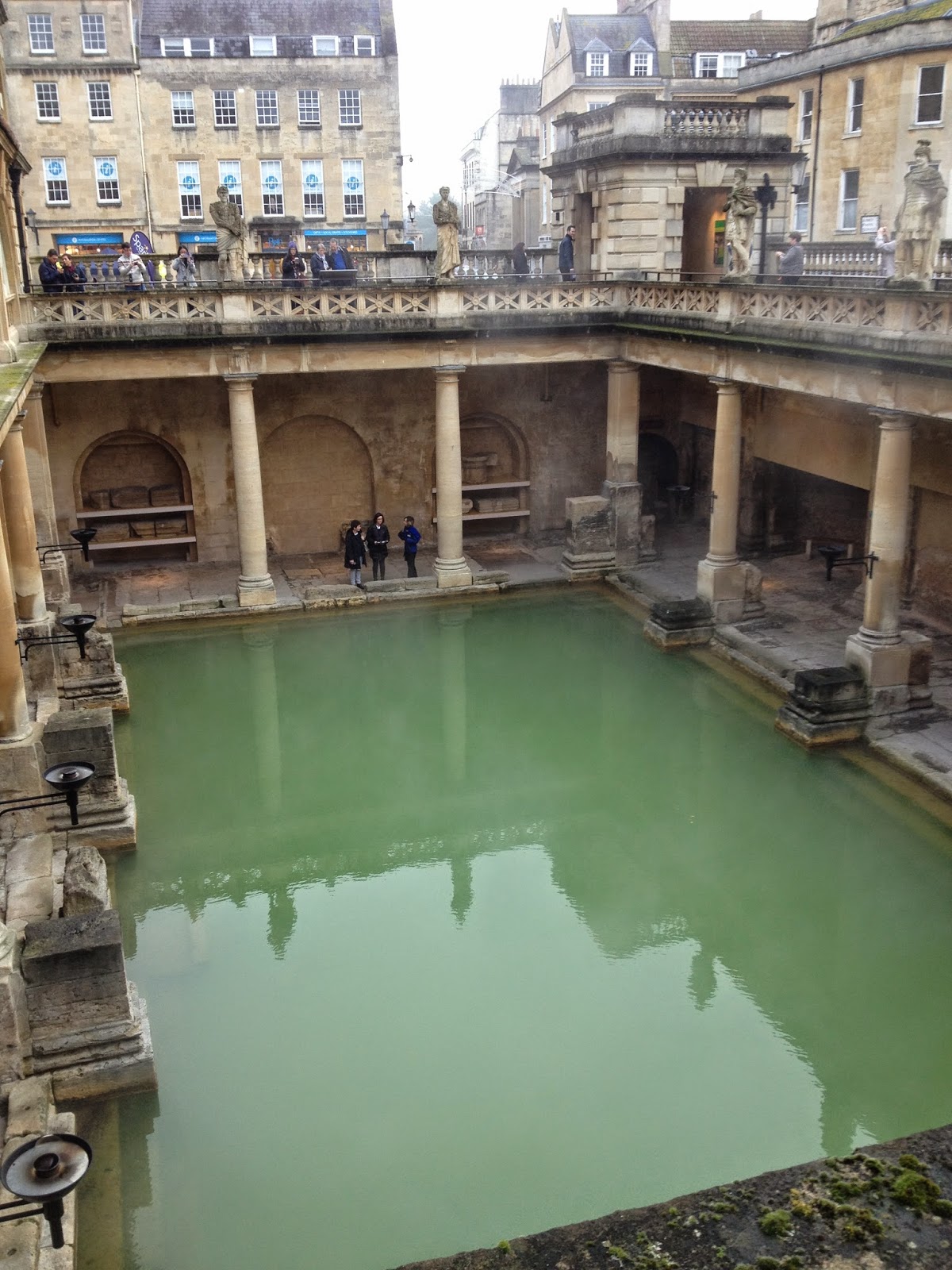


Here’s a few photos of the Great Bath. The architectural styles are varied, and only the floor of the lower level is Roman. The complex has been modified extensively over the centuries.

After visiting the Baths, we went next door to Bath Abbey, a spectacular Gothic church.
A few from the outside through the mist.

A view of the fan vaulting in the interior. Fan vaults were a major feature of many Gothic cathedrals in Britain, but were never used in Continental churches, which used rib and groin vaults exclusively.


After we left the cathedral, we spent some time walking around Bath. The area around the Pulteney Bridge was especially beautiful, so I took plenty of photos.


After walking around the city a little more and visiting a local pub, it was time to head back to London. After a few hours of sleep, my friends and I were back on a train – this time to Salisbury.


Happy
0 %

Sad
0 %

Excited
0 %

Sleepy
0 %

Angry
0 %

Surprise
0 %