 |
| Photo by Frank Murmann via Wikipedia |
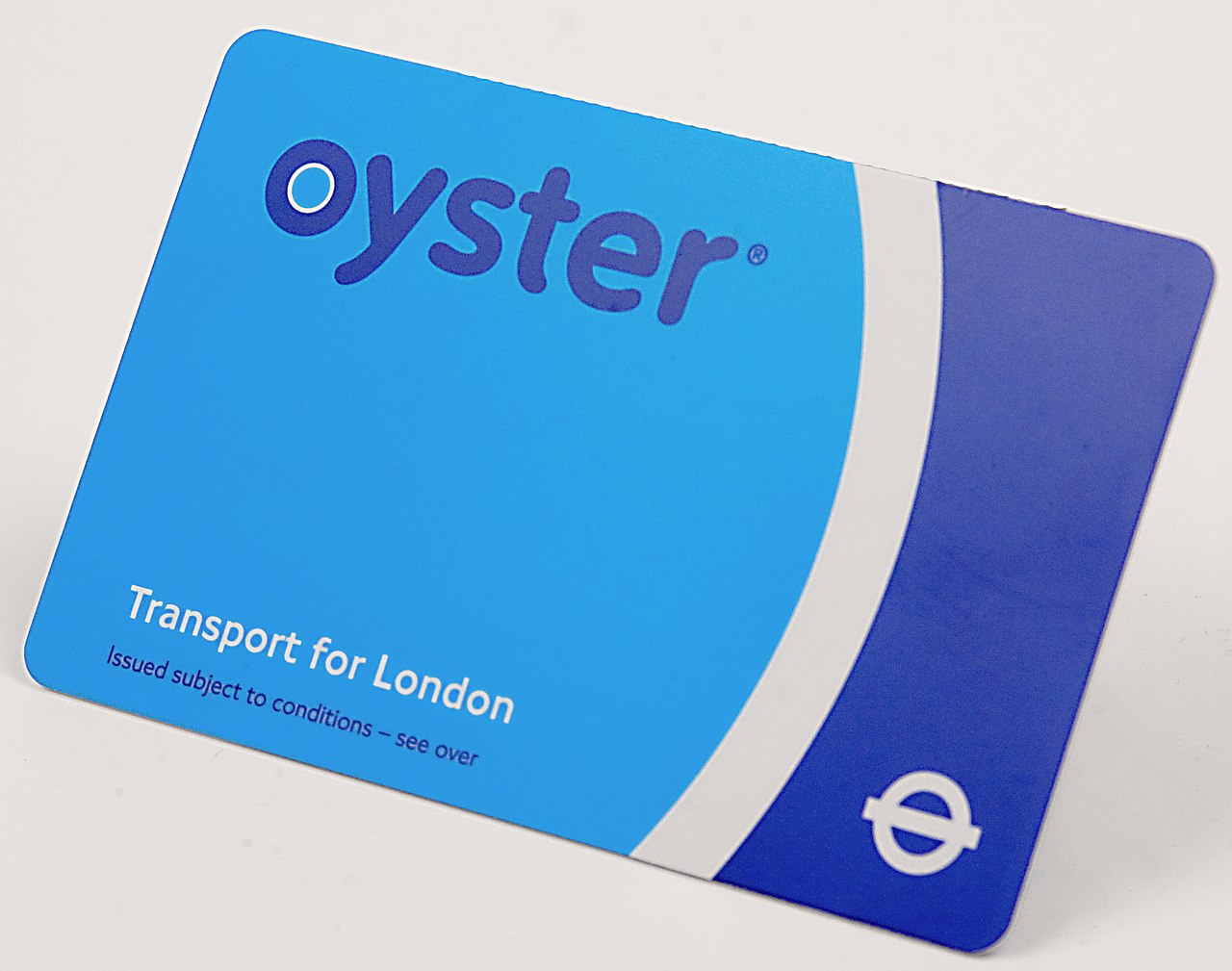
Rule #1 – Have your Oyster Card Ready
 |
| Photo by Kenneth Jorgensen via Wikipedia |
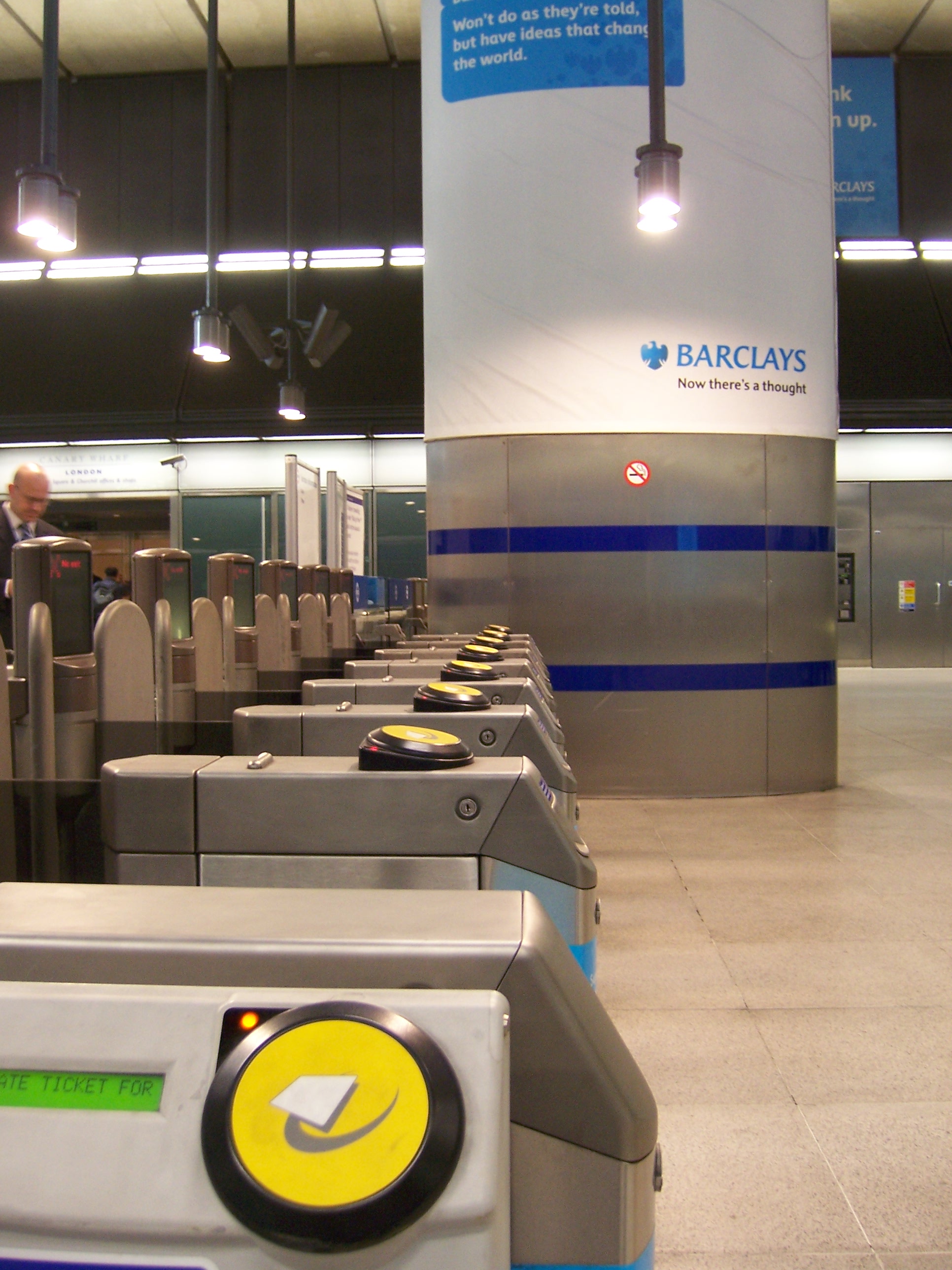
When you’re greeted by those imposing ticket barriers like the ones at Canary Wharf to the right, have your Oyster card ready to pay. Don’t stop in the middle of the station while you fumble through your purse or pockets to find it. You’re inconveniencing every other person in that station.
Pro Tip: Veteran tube riders don’t get their Oyster Card out of their wallet at all. The scanner has a little bit of range, so it’s usually possible to tap an entire wallet on the scanner and register the card properly. If you carry a thicker wallet, it might be necessary to use a specific side of the wallet for your Oyster Card.
Plenty of Londoners also use purpose-built Oyster Card holders, usually picked up for free at an event or distributed by various companies. In some ways, it’s a London-only fashion accessory. Usually it accommodates a credit card as well, so it can be used as a miniature wallet if needed.
Another Pro Tip: When the person in front of you taps their card, the barriers will open to let them through. There’s no need for you to wait for the barriers to close before tapping your own card. They’ll stay open.
Rule #2a – Stand on the Right, Walk on the Left
Escalator etiquette is essential to proper functioning of the Tube. The left side of the staircase is reserved for those walking up the steps. They are invariably in a hurry, and it’s offensive to obstruct their travel in any way. If you wish to stand on the escalator, stand on the right side only, one person at a time. At busy times of day, make sure you occupy every step, leaving no wasted space. There will frequently be a queue to get the standing side of the escalator, Make sure you’re not obstructing the stair-climbers who are walking past you to get on the left side.
Pro Tip: It’s always faster to walk, especially during rush hour when a queue forms to stand. Besides being faster, it’s also great exercise, especially at the really deep stations on the Central Line.
Rule #2b – No Switching
Pick whether you’re standing or walking and stick with it. No matter whether you’re switching from standing to walking or the other way around, you’re invariably inconveniencing someone.
Rule #3 – Know Where You’re Going
Trains on the Tube travel in both directions, and like most major railway systems, trains are identified by the station where the train terminates. Most likely, you won’t know in advance that “Central Line train to Epping” means “Central Line Eastbound.” Luckily, the Underground makes it easy by indicating which platforms go in which direction. What’s most essential is to know whether you’re going north, south, east, or west from the station where you get on. Stopping in the middle of the station to look at a map will get you laser burns in the back of your head from the glares of other passengers.
Pro Tip: Google Maps usually has excellent directions for the Tube, and frequently even notes the terminating station. It also works when not connected to wifi or a cellular network (i.e. underground on a train). However, the journey times can be a little optimistic, especially during rush hour, when using bus routes, or walking at anything less than a brisk London pace.
Rule #4 – Move down the platform
When you’ve finally reached the platform where the trains arrive move away from the entrance. This creates more space for others to stand on the platform and ensures that passengers will be evenly distributed along the train when it arrives.
Pro Tip: Tube Pros have memorised the layout at most of the stations they frequent. They generally position themselves at the part of the train resulting in the shortest walk upon arrival. When the train pulls into their stop, their carriage is directly in front of the exit.
Rule #5 – Let People Off the Train
When the train pulls into the station, let passengers off before attempting to get on. Those who try to board without letting others off first are some of the most hated people on the Tube.
Rule #6 – Fill All Available Space
During rush hour, it’s often necessary to stand in the aisle between seats on the Tube. Even if you boarded two stops ago, move into this space as it becomes available so more people can fit on the train. If you’re standing near the doors, give up all expectation of personal space.
Rule #7 – Do NOT Block the Doors
There is absolutely no reason to block the doors. Tube trains run every 2-4 minutes. Just wait for the next one.
Pro Tip: As the Tube stops at major railway stations, tourists with massive bags will struggle to board the train, especially at rush hour. Don’t be one of these people,
Rule #8 – Hold On Tight
Your first time on the Tube, you will underestimate the lurch as the train leaves the station, so hold on tight to avoid staggering into the person behind you.
Pro Tip: Try to score a spot up against one of the perspex dividers on the carriage. By leaning your shoulder up against it, you’re in an excellent position to counter the acceleration and deceleration of the train.
Rule #9 – Do not Speak, do not Make Eye Contact
Ever. This one is pretty straightforward, but generally sociable Americans seem to struggle with following it. Making eye contact on the Tube is practically grounds for an assault charge. Stare at the floor, your phone, or the map on the wall instead.
Pro Tip: It’s generally acceptable to speak very quietly with members of your own party if you’re seated next to each other. Unfortunately what most Americans term “very quietly” sounds like “loud drunkard” to British ears. Despite the loudness of the train, when you’re in adjacent seats, surprisingly little volume is necessary. You should speak only loud enough so that the person next to you can hear you; the person across the aisle shouldn’t.
Congratulations! You’re now prepared to ride the Tube like a local!




??