Read Time:2 Minute, 51 Second
Some of the travel guidebooks or websites I’d read called Nukus “The Most Depressing City in the World” or “The City at the End of the Earth.” I found it to be neither during my brief time there.
After the Soviets had consolidated their control over Uzbekistan, they introduced cotton to the region. What had previously been barren land along the Amu Darya River was watered by extensive irrigation works. Nukus was built on an empty plot of desert to serve the workers on massive industrial farms. Almost the entirety of the river’s output was diverted to satisfy the thirsty cotton. Since the 1970s, this has resulted in the shrinking of the Aral Sea into which the river flows. The sea is now a fraction of its former size, devastating the population that depends on it. Despite achieving independence, Uzbekistan has never broken its addiction to cotton, and the Aral Sea has continued to shrink in the 21st century. Nukus itself has been affected to, though the Uzbek government is trying to remodel the urban center.
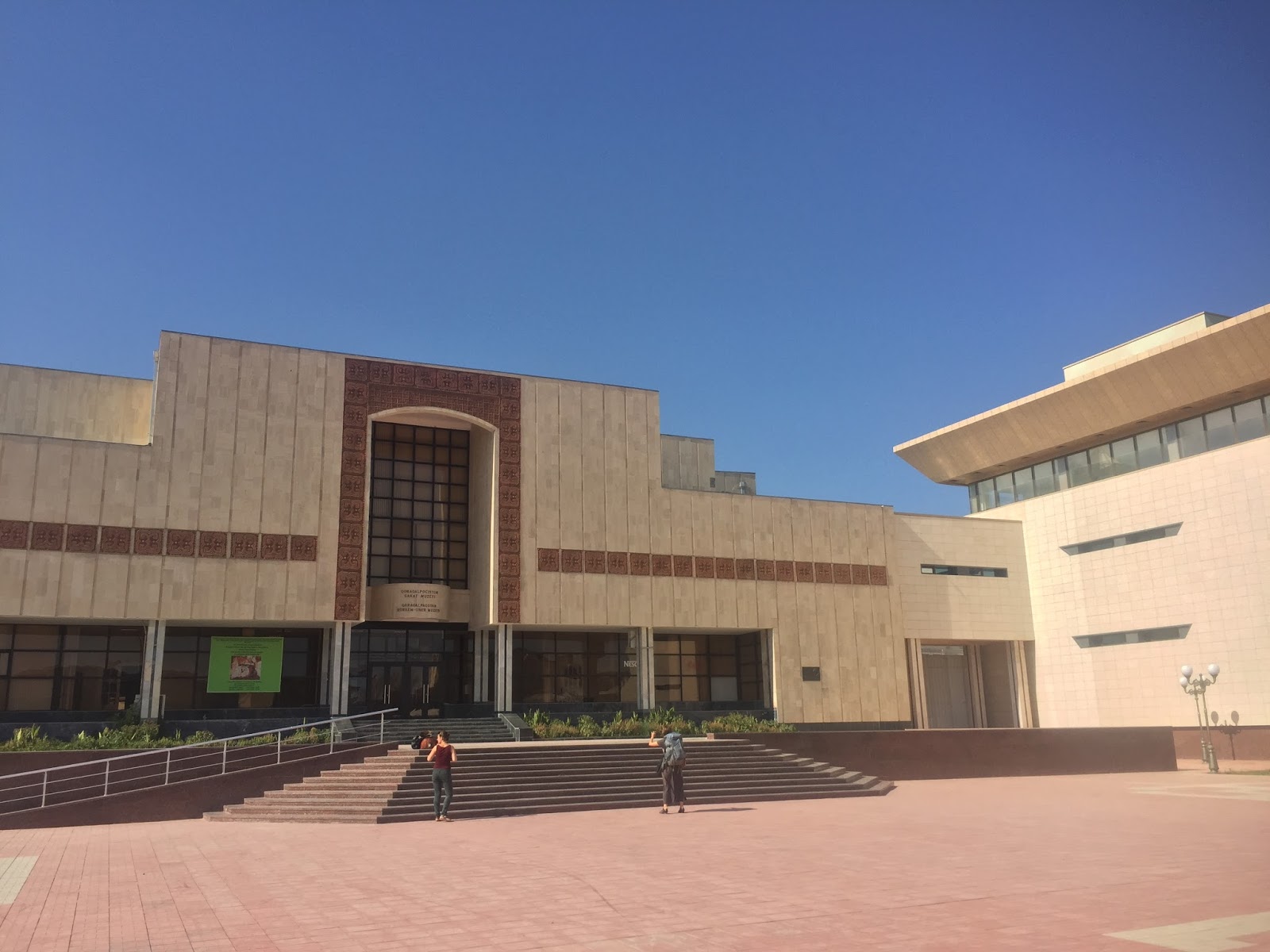
The city’s signature – and perhaps only – attraction is the Nukus Museum of Art, better known as the Savitsky Museum after its founder. Savistky did his best to collect the works of Russian avant-garde artists condemned by Stalin and collect them in the last place they would look, a cotton city in Uzbekistan. The museum opened in 1966 and now contains the second-largest collection of Russian Art after the Russian Museum in St. Petersburg.
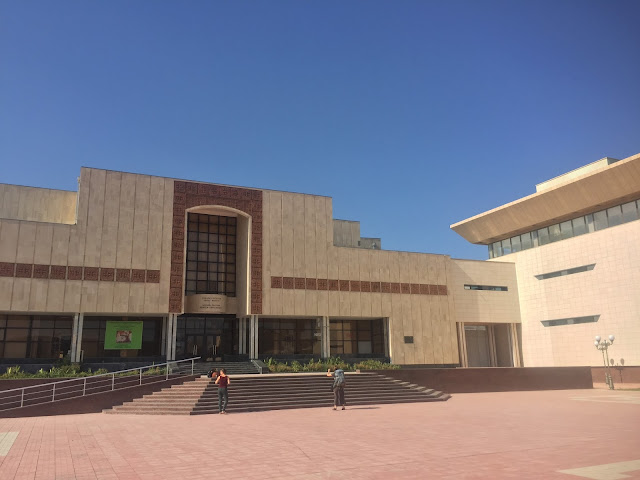 |
| The exterior of the Savitsky Museum in Nukus |
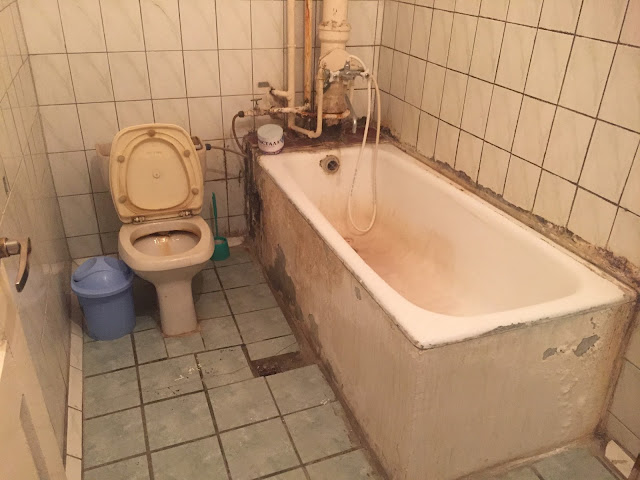 |
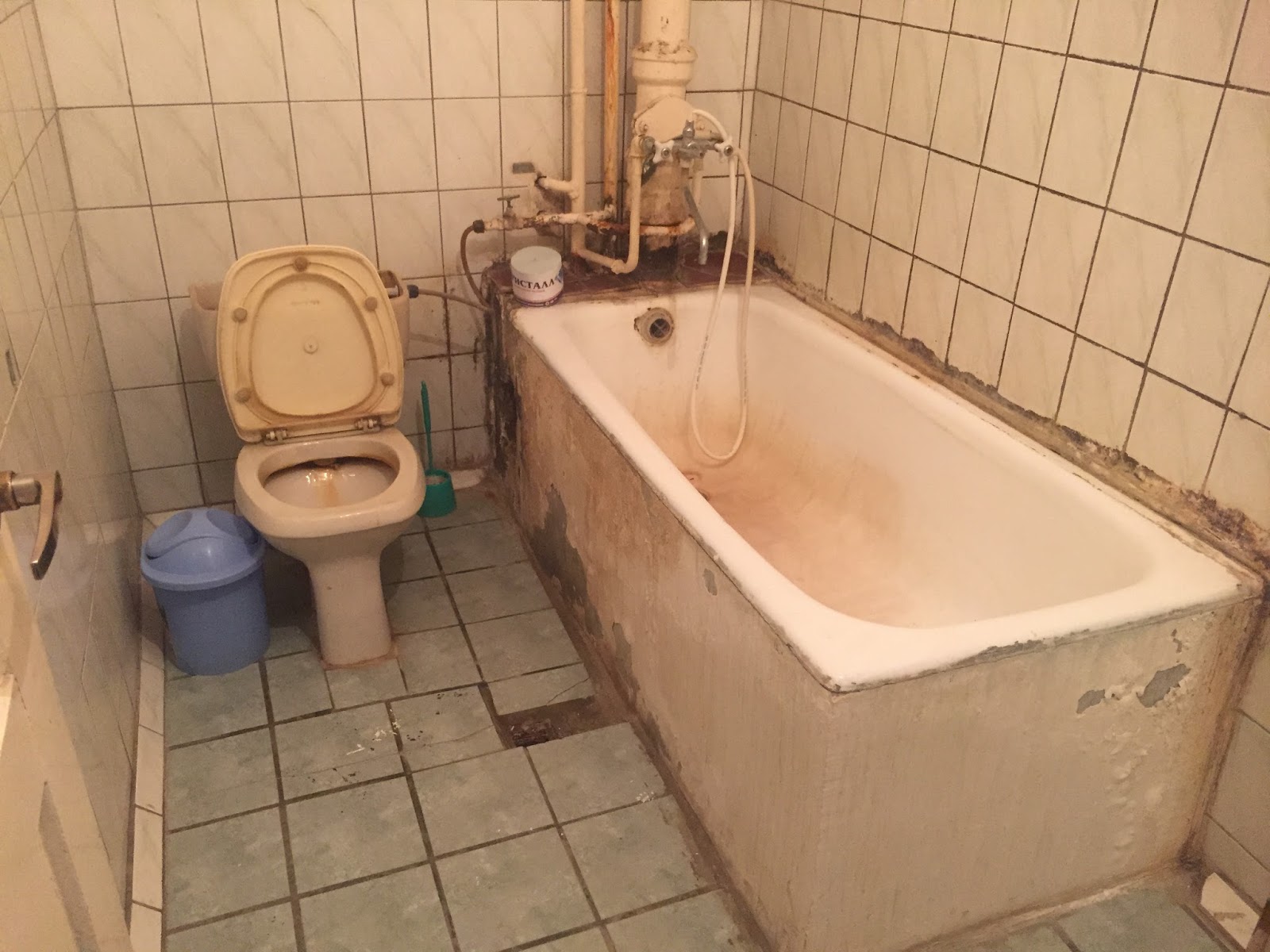
| My terrifying hotel bathroom with non-functional toilet. I didn’t even try the shower. |
After just one full day in Nukus, it was time for my journey home. The journey would take four days and involve two private cars, five taxis, four trains, three planes, and five airports. I didn’t get to sleep in a real bed and was lucky to get a single shower in the Frankfurt airport. First, I caught a train in Nukus for a 26-hour journey across Uzbekistan.
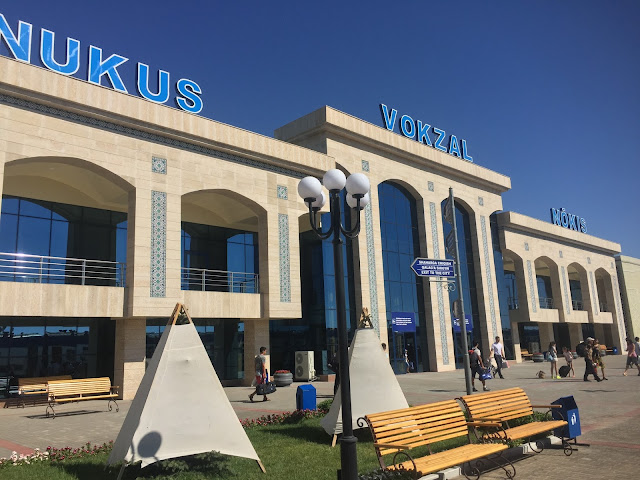 |
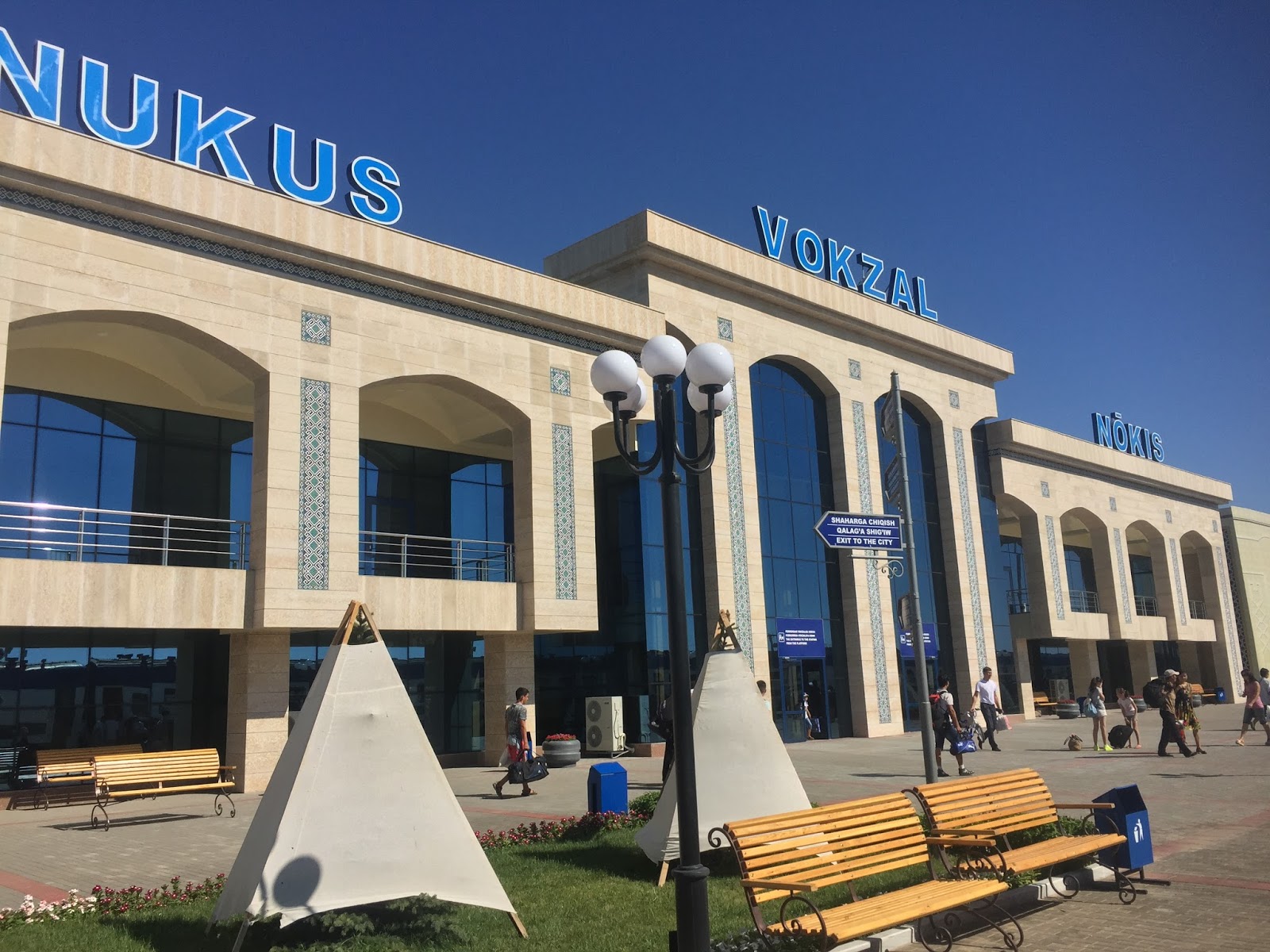
| The shiny new train station in Nukus |
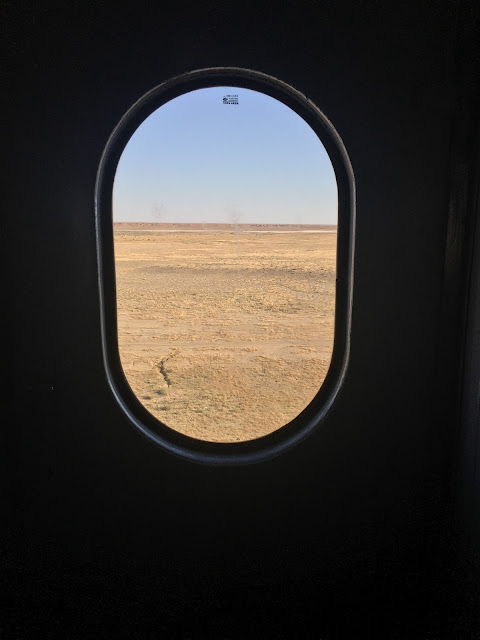 |
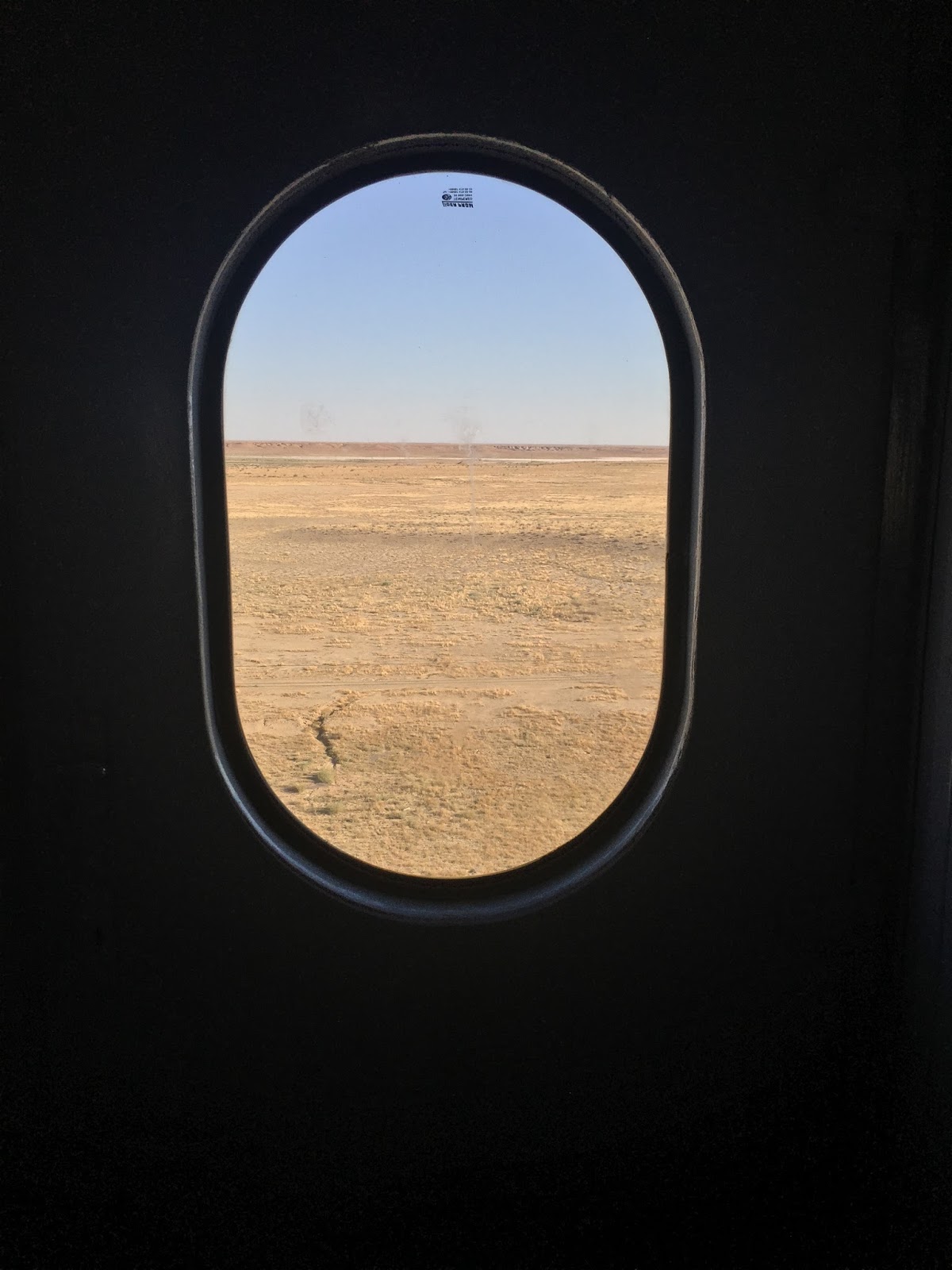
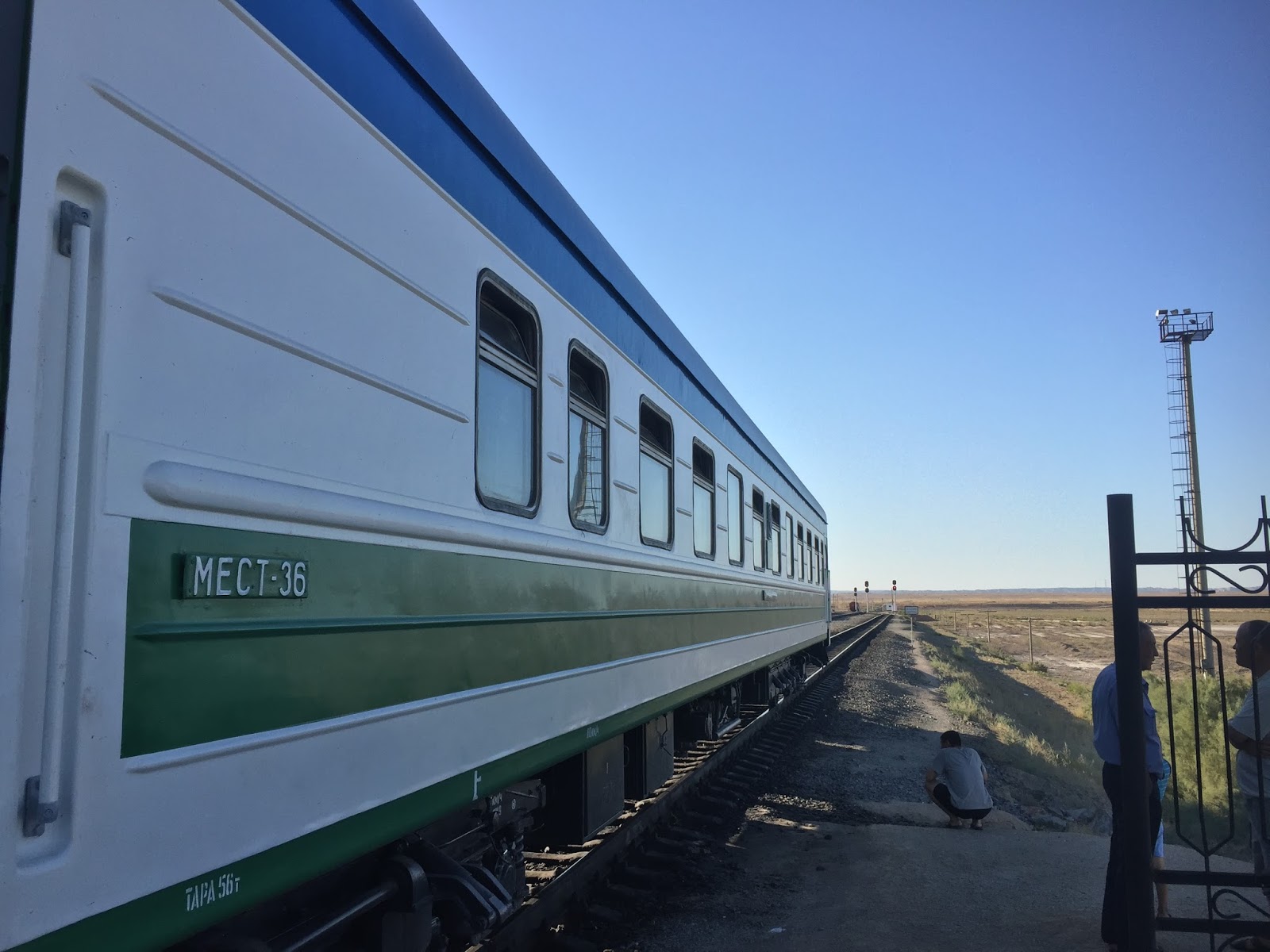
| View out the train window near Uchkuduk, Uzbekistan. Endless desert as far as the eye can see. |
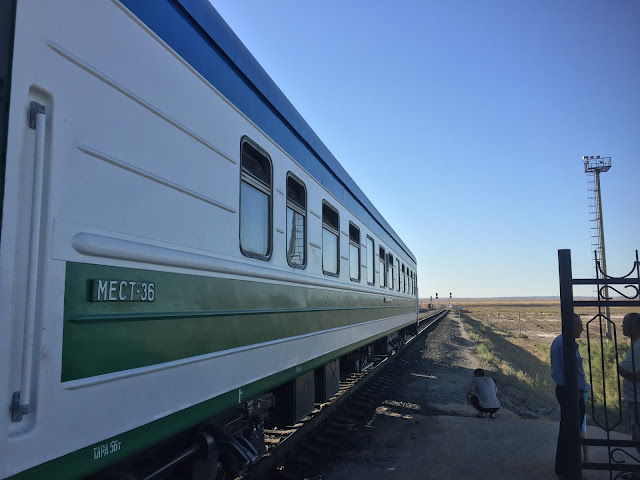 |
| My car was the last one on the train. Taken at Uchkuduk-2 Station. |
At Tashkent, I met my travel agent to pay for my visa letter, went to the border and crossed back into Kazakhstan, where I would take an overnight train from Shymkent to Almaty.
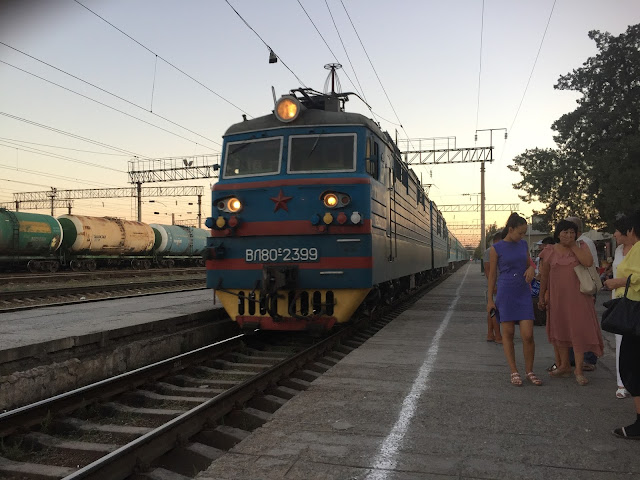 |
| My train pulls into the station at passengers wait on the platform in Shymkent, Kazakhstan |
I had a full day to kill in Almaty, so I visited Ascension Cathedral, better known as Zenkov’s Cathedral after its architect. The church was completed in 1907, and there is not a single nail in the building’s construction. It was one of two buildings, both by the same architect, to survive the 1911 Almaty Earthquake that leveled the city, and is therefore one of the few remaining pre-Soviet buildings. Its vivid paint scheme and location in a peaceful park makes it one of the city’s highlights.
Around midnight, my plane took off from Almaty airport and arrived in Frankfurt, Germany after a short stop in Astana, Kazakhstan’s capital. I made a quick tour of Frankfurt and returned to the airport to fly to Washington D.C. and then on to Los Angeles where my father was waiting at the airport for me.

Happy
0
0 %

Sad
0
0 %

Excited
0
0 %

Sleepy
0
0 %

Angry
0
0 %

Surprise
0
0 %
 0
0
 0
0