0
0
 0
0
For the last few months, I’ve been reading BBC News so I arrive in the UK with some knowledge of current issues. Right now, the dominant news story is next week’s referendum on Scottish independence. One of the chief issues in the debate is whether an independent Scotland would continue to use the Pound Sterling. There are a few possibilities here. Scotland can enter into a currency union with the UK (much like the EU), can unilaterally adopt the Pound, join the Eurozone, or can create its own currency.
The government in London seems strongly opposed to a currency union, but Scotland has some leverage. They’re refusing to pay their share of the UK debt if they don’t get a currency union (something to the tune of 100 billion pounds). This issue still remains unresolved.
Adopting the Euro is less attractive for Scotland because the majority of its trade is with the UK, not the rest of Europe. Unilaterally adopting the pound would severely restrict Scotland’s options for financing its debt, and an independent currency would likely not be strong.
The vote on the referendum takes place two days after I arrive in the UK, so I’m really interested to be in the UK at this time. I didn’t think I had a vested interest in this debate until I saw this today:
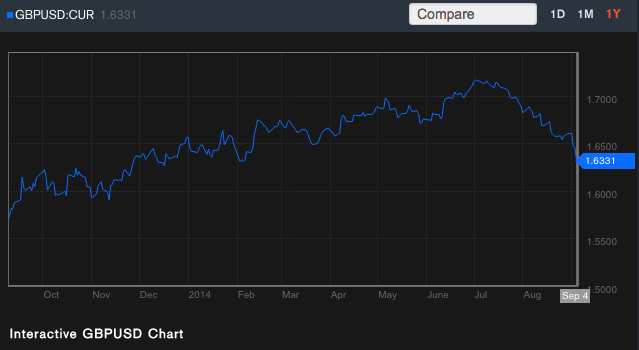
*chart borrowed from Bloomberg
This chart shows the price of a Pound in Dollars. Since July, the Pound has been steadily weakening because of the possibility that Scotland might cease to use it. So far, it’s lost about 3% against the dollar, and probably won’t reverse this trend until a vote on independence is final. It’s likely that there will be a particularly steep drop tomorrow (Monday) since a poll this weekend showed for the first time that 51% of voters were in favor of independence.
I’m excited to see the results of the referendum shortly after I arrive. For the time being, it’s time to take advantage of this attractive exchange rate.